


If you have any questions, please contact our online customer service staff immediately
 Click:3
Edit: Chuanghe Hoisting
 Time:2026-10-27 14:23:54
A Practical Lifting Solution for Steel Plates, Blocks, Bars, and Round Materials
In steel fabrication, metal processing, machinery manufacturing, and industrial workshops, moving heavy steel materials efficiently is an important part of daily operations.
Traditional lifting methods often require slings, clamps, or other rigging accessories. For suitable ferromagnetic materials, a Permanent Magnetic Lifter offers an alternative that can simplify material handling and reduce the need for manually attaching slings around every load.
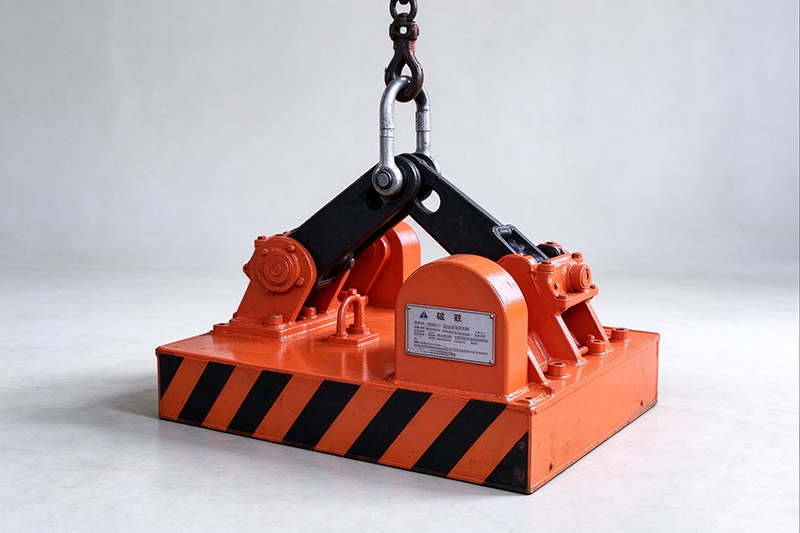
Also known as a magnetic lifting magnet or permanent magnetic chuck, this equipment uses permanent magnetic force to attach to compatible steel materials. It can be connected to a suitable crane or hoist to lift and move the load.
For industrial buyers, importers, wholesalers, and lifting equipment distributors, understanding magnetic lifter capacity, material compatibility, operating conditions, and safety requirements is essential.
In this guide, we will explain how permanent magnetic lifters work, their main features, how to select the correct model, and what buyers should consider before purchasing.
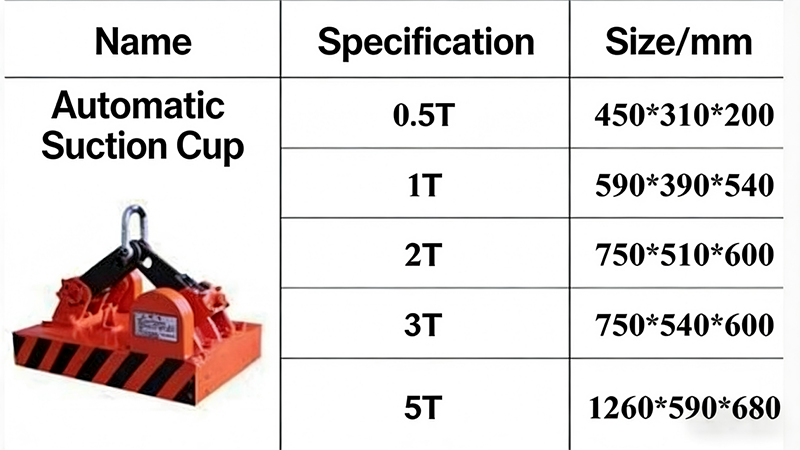
A permanent magnetic lifter is a mechanical lifting accessory designed to lift suitable ferromagnetic materials using permanent magnets.
Unlike an electromagnetic lifting system, a conventional permanent magnetic lifter does not require an external electrical supply to generate its basic magnetic holding force.
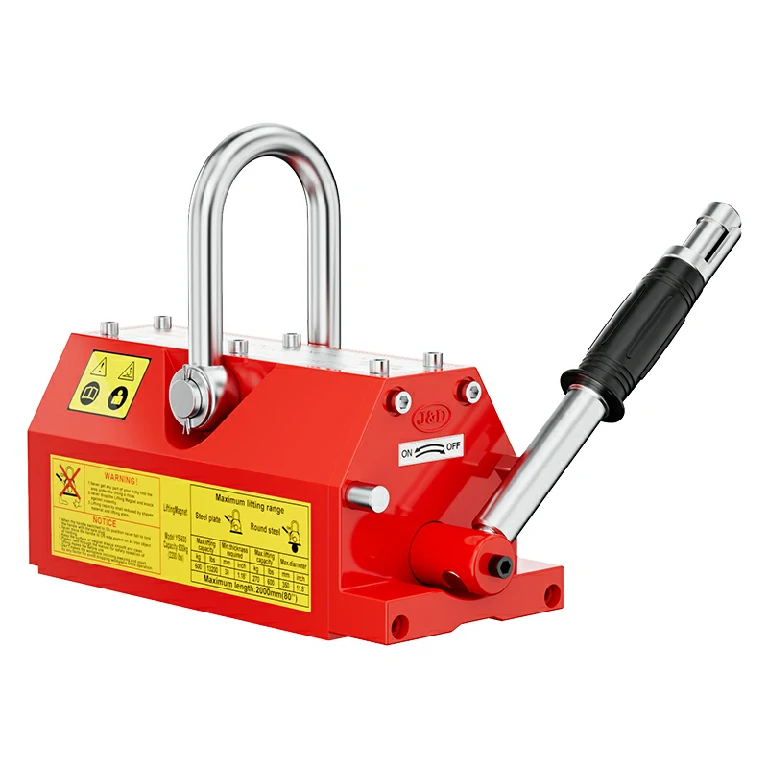
A typical permanent magnetic lifter includes:
A permanent magnetic system
A magnetic circuit
An ON/OFF operating handle
A magnetic contact surface
A lifting eye or shackle
A protective steel housing
A locking or safety mechanism, depending on the model
The operator positions the magnetic surface against a compatible steel load and activates the magnet according to the manufacturer's instructions. The lifting eye can then be connected to a suitable crane hook or hoist.
When the load has been placed securely on a stable support, the operator releases the magnetic force according to the prescribed operating procedure.
Permanent magnetic lifters are commonly used in steel fabrication, machine shops, metalworking facilities, warehouses, and industrial maintenance operations.
A permanent magnetic lifter uses a controlled magnetic circuit to create attraction between the lifting device and a suitable ferromagnetic load.
Many conventional models use a mechanical handle to switch the magnetic circuit between ON and OFF positions.
The general operating sequence is:
Inspect the load → Position the lifter → Activate the magnet → Verify engagement → Lift and move the load → Set the load down securely → Release the magnet
The magnetic force must be sufficient for the specific load and operating conditions. Rated capacity alone does not guarantee suitability for every steel object.
Material thickness, surface condition, load shape, contact area, and the presence of gaps between the magnet and the load can all affect magnetic performance.
For this reason, always use the lifter according to its model-specific instructions and rated capacity.
A conventional permanent magnetic lifter does not require a continuous electrical power supply to maintain its magnetic force.
This can be useful in workshops and industrial environments where an electricity-free lifting accessory is preferred.
However, the absence of an electrical supply does not eliminate lifting risks. Correct attachment, inspection, and operating procedures remain essential.
Many models use a mechanical handle to activate or release the magnetic circuit.
This design allows operators to engage the magnet without manually wrapping slings around every suitable steel component.
Always verify that the handle and any locking mechanism are fully engaged as specified by the manufacturer.
Depending on the design, magnetic lifters can handle flat steel plates, blocks, bars, and certain round materials.
Some models feature a V-shaped contact surface intended to accommodate cylindrical steel.
The rated capacity for flat steel can be significantly different from the capacity for round steel. Check the manufacturer's ratings for the exact load shape.
A permanent magnetic lifter can provide a practical lifting accessory without the need for a separate electrical power supply or control cable.
Its dimensions and weight depend on the model and rated capacity.
Magnetic lifters can be used with compatible overhead cranes, gantry cranes, or electric hoists.
The lifting equipment, connection, supporting structure, and magnetic lifter must all be suitable for the intended load and operating conditions.
The following table summarizes examples published in the CH HOIST product guide. These are model-specific catalog figures, not universal specifications for every magnetic lifter.
Model | Flat Steel Capacity | Round Steel Capacity | Proof Load |
PML1500 | 1,500 kg | 750 kg | 4,500 kg |
PML2000 | 2,000 kg | 1,000 kg | 6,000 kg |
PML3000 | 3,000 kg | 1,500 kg | 9,000 kg |
PML5000 | 5,000 kg | 2,500 kg | 15,000 kg |
Source: CH HOIST published permanent magnetic lifter product guide.
The table highlights an important selection principle: the capacity for round steel is not necessarily the same as the capacity for flat steel.
Important: Proof load is a test-related specification and must not be treated as the permissible working load. Always follow the rated capacity and operating instructions for the exact model.
Before purchasing, request the complete technical datasheet, including dimensions, net weight, minimum material thickness, rated capacity for different load shapes, operating temperature limits, and applicable safety documentation.
Permanent magnetic lifters are primarily designed for suitable ferromagnetic materials.
Common applications may include:
Steel plates
Steel blocks
Steel bars
Round steel stock
Suitable steel pipes
Compatible ferromagnetic machine components
Not all metals are magnetic in the way required by a conventional permanent magnetic lifter. Aluminum, copper, and many stainless-steel grades are generally unsuitable for this type of equipment.
Even when the material is magnetic, its thickness, surface condition, shape, and contact area must match the manufacturer's requirements.
Before lifting an unfamiliar material, verify its suitability rather than relying on its appearance alone.
Steel fabrication facilities regularly move plates, bars, and metal components between cutting, machining, welding, and storage areas.
A suitable magnetic lifter can help simplify handling when the material and working conditions are within the equipment's rated limits.
Machinery manufacturers may need to move steel blocks, machine components, and compatible metal parts during assembly or maintenance.
The magnetic lifter must be selected according to the component's shape, weight, material, and available contact surface.
Metal processing businesses often handle steel stock of different sizes and shapes.
A suitable magnetic lifter can support material movement when used with a compatible crane or hoist and a properly designed lifting arrangement.
Steel storage facilities may use magnetic lifters to move suitable plates, blocks, and bars between designated storage and processing areas.
The operator must confirm that each load meets the equipment's capacity and material requirements.
During equipment maintenance, magnetic lifting devices may help handle suitable steel components.
For irregularly shaped parts or loads with limited contact areas, a different lifting method may be necessary.
Different lifting accessories are designed for different loads and handling requirements.
Feature | Permanent Magnetic Lifter | Webbing or Wire Rope Sling | Lifting Clamp |
Main operating principle | Magnetic attraction | Mechanical support around or beneath the load | Mechanical gripping |
Suitable materials | Compatible ferromagnetic materials | Depends on sling and rigging arrangement | Depends on clamp design and material |
Electricity required | No, for conventional permanent magnetic models | No | Usually no for conventional mechanical models |
Load contact | Magnetic contact surface | Sling contact points | Clamp gripping surfaces |
Main selection factors | Material, thickness, shape, surface, capacity | Sling type, angle, configuration, capacity | Material, thickness, gripping direction, capacity |
Typical use | Suitable steel plates, blocks, and certain round stock | Many load types with suitable rigging | Loads specifically compatible with the clamp design |
Which option is better?
A magnetic lifter may be convenient for compatible steel materials when a quick magnetic attachment is useful.
Slings can accommodate many different materials and load shapes when the correct sling arrangement is used.
Lifting clamps are designed for specific gripping tasks, such as handling certain steel plates or structural components.
The best solution depends on the load geometry, material, lifting direction, working environment, and applicable safety requirements.
Determine the weight of the heaviest load you intend to lift.
Select a model with an appropriate rated capacity for the actual load shape and operating conditions. Do not rely solely on the model name or maximum advertised capacity.
Confirm that the load is suitable for magnetic lifting.
The equipment is generally intended for ferromagnetic materials. If the material composition is uncertain, verify compatibility before use.
Material thickness can affect magnetic performance.
Thin steel may not provide the same holding capability as thicker steel. Confirm the minimum material thickness specified by the manufacturer.
Flat plates and round materials may require different capacity ratings.
If your application involves both flat steel and cylindrical stock, confirm the applicable capacity for each type.
Rust, scale, paint, oil, dirt, and other contaminants can create a gap between the magnetic surface and the load.
A clean, flat contact surface is generally preferable. Follow the manufacturer's instructions regarding surface preparation.
Check the compatibility of the lifter's lifting eye, crane hook, hoist, and any associated rigging.
The complete lifting system must be suitable for the load and intended operation.
Consider temperature, moisture, corrosion exposure, vibration, and the type of material being handled.
Confirm the operating limits and environmental suitability of the selected model.
For industrial and export purchases, request the model-specific technical datasheet, operating instructions, inspection criteria, rated capacities, and applicable conformity documents.
Do not assume that all magnetic lifters have the same certification or performance rating.
Magnetic lifting equipment handles potentially heavy loads. Correct use is essential to help prevent dropped loads and serious injuries.
Before lifting:
Check the rated capacity for the specific load shape and material.
Inspect the magnet's contact surface and the load.
Remove contaminants where required by the manufacturer's instructions.
Verify that the lifter is correctly positioned.
Check the lifting connection and supporting equipment.
Confirm that the handle is fully engaged and any locking mechanism is secured.
During lifting:
Lift smoothly and avoid sudden acceleration or shock loading.
Keep the load balanced and avoid unnecessary tilting.
Do not exceed the rated capacity.
Keep people away from the suspended load.
Never stand or walk beneath a suspended load.
Do not leave a suspended load unattended.
Do not use the lifter to handle people.
After moving the load:
Lower it onto a stable support.
Make sure it is securely positioned before releasing the magnet.
Inspect the equipment for any damage or abnormal behavior.
Never use a magnetic lifter that is damaged, malfunctioning, or missing required components.
Always follow the manufacturer's instructions and applicable workplace safety regulations.
Regular maintenance helps keep the magnetic lifter in suitable operating condition.
Check for wear, damage, corrosion, and deformation. The contact surface should meet the manufacturer's requirements.
Inspect the handle and any locking mechanism for damage or abnormal movement.
Look for visible cracks, deformation, loose components, or other signs of damage.
Remove contaminants according to the manufacturer's instructions. Avoid actions that could damage or distort the magnetic contact surface.
Keep the lifter in a clean, dry location appropriate for its design and protective finish.
Use the manufacturer's inspection schedule and replacement criteria. Keep records of inspections, repairs, and any abnormal findings.
Maintenance should be performed by qualified personnel when required.
For international buyers, selecting a magnetic lifter involves more than comparing unit prices.
Before placing an order, consider:
Available models and rated capacities
Flat and round steel capacity ratings
Minimum material thickness
Product dimensions and net weight
Operating temperature limits
Technical documentation and applicable certifications
Packaging dimensions and shipping weight
Spare parts and after-sales support
Minimum order quantity
Production lead time
Destination-market requirements
Distributors should also consider the types of steel materials their customers handle most frequently.
For example, a metal fabrication supplier may need magnetic lifters for flat plates, while a machine shop may require a model compatible with cylindrical components.
Providing clear application details helps the supplier identify a suitable product configuration.
CH HOIST supplies lifting and material handling equipment for industrial and commercial applications.
Its product range includes permanent magnetic lifters, electric hoists, manual chain hoists, lever hoists, winches, lifting clamps, slings, and other lifting accessories.
For importers and distributors, understanding the customer's load type and working conditions is essential when selecting magnetic lifting equipment.
When requesting a quotation, provide the following information:
Maximum load weight
Flat or round material
Material type and thickness
Required lifting capacity
Working environment
Order quantity
Destination country
Documentation requirements
These details help establish which model may be appropriate for the application.
Q1: What is a permanent magnetic lifter used for?
It is used to lift suitable ferromagnetic materials, such as compatible steel plates, blocks, bars, and certain round steel components.
Q2: Does a permanent magnetic lifter require electricity?
A conventional permanent magnetic lifter does not require an external electrical supply for its basic magnetic holding function.
Q3: Can a magnetic lifter handle round steel?
Some models are designed to handle round steel. However, the rated capacity for round materials may be lower than the capacity for flat steel. Always confirm the applicable model rating.
Q4: Can a magnetic lifter handle stainless steel?
Suitability depends on the stainless-steel grade and its magnetic properties. Many stainless-steel grades are unsuitable for conventional permanent magnetic lifters. Verify the material before lifting.
Q5: Why does material thickness matter?
The magnetic circuit depends on the material and contact conditions. Thin steel may not provide sufficient magnetic performance for the intended load. Follow the manufacturer's minimum-thickness requirements.
Q6: Is the proof load the same as the rated capacity?
No. Proof load is a test-related value, not the permissible working load. Always follow the rated capacity and operating instructions.
Q7: What information should I provide when requesting a quotation?
Provide the load weight, material type, material thickness, load shape, required capacity, operating conditions, quantity, and destination country.
A Permanent Magnetic Lifter can be a practical lifting accessory for handling compatible steel materials in fabrication workshops, metal processing facilities, machinery manufacturing plants, and warehouses.
Its electricity-free magnetic operation and convenient attachment method can help simplify selected steel-handling tasks.
However, choosing the right model requires careful consideration of material properties, thickness, surface condition, load shape, and rated capacity.
For importers, distributors, and industrial buyers, accurate specifications and correct operating procedures are essential for selecting and using magnetic lifting equipment responsibly.
A Practical Lifting Solution for Steel Plates, Blocks, Bars, and Round Materials In steel fabrication, metal processing, machinery manufacturing, and industrial workshops, moving heavy steel materials efficiently is an important part of daily operations.
2026-10-27View More →
Lifting and positioning loads is a routine task in workshops, warehouses, garages, small factories and maintenance areas. When loads are too heavy to lift manually, a compact powered lifting device can help improve handling efficiency and reduce physical effort.
2026-10-26View More →
In the era of rapid global industrialization, heavy manufacturing, mechanical processing, steel structure production, large equipment assembly, port logistics and engineering construction industries are developing rapidly. Modern industrial production is gradually moving toward large-scale, heavy-load, high-frequency and high-precision operation mode.
2026-10-24View More →


 Tel:
+8613653129869
 Whatsapp:
+8613653129869
 Email:
chuanghehoist@gmail.com
 Address:Donglu Village, Donglu Township, Qingyuan District, Baoding City, Hebei Province

 English
 Français
 Español


 Email
 +8613653129869
 +8613653129869

 Home
 Whatsapp
 chuanghehoist@gmail.com