



If you have any questions, please contact our online customer service staff immediately
 Click:4
Edit: Chuanghe Hoisting
 Time:2026-10-27 16:21:10
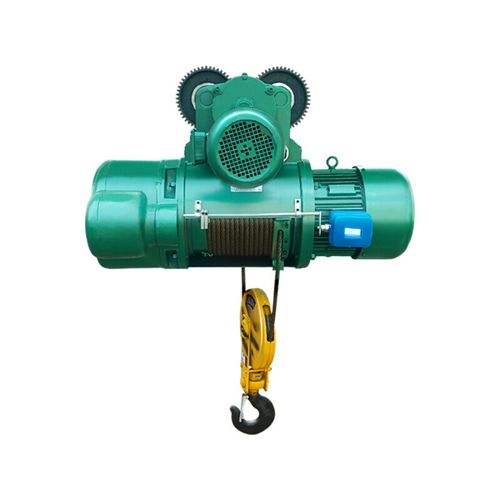
This technical article explores the integration, structural engineering, and operational advantages of the Electric Chain Hoist with Wireless Remote Control. Designed for modern manufacturing plants, automated warehouses, and maintenance facilities, this equipment combines heavy-duty lifting capacity with advanced wireless mobility.

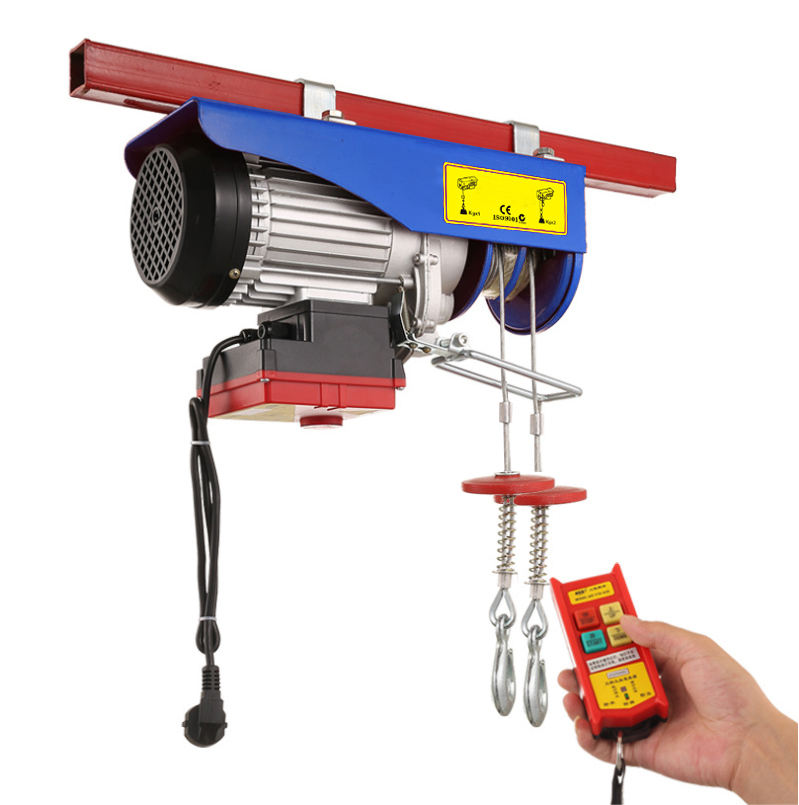
In contemporary industrial operations, material handling speed directly dictates plant throughput. Traditional wired pendant controls, while reliable, often restrict operator mobility and expose personnel to potential pinch points beneath suspended loads. The advent of the Electric Chain Hoist with Wireless Remote Control has revolutionized shop-floor ergonomics. By pairing heavy-duty grade alloy steel load chains with secure radio frequency (RF) or encrypted wireless transmitters, operators can seamlessly navigate lifts from optimal viewing angles.
Engineered for high duty cycles and rigorous industrial environments, CHHoist systems incorporate several cutting-edge technological advancements:
To help engineers and procurement specialists select the right configuration for their operational demands, the following specification matrix outlines standard parameters across popular capacity tiers:
| Technical Parameter | Model A (Light Duty) | Model B (Medium Duty) | Model C (Heavy Duty) |
|---|---|---|---|
| Lifting Capacity | 0.5 Ton (1,100 lbs) | 1.0 Ton (2,200 lbs) | 3.0 Ton - 5.0 Ton |
| Standard Lift Height | 3M - 6M | 6M - 9M | 6M - 12M |
| Control Interface | Wireless Remote + Backup Pendant | Wireless Remote + Backup Pendant | Dual Wireless Transmitter + Industrial Pendant |
| Load Chain Grade | G80 Case-Hardened Alloy Steel | G80 Case-Hardened Alloy Steel | G100 High-Tensile Alloy Steel |
| Duty Class (FEM / ISO) | M3 / H3 (30% ED) | M4 / H4 (40% ED) | M5 / H5 (50% ED) |
Maximizing the lifespan of an electric chain hoist requires strict adherence to maintenance schedules and operational guidelines. Operators must routinely inspect the grade-80/G100 load chain for micro-fractures, elongation, or lubrication wear. Furthermore, utilizing wireless remote operation requires a clear line of sight to the working envelope to prevent lateral pulling or swinging loads, which drastically compromises the hoist's structural safety factor.
Q: What are the key benefits of using an Electric Chain Hoist with Wireless Remote Control?
A: A wireless remote control allows operators to manage heavy lifting tasks from a safe distance, improving visibility, reducing operational hazards, and increasing overall workspace flexibility.
Q: What safety mechanisms are built into CHHoist electric chain hoists?
A: CHHoist electric chain hoists feature dual braking systems, emergency stop buttons, high-performance friction clutches for overload protection, and upper/lower limit switches.
Q: Can these hoists be integrated with motorized trolleys on I-beams?
A: Yes, our electric chain hoists can be easily paired with manual or motorized beam trolleys, enabling both vertical lifting and horizontal travel across workshops and warehouses.
This technical article explores the integration, structural engineering, and operational advantages of the Electric Chain Hoist with Wireless Remote Control. Designed for modern manufacturing plants, automated warehouses, and maintenance facilities, this equipment combines heavy-duty lifting capacity with advanced wireless mobility.
2026-10-27View More →
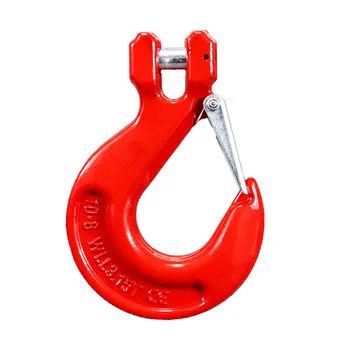
This blog takes lifting hooks as core subject, introducing functions, mainstream types, key safety components, material standards and application scenarios of industrial & construction‑grade lifting hooks. It provides reference parameter table for different working‑load‑level hooks, lists pre‑use inspection checkpoints and common wrong operation reminders.
2026-10-20View More →
This article targets warehouse maintenance engineers and facility managers. It establishes daily, weekly and quarterly maintenance checklists for electric stacker crane, covering rail, wheel, telescopic fork, motor, sensor, cable and safety limit switches. It lists common faults: positioning deviation, fork stuck, abnormal noise, communication failure, and corresponding troubleshooting steps. It explains how regular maintenance reduces downtime and extends stacker crane service life, also introducing CHHOIST global after-sales and spare parts service.
2026-10-16View More →


 Tel:
+8613653129869
 Whatsapp:
+8613653129869
 Email:
chuanghehoist@gmail.com
 Address:Donglu Village, Donglu Township, Qingyuan District, Baoding City, Hebei Province

 English
 Français
 Español




 Email
 +8613653129869
 +8613653129869

 Home
 Whatsapp
 chuanghehoist@gmail.com