tel

Blog

Current Location: Blog

What Is An Electric Stacker Crane? Working Principle, Types Application Scenarios

Click:45 Edit: Chuanghe HoistingTime:2026-09-30 10:10:28

This article introduces the definition and core working logic of electric stacker cranes. It explains how stacker cranes cooperate with racking and WMS systems to realize automatic inbound/outbound. It classifies single-column, double-column and heavy-duty models, compares applicable industries, and helps readers quickly understand what scenarios require an electric stacker crane. Suitable for new buyers and warehouse project planners.

Electric Stacker Crane

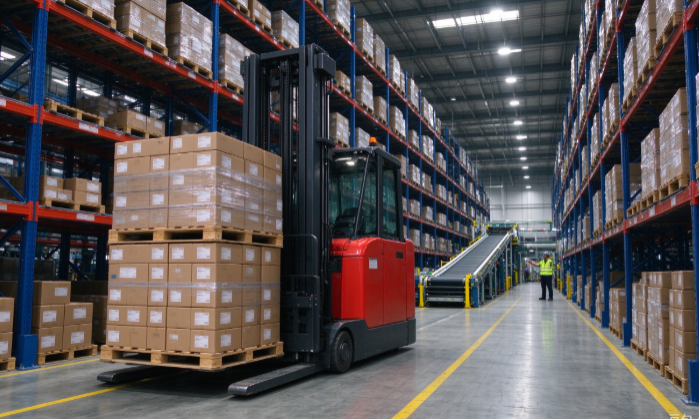
An electric stacker crane, also known as AS/RS stacker crane, is the core handling equipment of automated high-bay warehouses. Unlike traditional forklifts, the electric stacker crane runs on fixed ground rails, completes vertical lifting and horizontal travelling automatically, and realizes pallet storage and retrieval without manual operation. As the key hardware of automatic warehousing systems, it connects warehouse management software (WMS) and racking systems to achieve unmanned cargo access.

The working principle of an electric stacker crane relies on three core motion axes: horizontal travelling along the rail, vertical lifting via electric hoist mechanism, and telescopic fork movement for pallet picking and placing. WMS sends task orders, the stacker crane controller receives instructions, and the servo drive system precisely controls movement. High-precision positioning sensors ensure the fork can accurately align with storage locations on high racks, even for racks higher than 20 meters.

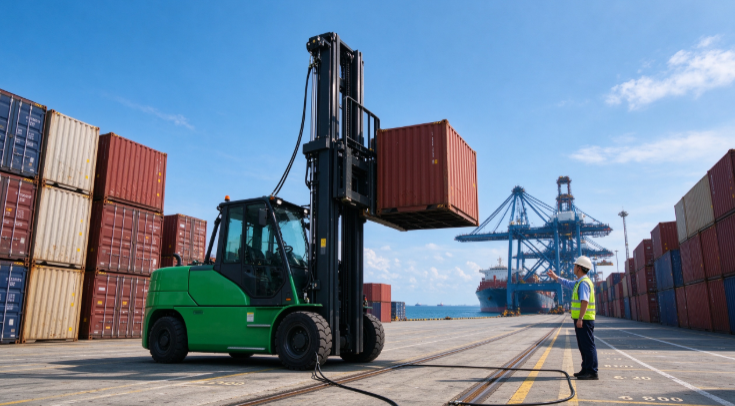
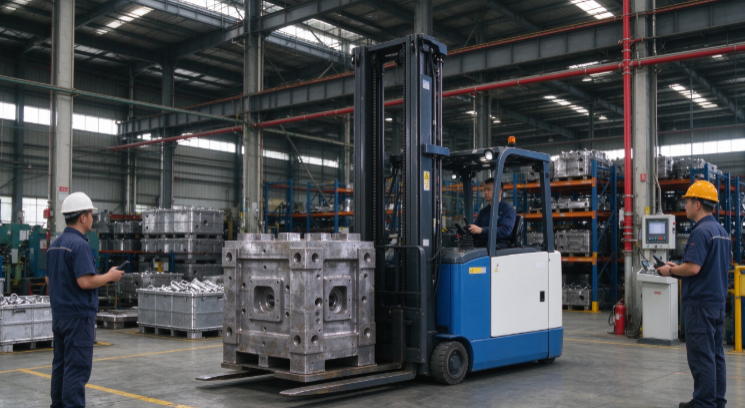
There are three mainstream types of electric stacker cranes on the market: single-column electric stacker crane, double-column electric stacker crane, and heavy-duty electric stacker crane. The single-column type features simple structure and lower budget, mainly used in small and medium automated warehouses with height below 12 meters and light load. Double-column stacker cranes adopt a double vertical frame structure, better rigidity, faster running speed and higher positioning accuracy, widely used in pharmaceutical, electronics and e-commerce distribution centers. Heavy-duty electric stacker cranes are designed for metal materials, mechanical parts and heavy pallet goods, supporting loads up to 15 tons and lifting heights up to 35 meters.

Electric stacker cranes have a wide range of application scenarios. E-commerce warehouses use them to improve order picking efficiency and save floor space. Pharmaceutical and food factories adopt AS/RS stacker cranes to meet strict traceability and clean workshop requirements. Manufacturing factories use stacker cranes for raw material and finished product storage, reducing forklift operation risks and lowering labor costs. For cold storage environments, CHHOIST also provides low-temperature resistant electric stacker crane versions for -25°C cold warehouse projects.

Many warehouse owners confuse electric stacker cranes with automated guided vehicles (AGVs). The biggest difference is that stacker cranes are fixed-rail equipment dedicated to high rack storage, while AGVs move freely on flat ground. If your warehouse plan includes high racking over 8m, an electric stacker crane is usually the more economical and high-efficiency choice.

When selecting an electric stacker crane, warehouse planners need to confirm lifting height, pallet weight, warehouse layout and throughput demand in advance. CHHOIST provides customized electric stacker crane solutions with ISO9001 and CE certification, serving clients across Europe, USA and Southeast Asia. Our engineering team supports on-site survey, scheme design, production, installation guidance and after-sales service for global AS/RS warehouse projects.

Parameter Single-column Electric Stacker Crane Double-column Electric Stacker Crane Heavy Duty Electric Stacker Crane
Lifting Height 3m ~ 12m 8m ~ 24m 10m ~ 35m
Rated Load 0.5t ~ 2t 1t ~ 5t 5t ~ 15t
Travel Speed Max 120 m/min Max 180 m/min Max 160 m/min
Positioning Accuracy ±5 mm ±3 mm ±3 mm
Suitable Storage Small/Medium AS/RS Standard Automated Warehouse Heavy goods, steel warehouse
Core Advantage Low investment, flexible layout High throughput, stable operation Super heavy load, high racking
Application E-commerce, spare parts warehouse Food, pharmacy, electronics Metal, machinery, raw material storage

Frequently Asked Questions

Q: What is an electric stacker crane used for?

A: An electric stacker crane is the core equipment of AS/RS high rack warehouses, used for automatic storage and retrieval of pallets. It runs on rails and works with WMS to realize unmanned cargo handling, save warehouse space and reduce manual labor.

Q: What is the difference between stacker crane and forklift?

A: Electric stacker cranes are rail-mounted for high rack AS/RS, suitable for high-density storage. Forklifts are free mobile vehicles for general loading and unloading, not designed for ultra-high rack storage.

Q: Is an electric stacker crane CE certified?

A: CHHOIST electric stacker cranes pass CE and ISO9001 certification, meeting EU and international industrial equipment standards for global warehouse projects.

RELATED NEWS

  • Lifting Hooks Buying Guide: Types, Features & Selection Tips

    Lifting Hooks Buying Guide: Types, Features & Selection Tips

    This blog takes lifting hooks as core subject, introducing functions, mainstream types, key safety components, material standards and application scenarios of industrial & construction‑grade lifting hooks. It provides reference parameter table for different working‑load‑level hooks, lists pre‑use inspection checkpoints and common wrong operation reminders.

    2026-10-20View More →
  • Electric Stacker Crane Maintenance & Troubleshooting | Maximize Warehouse Uptime

    Electric Stacker Crane Maintenance & Troubleshooting | Maximize Warehouse Uptime

    This article targets warehouse maintenance engineers and facility managers. It establishes daily, weekly and quarterly maintenance checklists for electric stacker crane, covering rail, wheel, telescopic fork, motor, sensor, cable and safety limit switches. It lists common faults: positioning deviation, fork stuck, abnormal noise, communication failure, and corresponding troubleshooting steps. It explains how regular maintenance reduces downtime and extends stacker crane service life, also introducing CHHOIST global after-sales and spare parts service.

    2026-10-16View More →
  • Electric Stacker Crane Selection Guide: Key Parameters Cost Factors For Automated Warehouse

    Electric Stacker Crane Selection Guide: Key Parameters Cost Factors For Automated Warehouse

    This is a buyer-focused purchasing guide. It lists all critical technical parameters for selecting an electric stacker crane: load capacity, lifting height, travel speed, positioning accuracy, pallet size and environment conditions (cold storage, dust). It analyzes investment cost composition, return on investment, and how to match stacker crane with racking and WMS. It helps warehouse project buyers compare suppliers and avoid common selection mistakes, strong commercial conversion intent.

    2026-10-08View More →

ONLINE INQUIRY

Close
Close

Security Code

CAPTCHA