


If you have any questions, please contact our online customer service staff immediately
 Click:2248
Edit: Chuanghe Hoisting
Click:2248
Edit: Chuanghe Hoisting Time:2025-12-10 16:28:59
As global manufacturing, logistics, and infrastructure development continue to expand, the lifting equipment industry is entering a new growth cycle in 2025. From construction and factories to ports and warehousing, safe and efficient lifting tools are becoming essential for companies aiming to enhance productivity and operational safety.
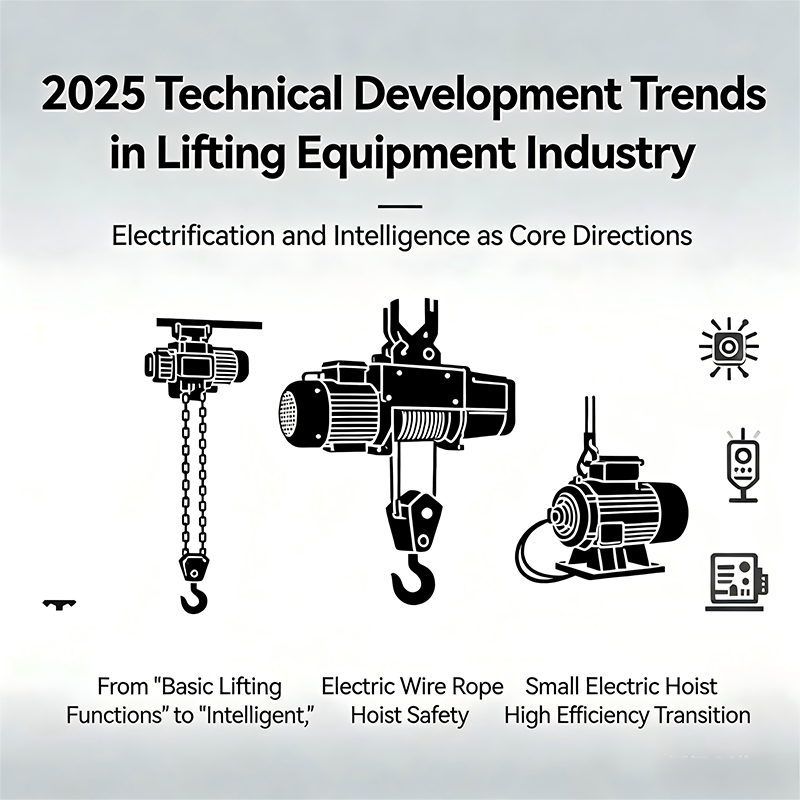
To help industry users understand the shifting landscape, we present a detailed overview of the key trends driving the global lifting equipment market in 2025.
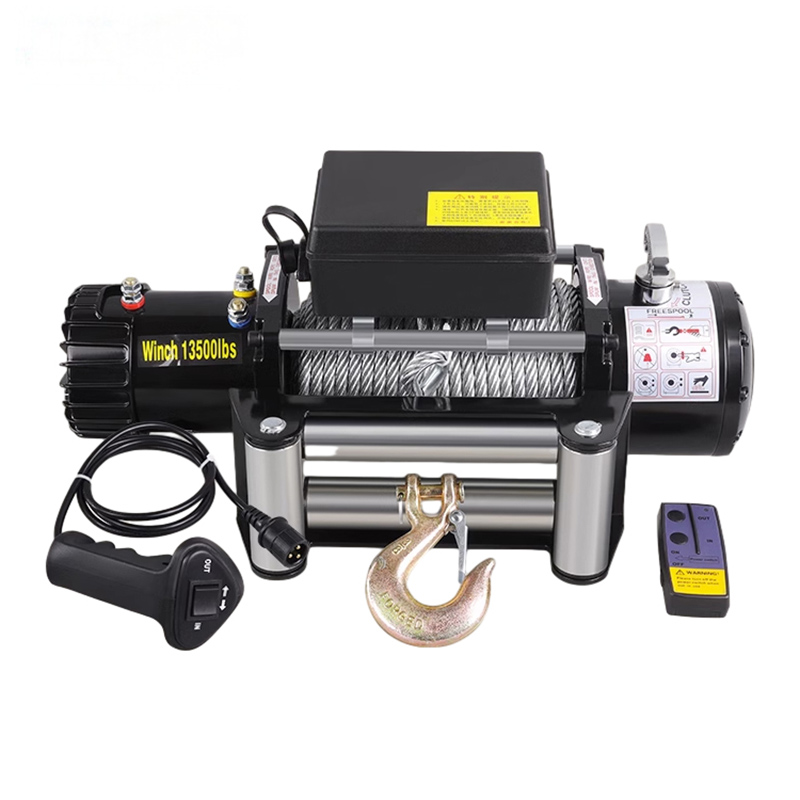
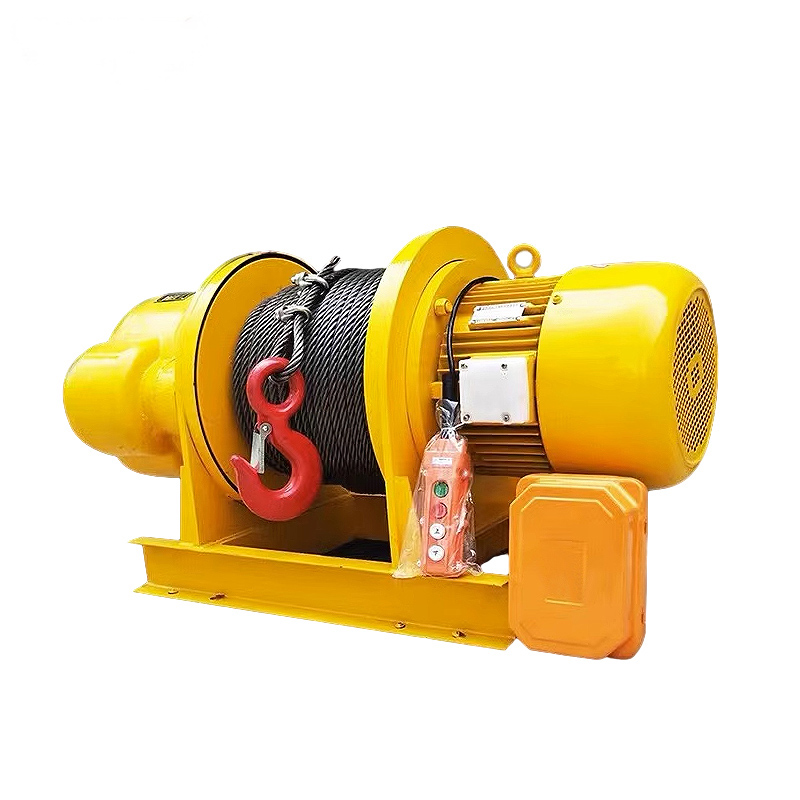
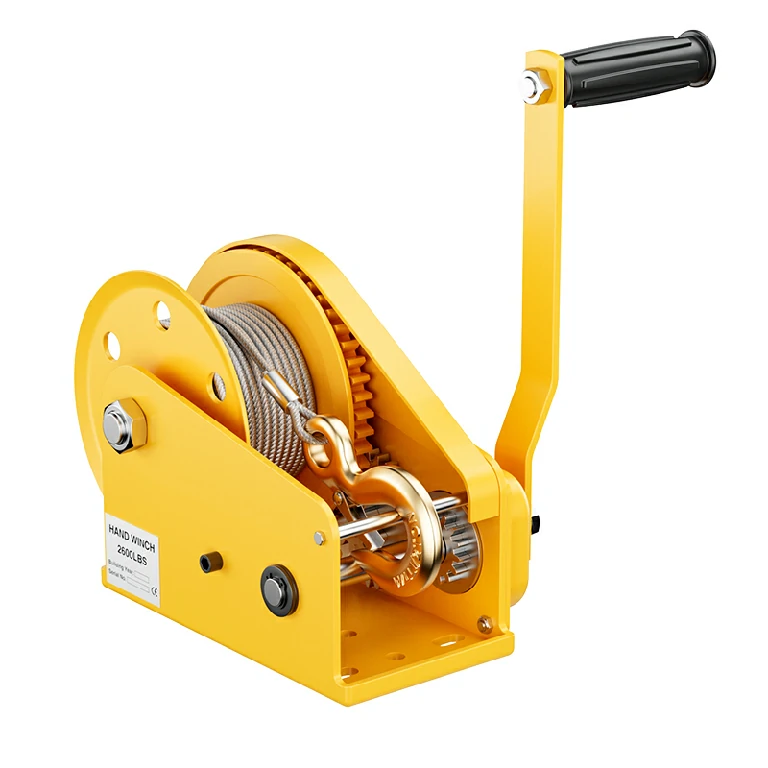
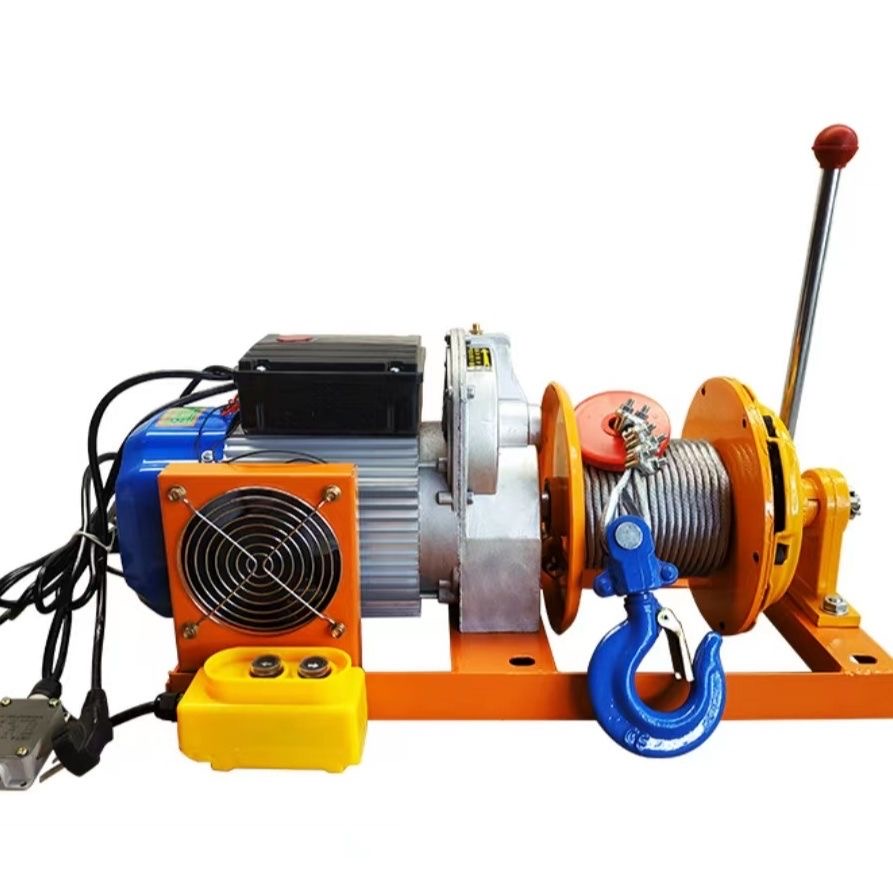
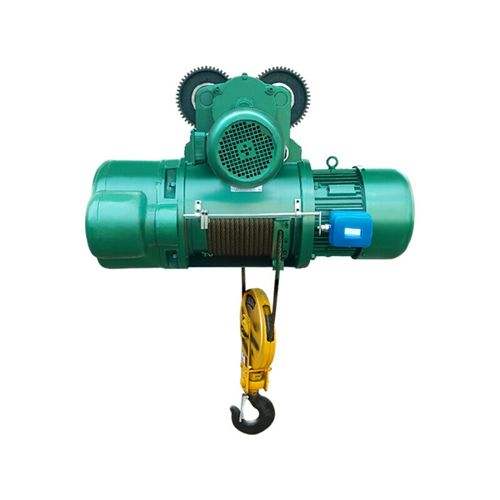
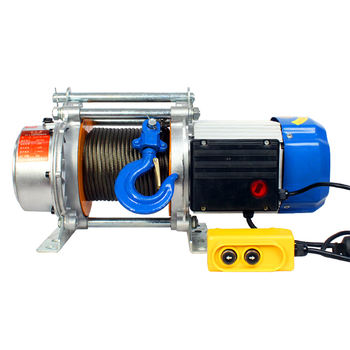
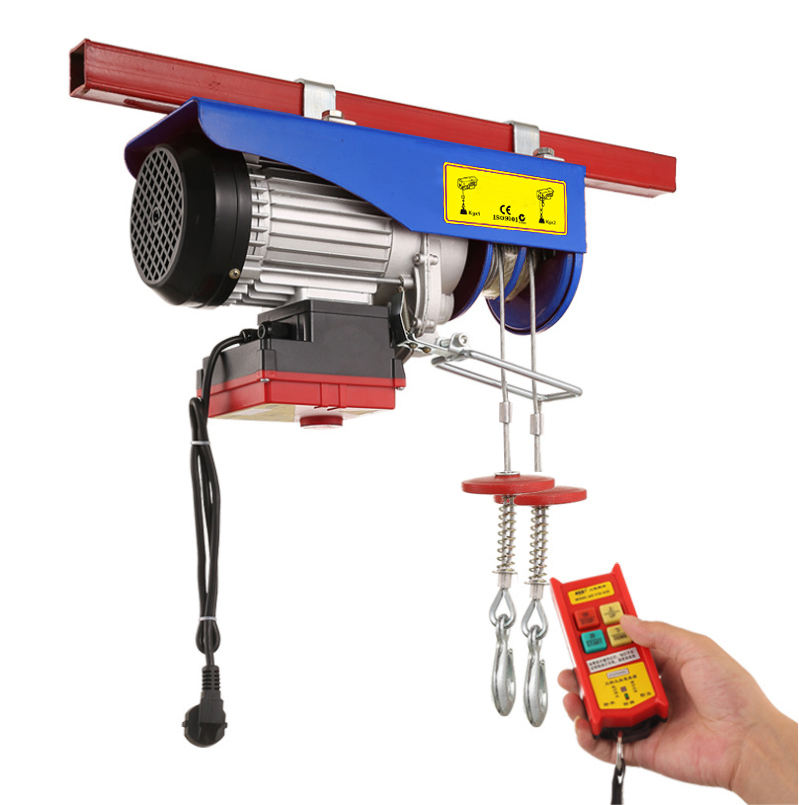
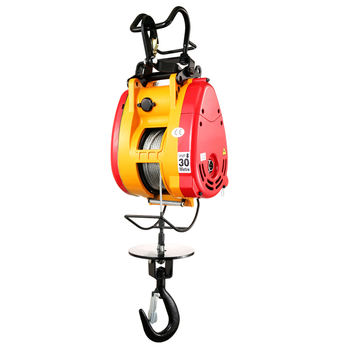
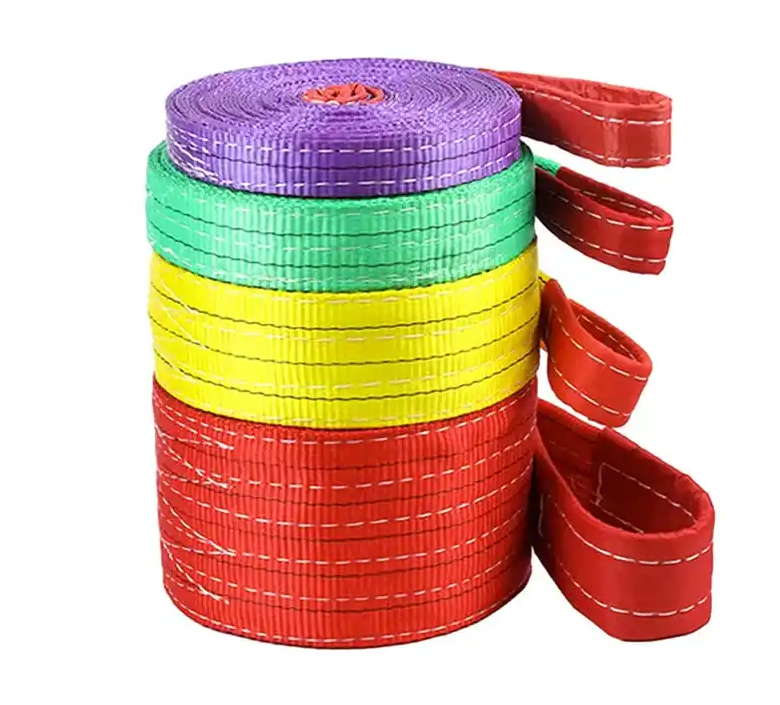
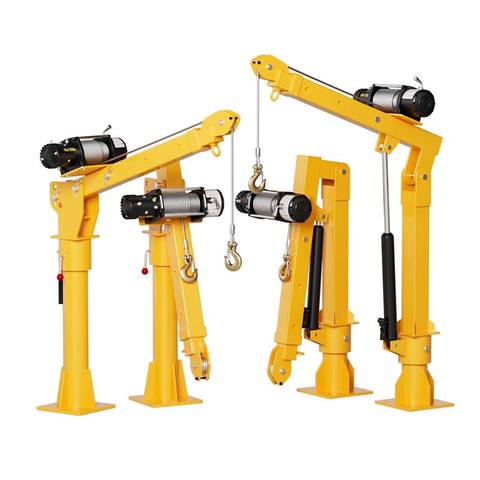
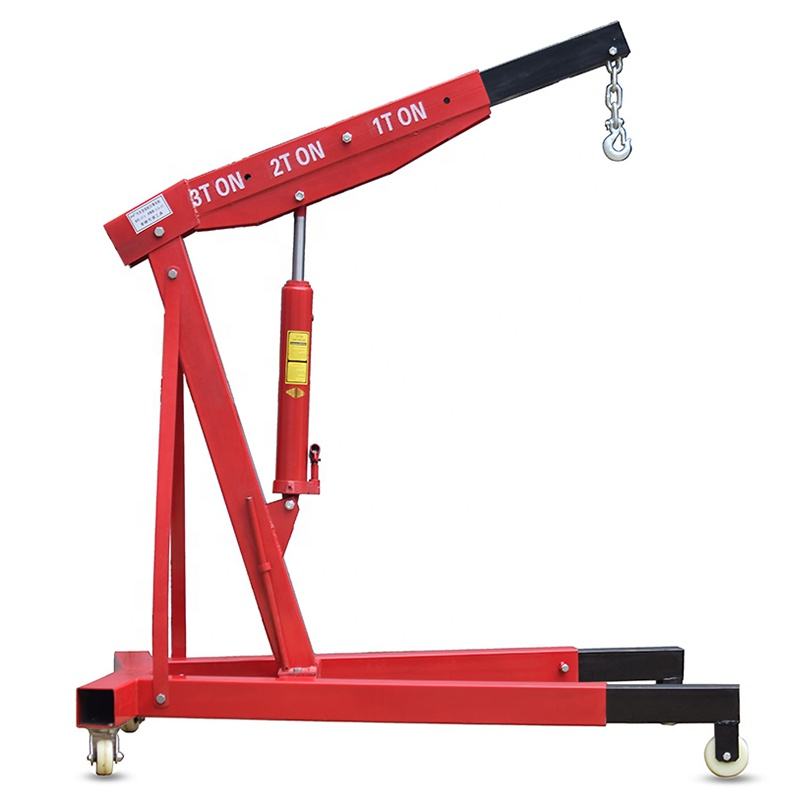
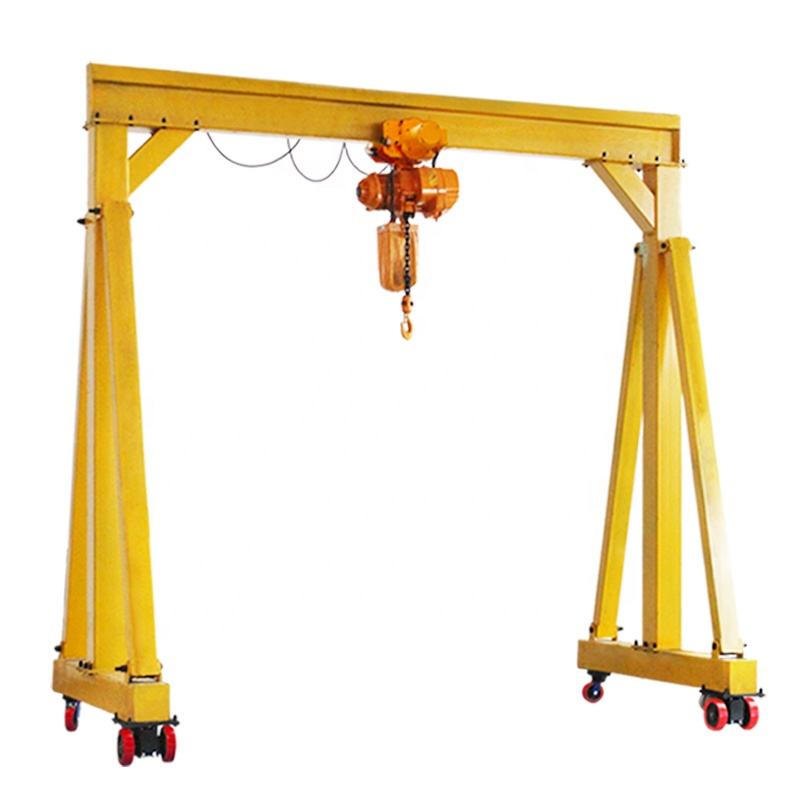
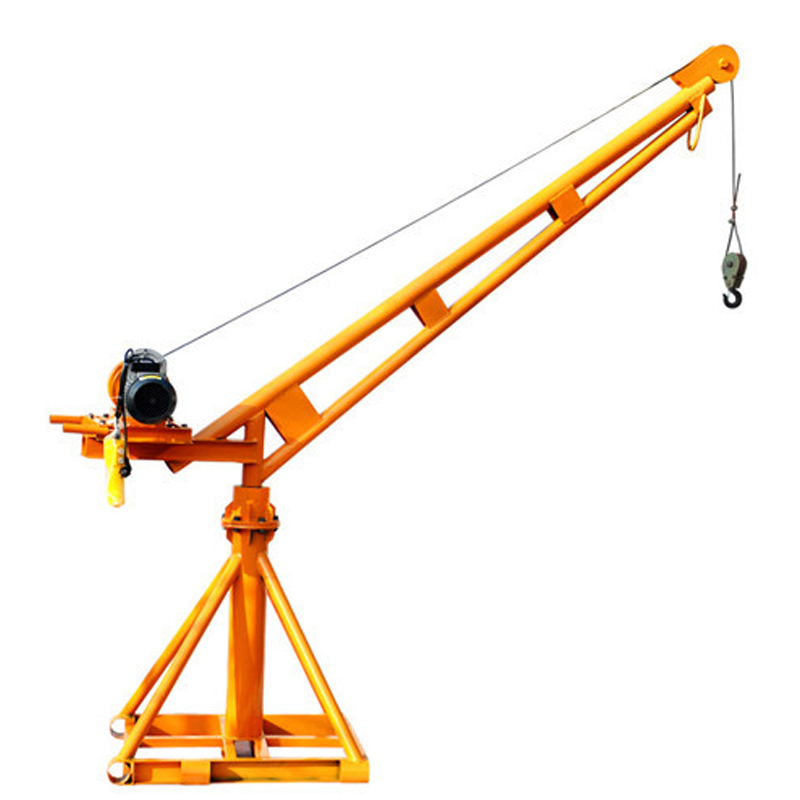
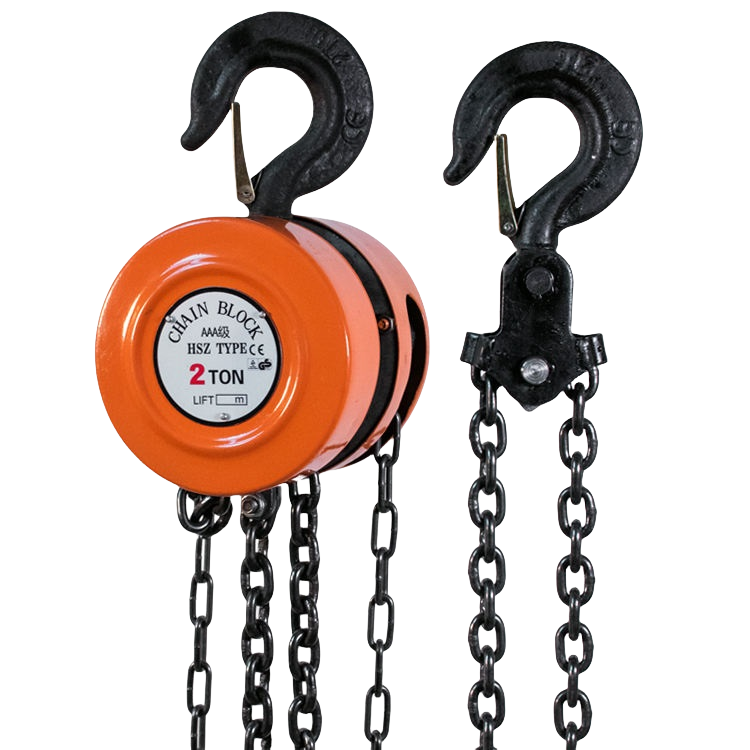
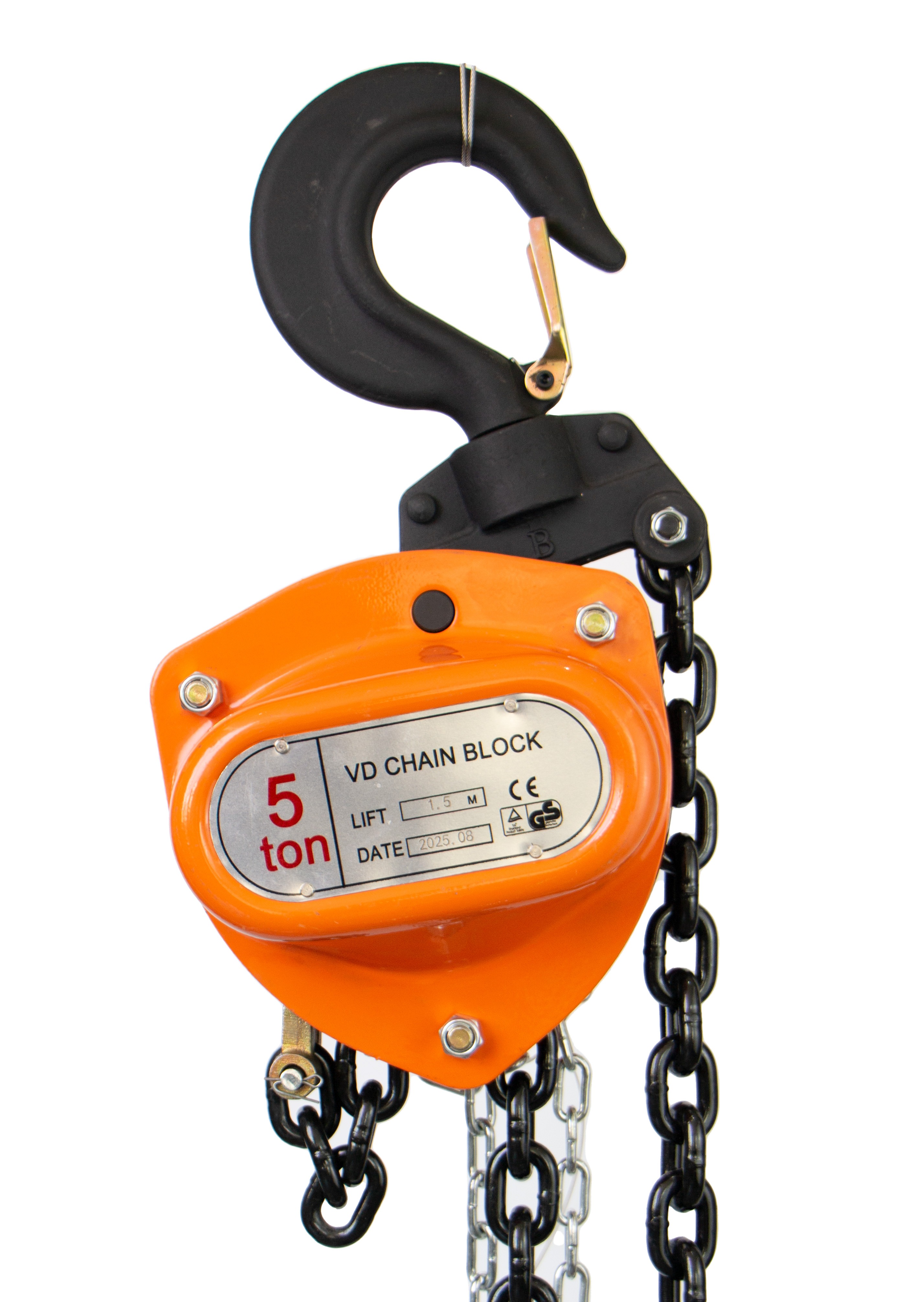
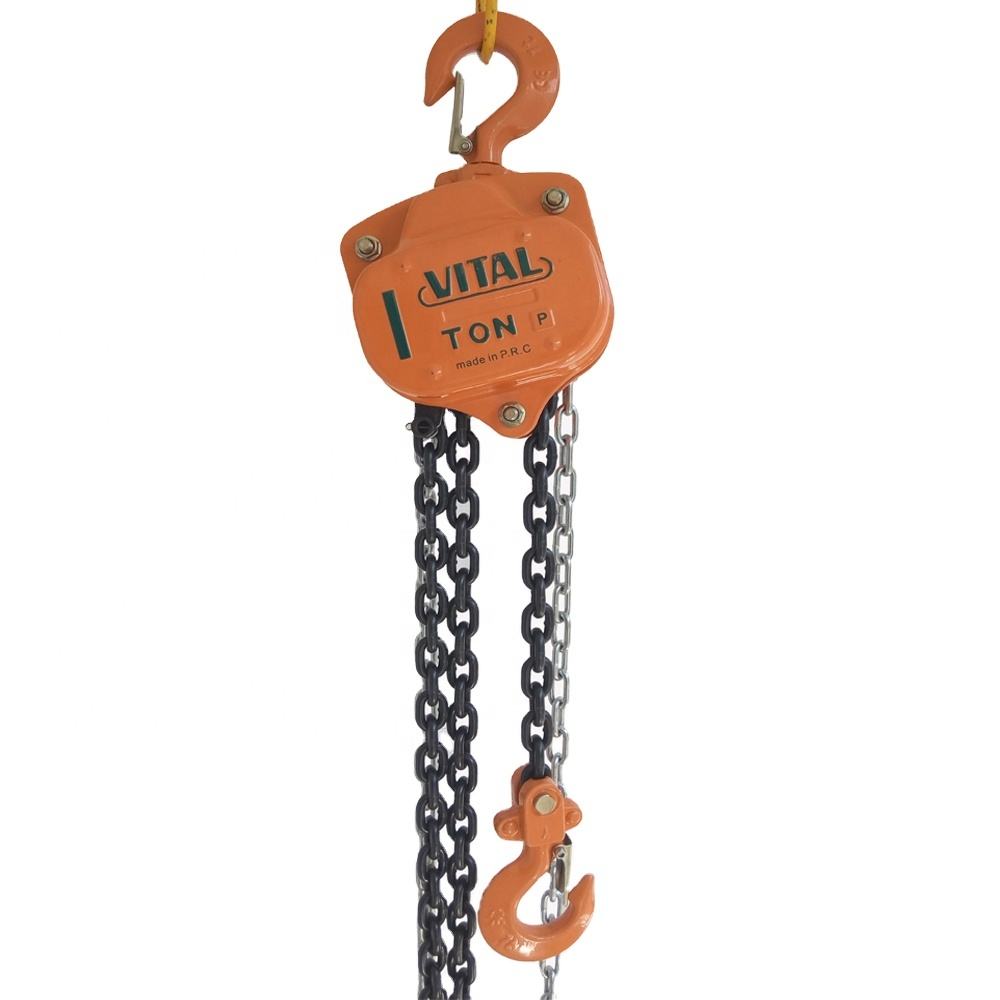
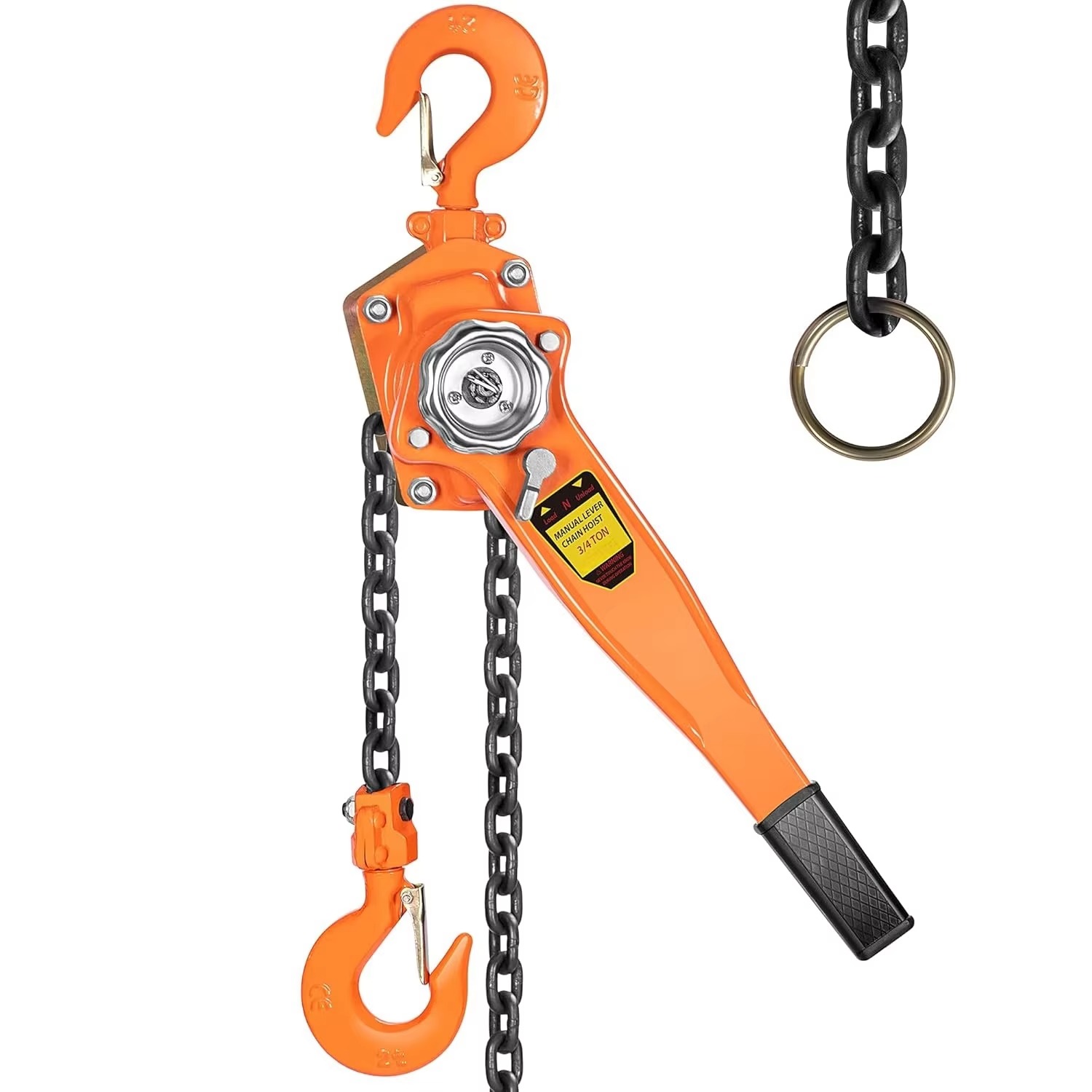
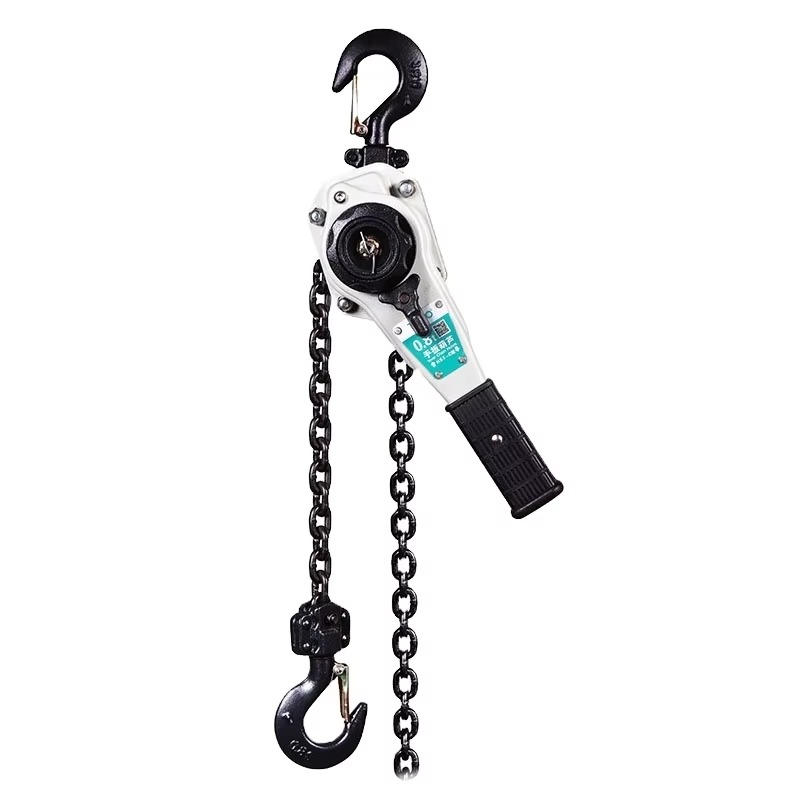
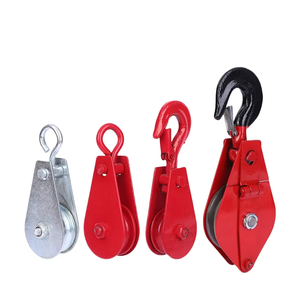
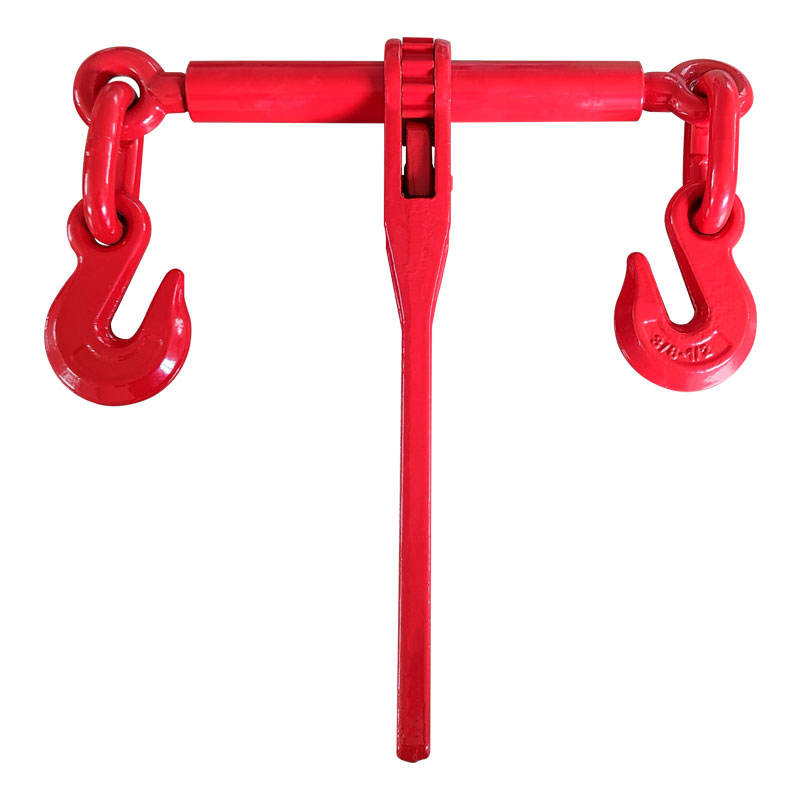
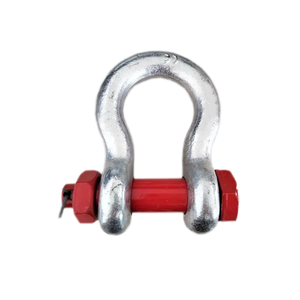
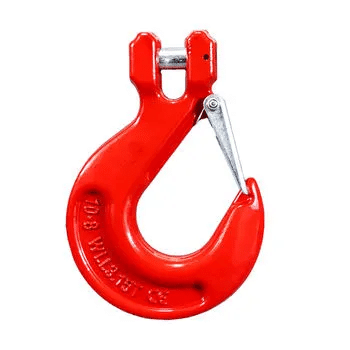
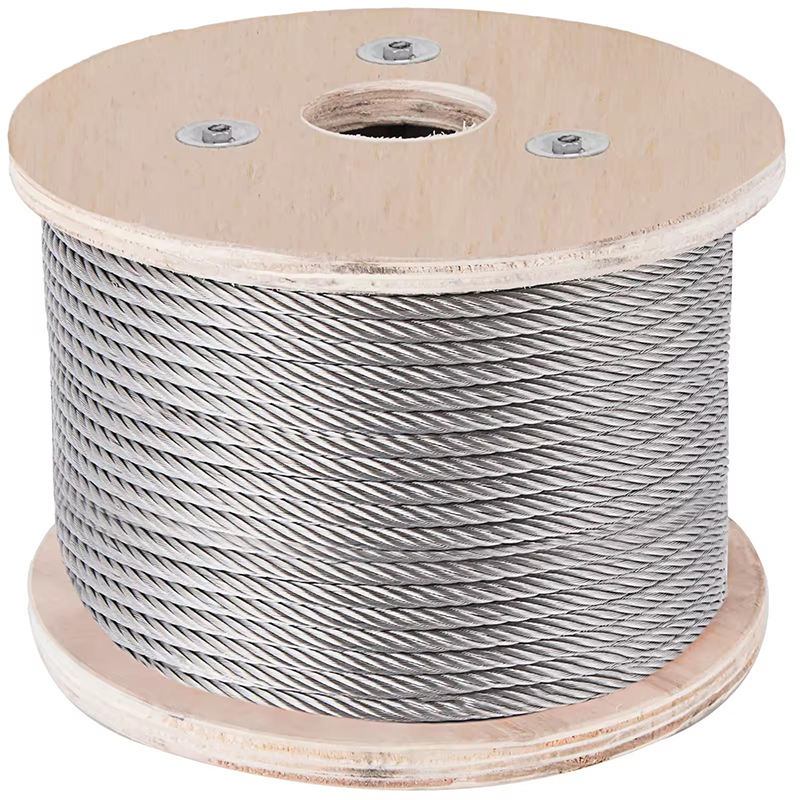
Products such as electric hoists, electric winches, wire rope hoists, chain slings, and lifting beams are seeing the fastest increase in global demand.

The focus of lifting equipment development is shifting rapidly from basic functionality to intelligent, safer, and more efficient solutions.
Electrification Becomes Mainstream√ More precise safety control
These technologies are transitioning from optional add-ons to standard configurations.
Customers are increasingly favoring suppliers that provide full documentation, quality traceability, and strict testing reports.
These products are growing faster because they offer lower cost, simple installation, and wide usability.
Manufacturers with independent production capability + engineering expertise + global after-sales support are becoming the preferred partners.
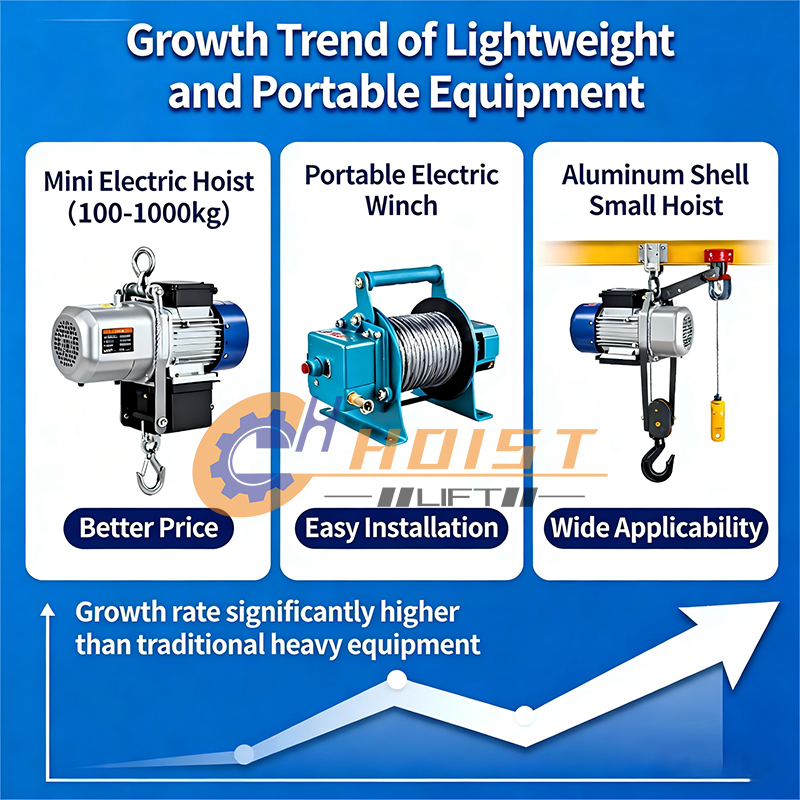
The global market is expected to reach a new peak by 2027.
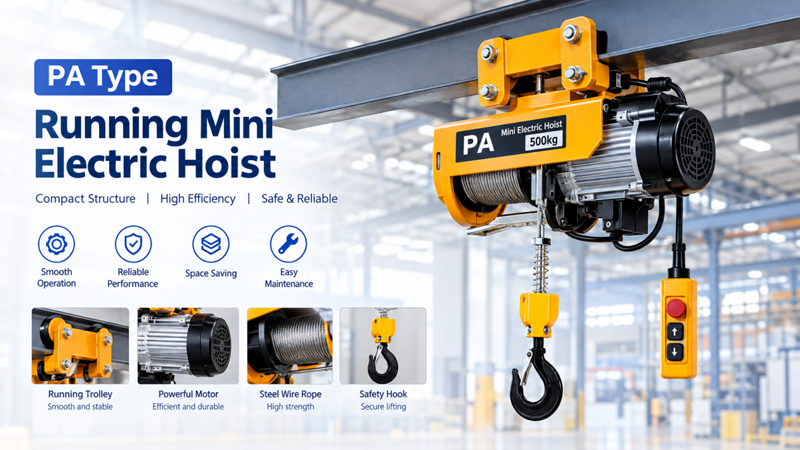
Learn about PA type running mini electric hoist, including key selection factors, typical applications, safety operation tips for small lifting jobs.
2026-10-20View More →
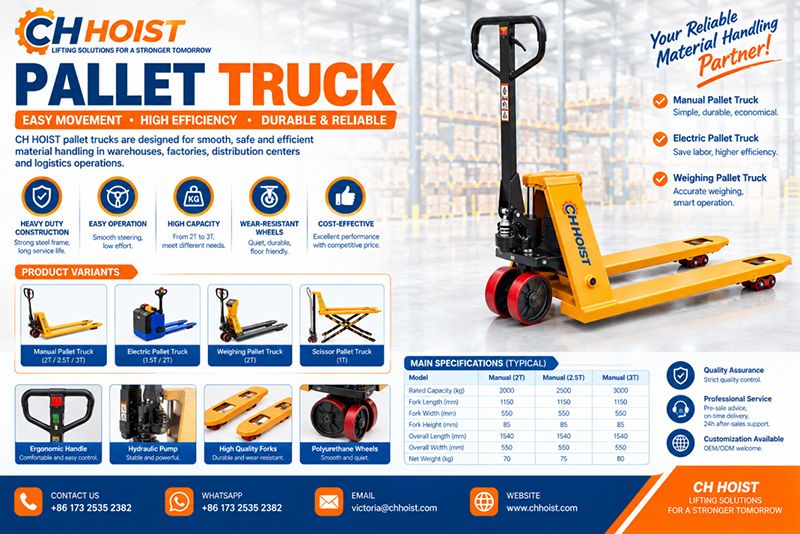
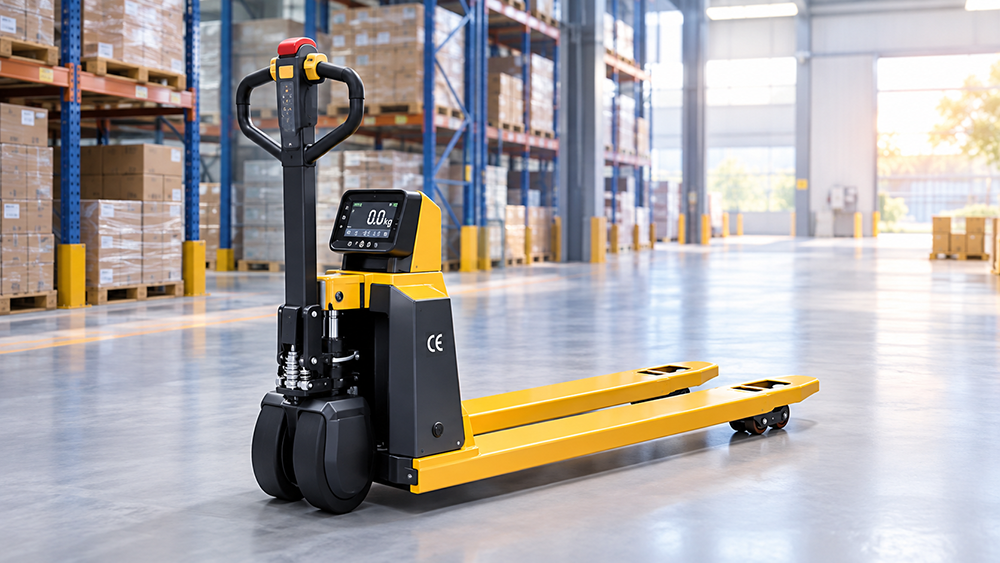
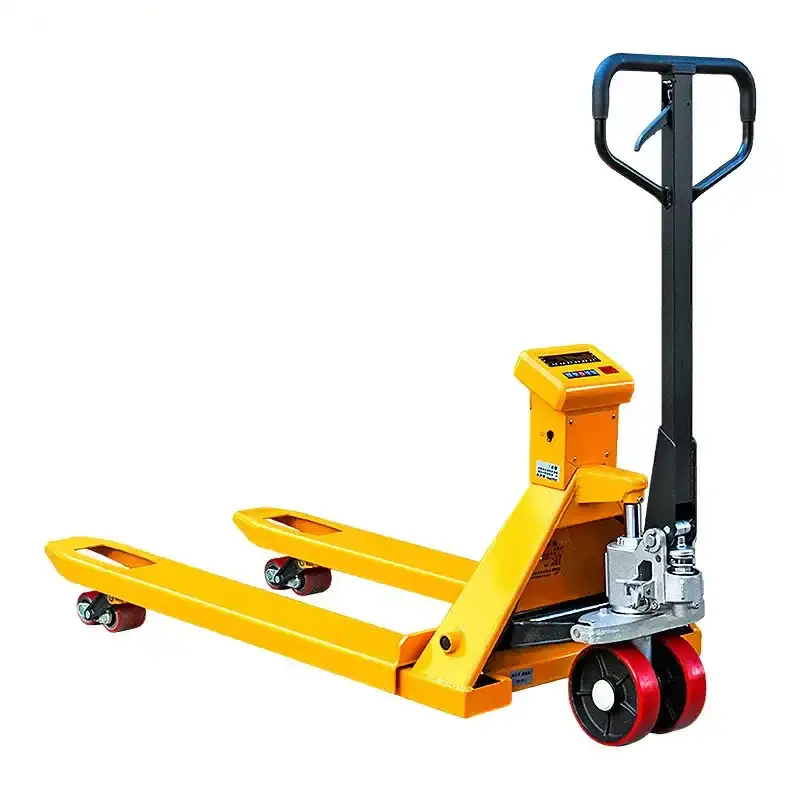
A pallet truck, also known as a pallet jack or pallet trolley, is one of the most practical tools for transporting palletized materials over short distances. Compared with moving goods manually, pallet trucks help reduce physical effort, improve workflow, and make warehouse operations more efficient.
2026-10-19View More →
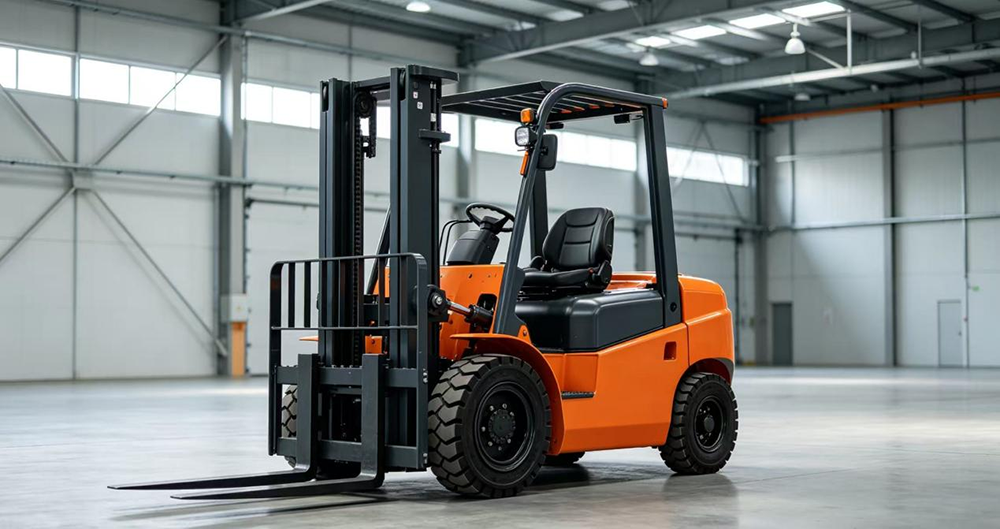
In recent years, with the continuous global promotion of green manufacturing, low-carbon industrial policies, intelligent warehouse transformation and rapid expansion of cross-border e-commerce logistics, the traditional diesel forklift market has shown obvious shrinking trends. At the same time, electric counterbalance forklifts have ushered in explosive growth worldwide.
2026-10-16View More →


 Tel:
+8613653129869
Tel:
+8613653129869
 Whatsapp:
+8613653129869
Whatsapp:
+8613653129869
 Email:
chuanghehoist@gmail.com
Email:
chuanghehoist@gmail.com
 Address:Donglu Village, Donglu Township, Qingyuan District, Baoding City, Hebei Province

 English
 Français
 Español


 Email
Email +8613653129869
 +8613653129869
 Home
Home Whatsapp
 chuanghehoist@gmail.com