


If you have any questions, please contact our online customer service staff immediately
 Click:4
Edit: Chuanghe Hoisting
 Time:2026-11-02 17:35:43
How to Choose the Right Ratchet Tie Down Strap for Trucks, Warehouses, Logistics, and Industrial Transportation
Cargo safety is an essential part of transportation and logistics. Whether securing machinery, steel materials, construction equipment, or palletized goods, choosing the correct cargo-securing equipment helps reduce movement during transportation and protects both products and people.
Ratchet tie down straps are widely used because they offer adjustable tension, convenient operation, and reliable cargo restraint when selected and used correctly.
For importers, wholesalers, distributors, and industrial buyers, understanding the different types of ratchet straps is important when sourcing products for the transportation and material-handling markets.
This guide explains how ratchet tie down straps work, their common applications, key specifications, safety requirements, and how to choose the right products for your business.

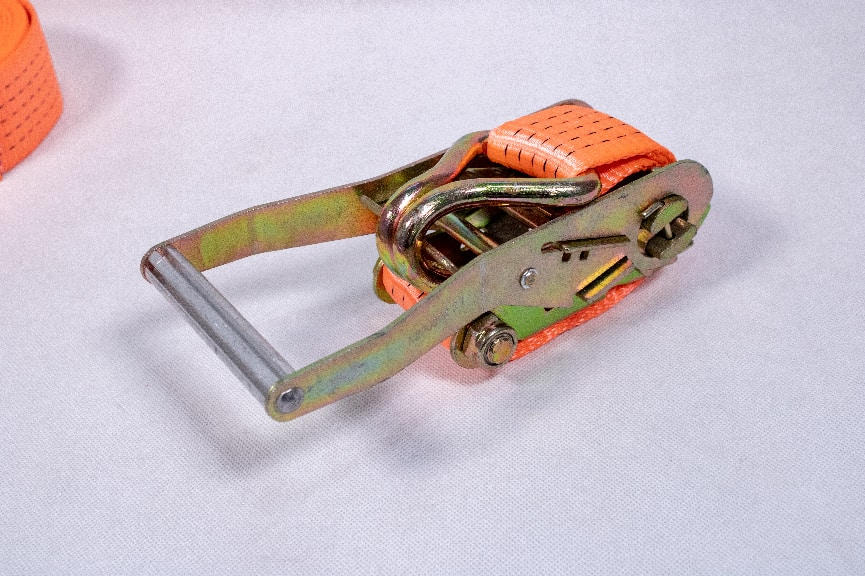
A ratchet tie down strap is a cargo-securing device consisting of a woven webbing strap, a ratchet tensioning mechanism, and suitable end fittings such as hooks or other connectors.
The ratchet mechanism allows the operator to tighten the strap around or across a load. Once properly tensioned and secured, the strap helps restrain cargo from shifting during transportation.
Ratchet straps are commonly used for:
Securing machinery on flatbed trucks
Holding construction equipment during transportation
Restraining palletized goods
Securing steel products and industrial materials
Transporting furniture and commercial goods
Fastening equipment to trailers and transport vehicles
A ratchet tie down strap is designed for cargo restraint, not for lifting suspended loads. It must never be used as a lifting sling unless the product is specifically designed, marked, and approved for that purpose.
The ratchet mechanism uses a handle, gear, pawl, and axle to tighten the webbing.
The basic operating process is:
· Select a strap with suitable capacity, length, and fittings.
· Inspect the webbing, ratchet mechanism, stitching, and hooks.
· Attach the end fittings to suitable and rated anchor points.
· Position the strap according to the cargo-securing plan.
· Feed the loose webbing through the ratchet axle.
· Operate the handle to gradually tighten the strap.
· Engage the locking mechanism and check that the cargo is properly restrained.
· After transportation, release the ratchet carefully and remove the strap.
The required tension and securing arrangement depend on cargo weight, dimensions, friction, anchor points, transport conditions, and applicable regulations.
Different cargo and transportation conditions require different strap configurations.
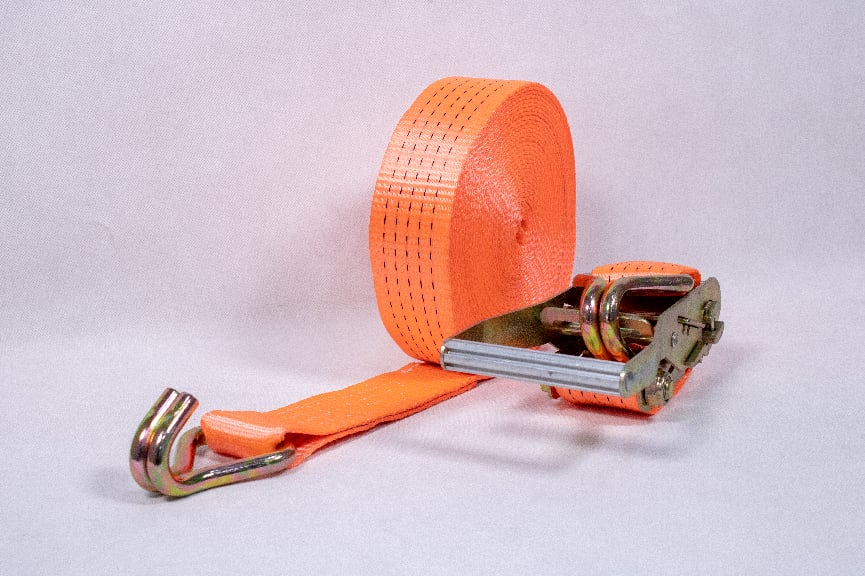
<image-placeholder>Standard ratchet tie down strap with hooks</image-placeholder>
Standard ratchet straps are commonly used for general cargo securing. They usually consist of polyester webbing, a ratchet buckle, and end hooks.
Typical applications:
·
General truck transportation
Securing pallets and packaged goods
Moving furniture and appliances
Light and medium-duty cargo restraint
·
Buyers should confirm the working load limit, strap width, length, hook design, and applicable product markings.
<image-placeholder>Heavy-duty cargo ratchet straps</image-placeholder>
Heavy-duty ratchet straps are designed for demanding cargo-restraint applications, subject to their specified capacity and configuration.
They may be used for:
Heavy machinery transportation
Steel products and industrial materials
Construction equipment
Commercial freight transportation
The strap's rated capacity must be suitable for the actual securing arrangement. A wider strap or stronger-looking buckle does not automatically mean that the complete assembly has a higher rated capacity.
<image-placeholder>Endless ratchet strap loop</image-placeholder>
Endless ratchet straps are designed without conventional end hooks. The webbing forms a loop around the cargo or suitable securing points.
They can be useful for:
Bundling products
Securing compact cargo
Holding packaged materials together
Applications where hook fittings are not suitable
The user must ensure that the strap is compatible with the cargo and that the configuration does not create damaging pressure or sharp-edge contact.
The end fitting determines how the strap connects to the vehicle or anchor point.
Common configurations include:
End Fitting | Typical Application |
Double J Hook | Connecting to compatible vehicle anchor points |
Flat Hook | Attaching to suitable flat anchor rails |
Wire Hook | Connecting to compatible anchor rings or fittings |
S Hook | General-purpose securing where the anchor is suitable |
Other specialized fittings | Specific vehicle or cargo-restraint systems |
The hook must be compatible with the anchor point and must not be overloaded or positioned in a way that allows it to disengage.
When comparing ratchet straps, buyers should pay attention to the following specifications.
Specification | Description |
Webbing Material | Commonly polyester |
Strap Width | Determines the webbing size and is one factor in product selection |
Strap Length | Must suit cargo dimensions and securing configuration |
Lashing Capacity (LC) | Indicates the rated lashing capacity under the specified conditions |
Standard Hand Force (SHF) | Standardized hand force used in calculating lashing performance |
Standard Tension Force (STF) | Standardized tension force generated by the tensioning device under specified conditions |
End Fittings | Hooks or other connectors compatible with anchor points |
Ratchet Buckle | Mechanism used to tension and secure the webbing |
Product Marking | Identifies ratings, manufacturer, and relevant information |
These terms are important when sourcing cargo-lashing equipment.
Lashing Capacity (LC): The maximum force that a lashing assembly is designed to sustain under the specified conditions. It is not the same as lifting capacity.
Standard Hand Force (SHF): The standardized force applied by the operator to the tensioning device for rating purposes.
Standard Tension Force (STF): The standardized tension force achieved by the tensioning device under specified test conditions.
For importers, LC and STF should not be confused. They describe different aspects of cargo restraint performance.
Always refer to the product label and applicable standards when comparing products.
Both ratchet straps and cam buckle straps are used for cargo securing, but they have different tensioning mechanisms.
Comparison | Ratchet Tie Down Strap | Cam Buckle Strap |
Tensioning Method | Ratchet mechanism | Manual cam buckle |
Tightening | Handle-operated | Pulled manually |
Typical Applications | General and heavier cargo restraint, within rated limits | Lighter-duty securing applications, within rated limits |
Operation | Requires operating the ratchet handle | Simple manual operation |
Tension Adjustment | Ratchet mechanism provides controlled tightening | Tension depends on manual pulling |
Selection Factors | LC, STF, webbing, buckle, hooks | Rated capacity, buckle, webbing, and fittings |
Neither type is suitable for every application. The correct choice depends on cargo weight, dimensions, securing method, required restraint force, and the product's rated specifications.
Ratchet straps are used across many industries.
Truck operators and logistics companies use ratchet straps to secure cargo during road transportation.
Suitable straps can restrain compatible construction materials and equipment during delivery between project sites.
Industrial machines, generators, and other equipment may require a carefully planned cargo-restraint arrangement.
Ratchet straps can help secure bundled goods and packaged products during handling and transportation.
They may be used to secure compatible agricultural equipment and materials during transport.
Ratchet straps can be used in properly designed arrangements for securing steel products, pipes, timber, and other compatible materials.
For all applications, the load must be restrained using suitable equipment and an appropriate securing plan.
Choosing a suitable strap requires more than selecting a length and width.
Understand the total cargo weight, shape, dimensions, center of gravity, and how the load may move during transportation.
Consider the transportation direction, expected acceleration forces, friction between the cargo and vehicle deck, and the number and arrangement of lashings.
Follow the applicable cargo-securing regulations and use a suitable calculation method where required.
Check the LC marking on the strap assembly. Do not assume that LC is equal to the cargo weight or lifting capacity.
The strap must be long enough for the securing arrangement without excessive unused webbing. Its width and construction must meet the required rating.
Check that hooks and connectors fit the vehicle's anchor points securely and are rated for the intended application.
Sharp edges, abrasive surfaces, and rough corners can damage webbing. Use suitable edge protection when necessary.
For commercial purchasing, request product labels, rated specifications, instructions, and relevant conformity or test documentation.
Correct operation is essential for cargo safety.
Follow these important practices:
Check the label and rated capacity before use.
Never exceed the rated lashing capacity.
Use suitable and rated anchor points.
Inspect the webbing for cuts, tears, abrasion, chemical damage, and other deterioration.
Check the ratchet for deformation, corrosion, and malfunction.
Ensure hooks are correctly engaged and cannot slip off.
Protect webbing from sharp edges.
Avoid twisting or knotting the strap.
Do not use damaged or unidentified straps.
Tighten the strap appropriately without damaging the cargo.
Recheck cargo restraint during transportation when required by the applicable procedure.
Release the ratchet carefully to avoid sudden movement or injury.
Important safety reminder: Never use a cargo tie down strap to lift a suspended load. Ratchet tie down straps and lifting slings have different design requirements and ratings.
Regular inspection helps identify defects before they lead to cargo-securing failures.
Look for:
Cuts, holes, and tears
Frayed or broken fibers
Severe abrasion
Heat or chemical damage
Damaged stitching
Faded or unreadable labels
Check for:
Bent or cracked metal components
Damaged teeth or pawls
Malfunctioning locking mechanisms
Deformed hooks
Corrosion or excessive wear
Loose or damaged connections
Clean the strap according to the manufacturer's instructions.
Allow wet straps to dry appropriately before storage.
Store in a clean, dry place.
Keep away from excessive heat, chemicals, and direct sources of damage.
Avoid placing heavy objects on stored webbing.
Remove defective straps from service.
Do not repair or modify a ratchet strap unless the manufacturer explicitly authorizes the repair.
For overseas buyers, selecting a reliable supplier is as important as choosing the right product.
A supplier with different strap widths, lengths, ratchet designs, and end fittings can support a wider range of customer requirements.
Ask about webbing materials, stitching quality, buckle construction, hook quality, and product inspection procedures.
The label should clearly identify the relevant ratings and product information required by applicable standards.
Depending on the supplier's capabilities, buyers may request customized strap lengths, colors, packaging, labels, and branding.
Confirm that the supplier can provide suitable export packaging, shipping documentation, and communication support.
Technical assistance helps distributors answer customer questions and select appropriate products for different cargo-restraint applications.
For wholesalers and distributors, accurate specifications and reliable product quality are important factors in building long-term customer relationships.
CH HOIST specializes in lifting equipment and material-handling solutions for international customers.
Our product portfolio includes:
Electric chain hoists
Wire rope electric hoists
Manual chain hoists
Lever hoists
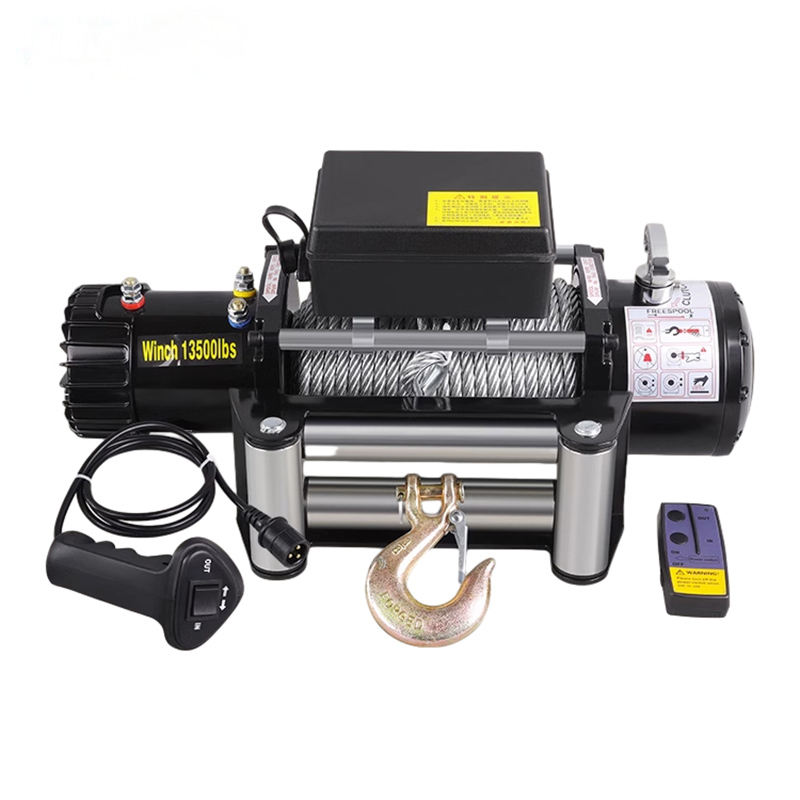
Electric winches
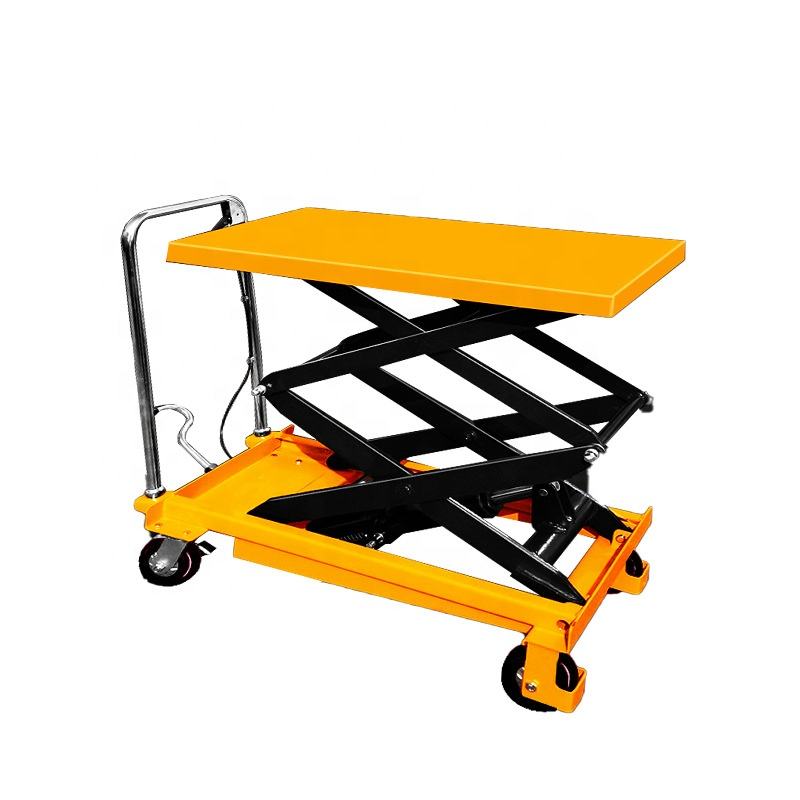
Pallet trucks
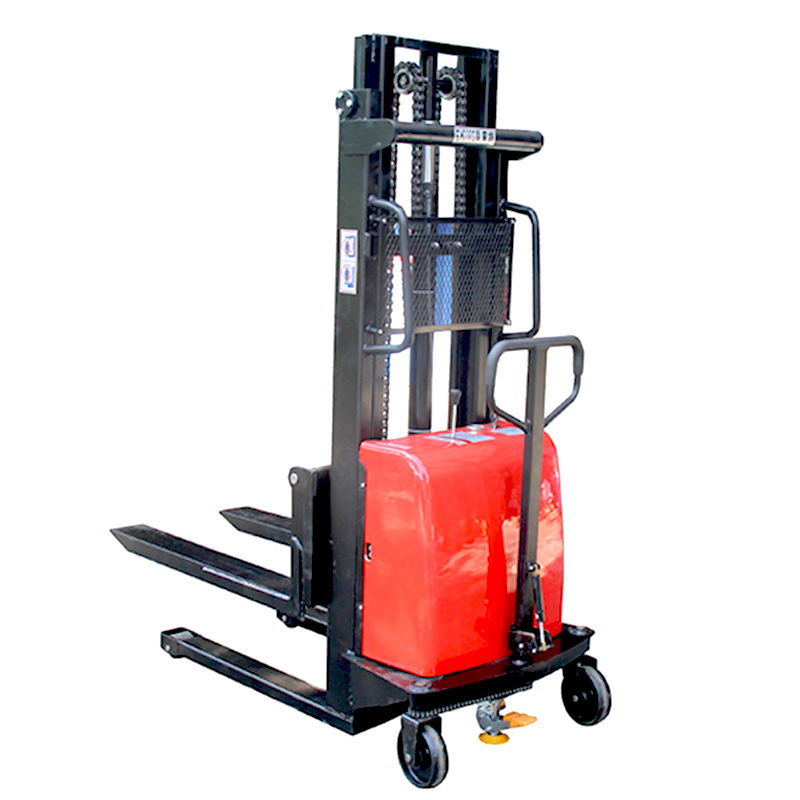
Electric and manual stackers
Lifting accessories and related equipment
We support overseas distributors, importers, wholesalers, and industrial buyers with product information and export-oriented service.
If you are sourcing ratchet tie down straps or other cargo-securing and lifting products, contact our team to discuss your requirements.
Q1: What is a ratchet tie down strap used for?
It is used to restrain cargo during transportation and prevent unwanted movement when correctly selected and installed.
Q2: Can ratchet straps be used for lifting?
Ordinary ratchet tie down straps are designed for cargo restraint, not lifting. Use properly rated lifting slings or other approved lifting equipment for suspended loads.
Q3: What is the difference between LC and STF?
LC refers to lashing capacity, while STF refers to the standardized tension force generated by the tensioning device under specified conditions. They are different ratings and should not be used interchangeably.
Q4: Which material is commonly used for ratchet straps?
Polyester is commonly used because of its strength and practical performance in cargo-restraint applications. The suitability of a strap still depends on its construction, ratings, and operating environment.
Q5: How do I select the correct strap length?
Consider the cargo dimensions, anchor-point locations, and the intended lashing arrangement. The strap should fit the application without unnecessary excess webbing.
Q6: How often should ratchet straps be inspected?
Inspect straps before each use and follow the manufacturer's inspection requirements and applicable transportation regulations. Remove defective products from service.
Q7: Can ratchet straps be customized?
Depending on the manufacturer's capabilities, customization may include strap length, width, color, end fittings, labels, and packaging.
Ratchet tie down straps are essential cargo-restraint products for transportation, logistics, construction, warehousing, and industrial applications.
Selecting the right strap requires careful consideration of lashing capacity, webbing material, length, end fittings, anchor points, and cargo characteristics.
How to Choose the Right Ratchet Tie Down Strap for Trucks, Warehouses, Logistics, and Industrial Transportation Cargo safety is an essential part of transportation and logistics. Whether securing machinery, steel materials, construction equipment, or palletized goods, choosing the correct cargo-securing equipment helps reduce movement during transportation and protects both products and people.
2026-11-02View More →
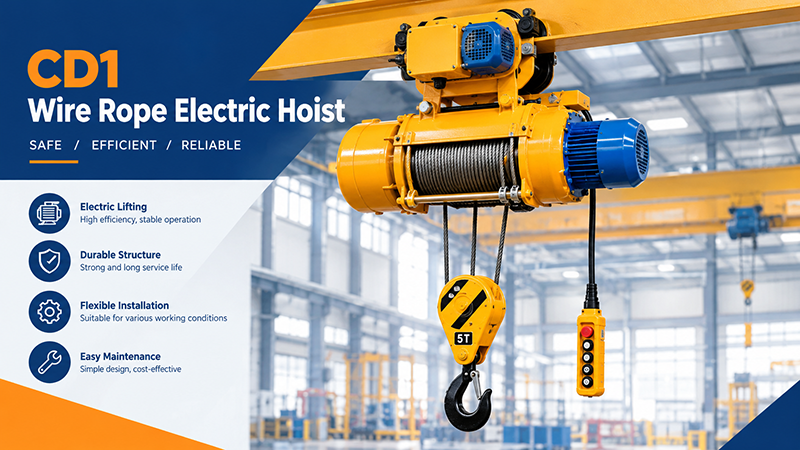
A CD1 wire rope electric hoist is a commonly used electric lifting device. In typical configurations, an electric motor drives a lifting mechanism that winds a wire rope around a drum, raising or lowering a load through a hook assembly.
2026-10-29View More →
In recent years, with the continuous development of global cross-border e-commerce, intelligent manufacturing, third-party logistics and industrial warehousing industries, the daily cargo turnover of factories, distribution centers, retail warehouses and freight yards has increased year by year.
2026-10-28View More →


 Tel:
+8613653129869
 Whatsapp:
+8613653129869
 Email:
chuanghehoist@gmail.com
 Address:Donglu Village, Donglu Township, Qingyuan District, Baoding City, Hebei Province

 English
 Français
 Español

 Email
 +8613653129869
 +8613653129869

 Home
 Whatsapp
 chuanghehoist@gmail.com