


If you have any questions, please contact our online customer service staff immediately
 Click:81
Edit: Chuanghe Hoisting
 Time:2026-10-16 09:13:08
In recent years, with the continuous global promotion of green manufacturing, low-carbon industrial policies, intelligent warehouse transformation and rapid expansion of cross-border e-commerce logistics, the traditional diesel forklift market has shown obvious shrinking trends. At the same time, electric counterbalance forklifts have ushered in explosive growth worldwide. More factories, distribution centers, cold storage parks, pharmaceutical workshops, food processing enterprises and large-scale logistics hubs are comprehensively eliminating high-pollution, high-noise and high-consumption internal combustion handling equipment and fully replacing them with high-efficiency, energy-saving, environmentally friendly and low-maintenance electric forklifts.
As one of the core equipment of modern warehouse handling systems, electric counterbalance forklifts play an irreplaceable role in pallet stacking, container loading and unloading, factory material transfer, goods sorting and high-level shelf storage. This news report will comprehensively analyze the industrial background, product classification, core performance advantages, detailed structural configuration, multi-scene application value, daily maintenance standards, market competition pattern, global demand trends and future development prospects of electric forklifts, providing professional industry reference for global buyers, logistics companies and equipment procurement enterprises.
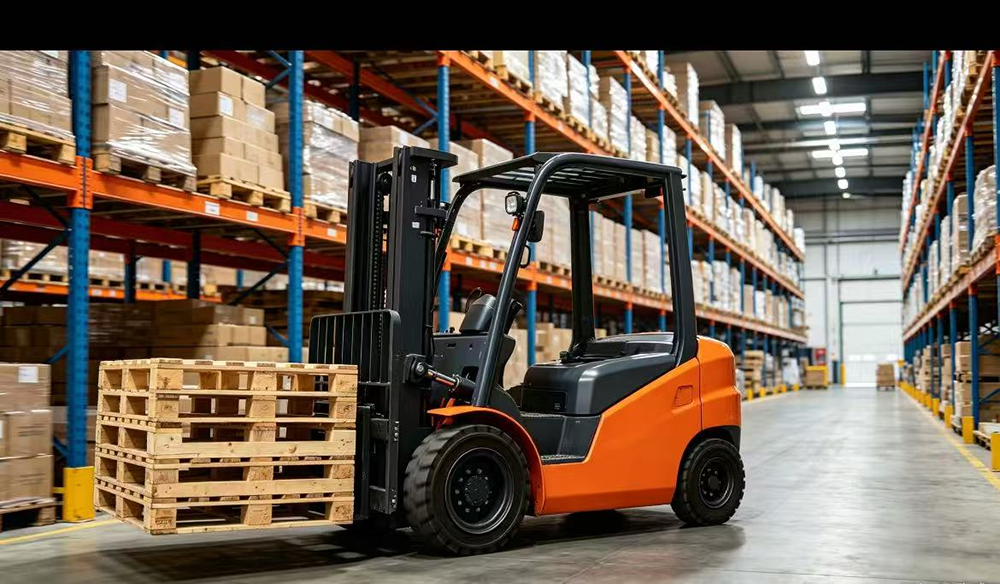
In Europe, Southeast Asia, Middle East and Latin American industrial zones, local governments have successively issued industrial environmental protection standards, clearly limiting the working time and operation scope of diesel forklifts in closed workshops, indoor warehouses and industrial parks. Exhaust emission detection, industrial noise control and factory carbon emission assessment have become rigid assessment indicators for enterprise production and operation. Traditional diesel forklifts produce a large amount of exhaust gas, particulate matter and engine noise during operation, which cannot meet the environmental certification requirements of modern standardized factories.
With the continuous fluctuation and overall rise of global fuel prices, the daily fuel consumption cost of diesel forklifts has become a heavy expenditure for logistics enterprises. In addition, diesel engines have complex mechanical structures, frequent wearing parts, regular oil replacement, filter replacement and engine maintenance, resulting in extremely high long-term maintenance costs. Compared with electric forklifts, diesel equipment has low cost performance in long-term factory operation.
Modern intelligent warehouses, automated sorting workshops and unmanned logistics parks require handling equipment with stable performance, low failure rate, precise control and low interference. Electric forklifts feature electronic control steering, stepless speed regulation, stable hydraulic lifting and intelligent protection functions, which perfectly match the operation logic of modern intelligent storage systems and have become the standard supporting equipment for new industrial parks.
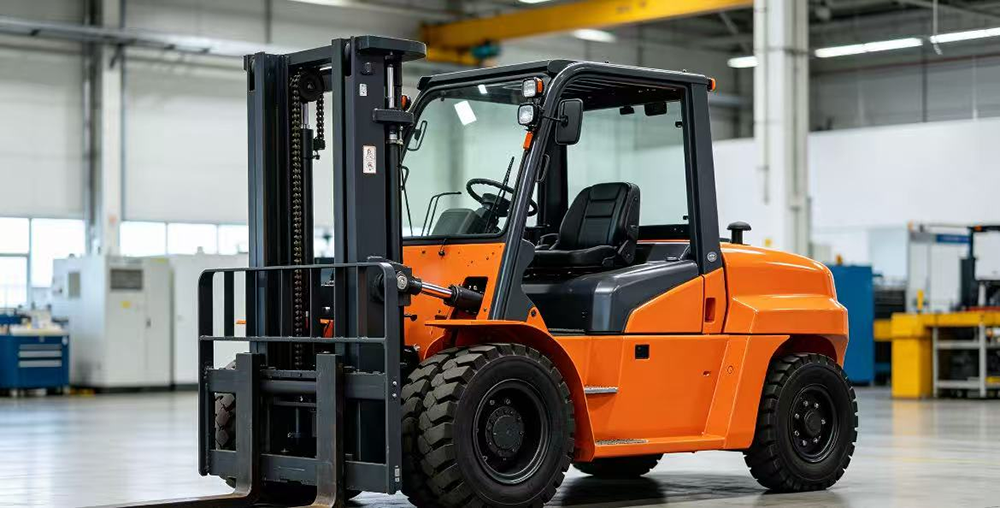
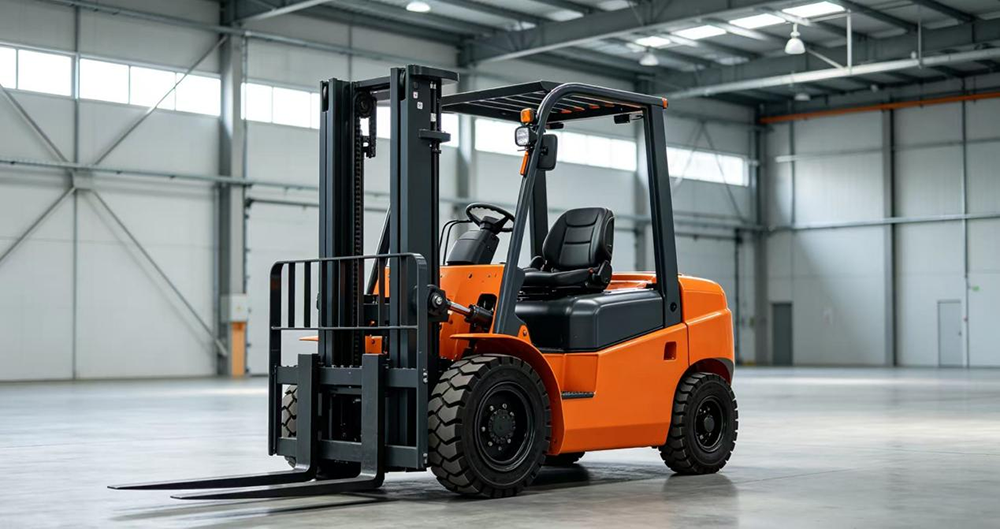
The electric counterbalance forklift is a battery-driven industrial handling vehicle. It adopts rear counterweight design to balance the front-end cargo weight, realizing safe lifting, stacking and short-distance handling of heavy pallet goods. Different from reach trucks and pallet trucks, counterbalance forklifts have larger load capacity, stronger ground adaptability and wider application range, and can independently complete all warehouse handling operations without auxiliary track equipment.
• Seated Electric Forklift: The most mainstream model in the market, suitable for long-time continuous work, comfortable driving vision, stable operation, widely used in large warehouses and factory assembly lines.
• Stand-on Electric Forklift: Compact body, flexible turning, suitable for narrow channel operation and small-space warehouse stacking.
The mainstream load specifications in the global market include 1.5-ton, 2-ton, 2.5-ton, 3-ton, 3.5-ton and 4-ton electric counterbalance forklifts, which can meet the handling needs of light, medium and heavy industrial goods respectively.
• Two-stage standard mast: suitable for conventional warehouse flat stacking and loading and unloading.
• Three-stage full free mast: ultra-high lifting height, suitable for high shelf warehouses, multi-layer goods stacking and high-space storage scenarios.
High-performance lead-acid battery or optional lithium battery is adopted, featuring large capacity, stable discharge, strong durability and long continuous working time. One full charge can support long-hour continuous warehouse operation, meeting the all-day working needs of logistics enterprises. The battery is equipped with overcharge protection, over-discharge protection and short-circuit protection systems to effectively extend battery service life and reduce equipment failure rate.
The whole machine adopts imported hydraulic components and integrated hydraulic station, with stable oil supply, uniform lifting force, no jitter during cargo ascending and descending, and accurate height control. The hydraulic system has the advantages of low noise, low oil leakage rate and strong wear resistance, which can ensure long-term stable high-frequency operation of the equipment.
The thickened steel gantry is integrally formed with high-strength structural steel, which has strong compression resistance and bending resistance and is not easy to deform under heavy load. The high-strength lifting chain is wear-resistant and tensile-resistant, with strong bearing capacity, ensuring safe lifting of heavy goods for a long time.
Equipped with overhead protective frame, anti-slip pedal, emergency stop button, safety restraint system and rear anti-collision structure. The whole vehicle complies with international industrial safety standards, effectively avoiding safety risks such as cargo falling, vehicle collision and overload operation, greatly improving the safety of factory operation.
Full solid rubber tires are adopted, which are puncture-proof, wear-resistant and pressure-resistant, adapting to complex workshop ground such as cement ground, floor ground and slightly uneven industrial ground. The low-center-of-gravity chassis and heavy rear counterweight ensure that the vehicle will not tilt or roll over when turning and lifting heavy loads.
The electric motor drives the whole machine without any exhaust gas, smoke and harmful gas emission during operation. It is fully suitable for closed indoor environments, food factories, beverage workshops, pharmaceutical production workshops, dust-free workshops and cold storage environments with extremely high environmental requirements, and will not cause any pollution to the production environment.
The electric driving system runs smoothly with low mechanical noise, which will not produce harsh engine noise like diesel forklifts. It effectively reduces workshop noise pollution, improves the working comfort of operators, conforms to modern factory humanized management standards, and helps enterprises pass industrial environmental assessment and safety assessment smoothly.
Electric energy consumption is far lower than diesel fuel cost. Under the same working load and working hours, the daily operating cost of electric forklift is only a fraction of that of diesel forklift. At the same time, the electric forklift has few mechanical wearing parts, no need for frequent oil change and engine maintenance, greatly reducing later maintenance labor costs and accessory replacement costs.
Electronic control speed regulation and hydraulic precise control make the start, stop, lifting and falling of goods very stable. There is no sudden acceleration or jitter, which effectively protects fragile goods, packaged goods and high-value industrial materials, greatly reduces cargo collision damage rate, and improves enterprise logistics benefit.
The operation interface of electric forklift is simple and intuitive, with sensitive control and easy learning. New operators can master proficient operation skills in a short time, reducing enterprise staff training cycle and training cost, and suitable for large-scale popularization in industrial assembly lines and logistics warehouses.
Suitable for daily pallet sorting, goods transfer, shelf storage and container loading and unloading of large e-commerce warehouses, supporting high-frequency and high-efficiency daily logistics operation.
Due to zero pollution and clean operation characteristics, it fully meets the strict hygiene and environmental protection standards of food processing and pharmaceutical production, and is the designated handling equipment for clean workshops.
Electric forklifts have strong low-temperature adaptability, stable battery discharge performance in low-temperature environment, no engine freezing failure, and are widely used in frozen food warehouses, fresh storage centers and cold chain logistics parks.
Used for raw material warehouse incoming and outgoing material handling, production line material transfer, finished product stacking and factory cargo turnover, helping factories realize standardized and efficient production and logistics docking.
Suitable for commercial commodity warehousing, bulk cargo turnover and port container auxiliary handling, with flexible operation and strong scene adaptability.
Check battery power, battery surface cleanliness and wiring firmness every day; inspect hydraulic oil level, no oil leakage in pipeline; check tire wear, brake sensitivity and gantry chain tightness to ensure no abnormal noise and stuck phenomenon.
Avoid over-discharge and long-term full charge, regularly clean battery dust and electrolyte stains, keep the battery ventilated and dry, and extend the overall service life of the battery pack.
Regularly replace hydraulic oil according to working hours, clean hydraulic filter elements, ensure smooth oil circuit, and maintain stable lifting power of the gantry.
Strictly prohibit overload operation, prohibit sharp turning at high speed, prohibit sudden stop and sudden start with heavy load; operators must wear safety protective equipment and standardize driving to avoid safety accidents.
At present, Southeast Asia, Central Asia, the Middle East, Africa and South America are in a period of rapid industrial construction and warehouse expansion. A large number of new factories and logistics parks are being built, and the demand for medium and small tonnage electric forklifts is growing rapidly. Buyers pay more attention to stable quality, low failure rate, affordable price and perfect after-sales service.
Affected by equipment budget and actual warehouse demand, many small and medium-sized enterprises tend to purchase high-quality used electric forklifts represented by Toyota brand. Such equipment has stable performance, durable body, low depreciation rate and cost-effective price, which is very popular in emerging markets.
With the upgrading of industrial intelligence, lithium battery electric forklifts, intelligent constant-speed handling, automatic safety recognition and remote monitoring functions will gradually become the mainstream configuration of new generation forklifts, further promoting the intelligent and green upgrading of the global material handling industry.
Enterprises should select the appropriate electric forklift model according to their actual warehouse height, channel width, single cargo weight, working environment temperature and daily working hours. For high shelf warehouses, it is recommended to choose three-stage mast high-lifting models; for cold storage environments, choose low-temperature resistant enhanced models; for long-time high-frequency work, prioritize high-capacity battery and high-strength body configuration. Choosing professional and reliable suppliers can ensure stable equipment quality, complete accessories supply and long-term after-sales guarantee.
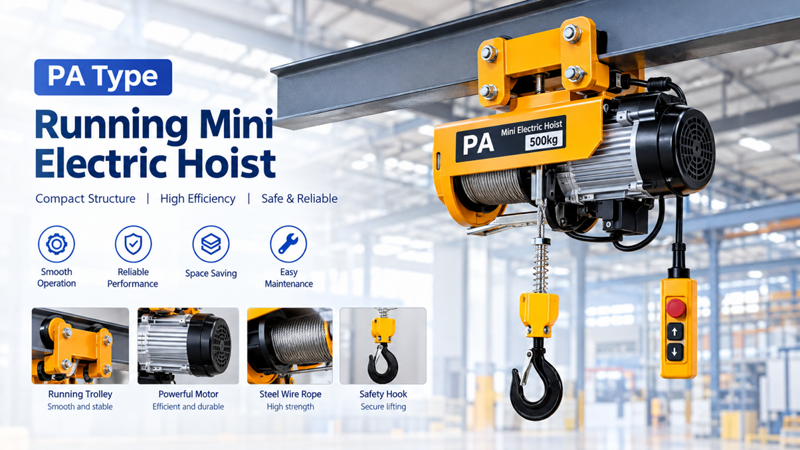
Learn about PA type running mini electric hoist, including key selection factors, typical applications, safety operation tips for small lifting jobs.
2026-10-20View More →
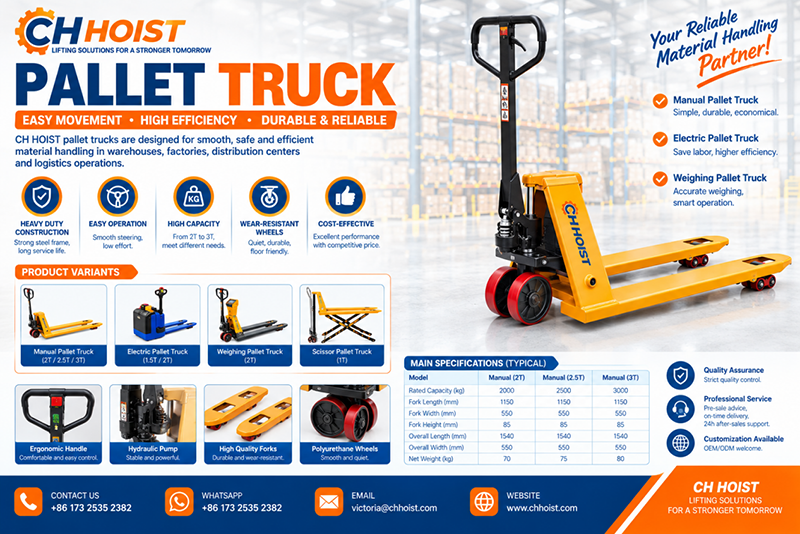
A pallet truck, also known as a pallet jack or pallet trolley, is one of the most practical tools for transporting palletized materials over short distances. Compared with moving goods manually, pallet trucks help reduce physical effort, improve workflow, and make warehouse operations more efficient.
2026-10-19View More →
In recent years, with the continuous global promotion of green manufacturing, low-carbon industrial policies, intelligent warehouse transformation and rapid expansion of cross-border e-commerce logistics, the traditional diesel forklift market has shown obvious shrinking trends. At the same time, electric counterbalance forklifts have ushered in explosive growth worldwide.
2026-10-16View More →


 Tel:
+8613653129869
 Whatsapp:
+8613653129869
 Email:
chuanghehoist@gmail.com
 Address:Donglu Village, Donglu Township, Qingyuan District, Baoding City, Hebei Province

 English
 Français
 Español

 Email
 +8613653129869
 +8613653129869

 Home
 Whatsapp
 chuanghehoist@gmail.com