


If you have any questions, please contact our online customer service staff immediately
 Click:427
Edit: Chuanghe Hoisting
Click:427
Edit: Chuanghe Hoisting Time:2026-09-01 10:26:35
Efficient material handling is essential for warehouses, factories, logistics centers, supermarkets, and distribution facilities. When pallets must be moved frequently, powered equipment can reduce operator effort and improve handling efficiency.
An Electric Pallet Truck, also known as a Powered Pallet Truck, Electric Pallet Jack, or Electric Pallet Mover, combines the basic pallet-handling function of a pallet truck with battery-powered travel and, depending on the model, powered lifting.
Compared with a manual pallet truck, an electric pallet truck is designed for more frequent handling, longer travel distances, and applications where reducing operator effort is important.
Explore CH HOIST material handling equipment and electric pallet truck solutions.
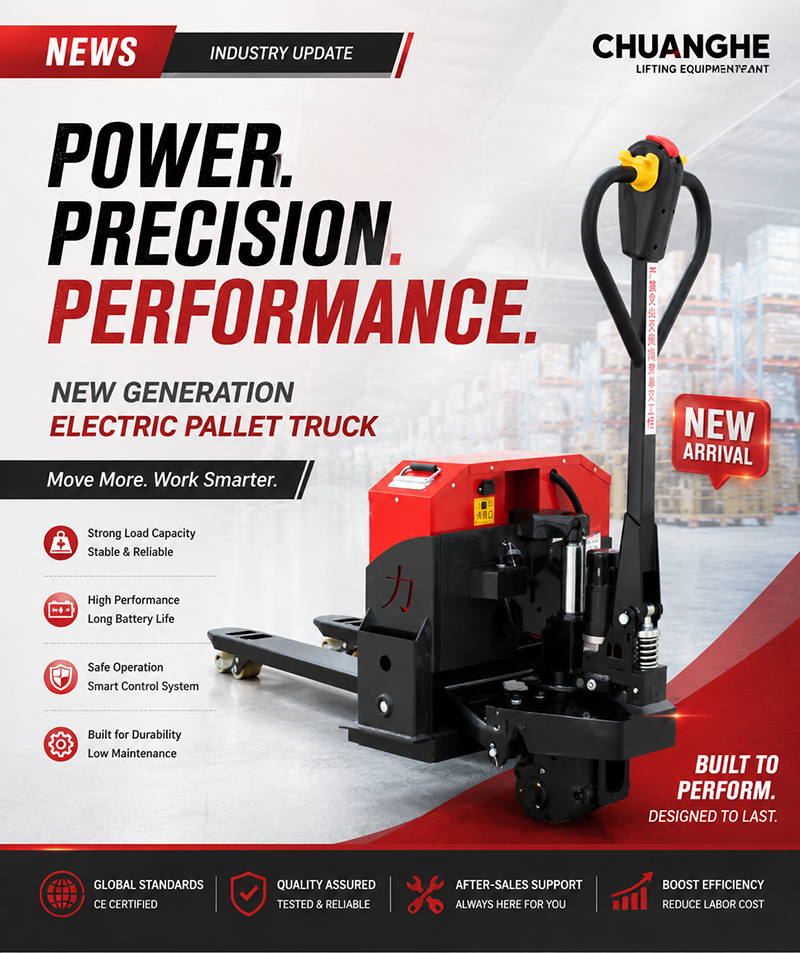
An electric pallet truck is a material handling device designed to lift and move palletized goods over short and medium distances using battery-powered travel. Depending on the design, lifting may be hydraulic, electric-hydraulic, or otherwise power assisted.
The basic structure can include:
· Battery
· Electric drive motor
· Controller
· Drive wheel
· Load wheels
· Forks
· Steering handle or tiller
· Hydraulic pump and lifting system
· Lowering control
· Steel frame
· Emergency stop / safety controls
The operator positions the forks underneath the pallet, raises the load to the required travel height, and uses the powered drive system to move the pallet to the destination.
This operating principle makes electric pallet trucks particularly useful in warehouses and industrial environments where pallets are handled repeatedly.
A manual pallet truck relies on operator force for travel and uses a hydraulic pump operated through the handle for lifting. An electric pallet truck uses a battery and electric drive system to reduce the physical effort required for movement.
Understanding the operating sequence helps buyers select the right model and helps operators use the equipment safely.
1. Position the Forks — Align the pallet truck with the pallet and insert the forks fully underneath the load.
2. Lift the Load — Activate the lifting control and raise the forks enough to clear the floor safely.
3. Control Travel — Use the tiller or steering handle to select the travel direction and control the truck.
4. Move the Load — The electric drive motor provides powered movement while the operator controls direction and speed.
5. Stop Safely — Release the travel control and use the braking or stopping function as required.
6. Lower the Forks — After reaching the destination, lower the forks carefully and remove the truck from underneath the pallet.
The battery supplies electrical energy to the drive and control system. Battery type, voltage, capacity, charging method, and operating environment should be considered when selecting a model.
The drive motor provides powered travel. The controller regulates motor operation and allows the operator to control direction and speed.
Powered travel reduces the physical effort required to move loaded pallets, especially when loads are heavy or handled repeatedly.
Electric travel can make repetitive pallet movement more efficient than manual pushing or pulling, particularly over longer warehouse routes.
Electric pallet trucks are well suited to receiving, storage, order preparation, production supply, and loading areas where pallets are moved many times each day.
A pallet truck generally occupies less space than a forklift and is designed primarily for horizontal pallet transportation.
Battery operation avoids the need for fuel during normal indoor handling and can support clean, convenient operation in appropriate environments.
Electric pallet trucks can move pallets between storage locations, staging areas, packing stations, and receiving zones.
· Pallet transportation
· Inventory handling
· Short- and medium-distance movement
· Loading and unloading
· Warehouse staging
In logistics facilities, powered pallet trucks can help move goods between trucks, loading docks, sorting areas, and storage locations.
Factories can use electric pallet trucks to transport raw materials, components, finished products, and packaging materials between production areas.
Powered pallet trucks can support receiving, back-room movement, replenishment, and other pallet-handling tasks where floor space and maneuverability matter.
Feature | Manual Pallet Truck | Electric Pallet Truck |
Power | Manual | Battery powered |
Driving | Manual | Electric |
Lifting | Hydraulic | Hydraulic / powered depending on model |
Operator effort | Higher | Lower |
Initial cost | Lower | Higher |
Maintenance | Simple | More components to maintain |
Charging | Not required | Required |
Best application | Short-distance, moderate workload | Frequent handling, higher workload |
Travel speed | Operator dependent | Controlled powered travel |
For relatively short transportation distances and moderate workloads, a manual pallet truck may provide excellent value. For frequent handling, heavier workloads, or applications where operator effort needs to be reduced, an electric pallet truck may be more suitable.
Choosing the right model requires more than simply looking at rated capacity. Buyers should evaluate the load, pallet dimensions, working environment, travel distance, battery system, and expected workload.
The rated capacity should be suitable for the maximum load that will actually be handled. Common pallet truck capacities include 1,500 kg, 2,000 kg, and 2,500 kg, with other configurations available depending on the product range.
Avoid regularly operating at the maximum rated capacity.
Fork length should match the pallet dimensions and fork-entry openings. A common fork length is approximately 1,150 mm, but other sizes may be available.
· Pallet dimensions
· Fork entry openings
· Load dimensions
· Warehouse layout
Overall fork width and fork spacing affect compatibility with different pallet designs and load configurations.
Battery selection affects operating time, charging requirements, maintenance, and overall suitability. Buyers should confirm battery voltage, capacity, battery type, charging time, and whether the battery can be removed or exchanged.
Drive motor power influences travel performance and should be evaluated together with rated load, working conditions, gradients, and expected duty cycle.
Travel speed should be appropriate for the warehouse layout and safety requirements. Controlled acceleration and braking are important for stable load handling.
Wheel material affects traction, noise, floor protection, wear, and handling performance.
· PU Wheels — suitable for many smooth indoor warehouse floors and applications where lower noise is desirable.
· Nylon Wheels — suitable for hard industrial floors and certain heavier-duty applications.
· Rubber Wheels — useful where shock absorption and quieter operation are important.
A reliable control system should provide predictable acceleration, direction control, braking, and safe stopping behavior.
Depending on the model, buyers may consider emergency stop controls, anti-roll-back or braking functions, horn, protective switches, and other safety features.
The tiller or steering handle should be comfortable to operate and provide convenient access to travel, lift, lower, horn, and other controls.
A strong steel frame and properly designed forks are important for stable load handling and long-term durability.
The charger should match the battery specification. Charging procedures should follow the manufacturer's instructions and the battery supplier's requirements.
For demanding industrial applications, a heavy-duty electric pallet truck can provide additional structural strength and durability.
· Reinforced steel frame
· Stronger drive system
· Heavy-duty forks
· Larger or more durable load wheels
· Higher-duty battery system
· Improved durability for frequent operation
These models can be suitable for applications involving heavier industrial materials, high-frequency warehouse operations, and demanding logistics environments.
· Frequent daily pallet movement
· Heavier loads
· Longer travel distances
· Industrial production environments
· High utilization and demanding duty cycles
Although an electric pallet truck is compact and relatively simple to operate, safe use is essential.
· Check the battery and charging condition.
· Inspect the forks and frame.
· Check wheel condition.
· Confirm the load weight.
· Make sure the pallet is stable.
· Check that the travel path is clear.
· Confirm that safety controls operate correctly.
· Keep the load centered.
· Move at a controlled speed.
· Avoid sharp turns.
· Keep the forks at a safe travel height.
· Pay attention to pedestrians.
· Use extra caution on ramps and uneven surfaces.
· Exceed the rated capacity.
· Carry passengers.
· Use damaged forks or wheels.
· Operate with an unstable load.
· Place any part of the body underneath a raised load.
Regular inspection and maintenance help improve reliability and extend equipment life.
· Inspect for visible damage.
· Keep charging connections clean and secure.
· Use the correct charger.
· Follow the battery manufacturer's charging instructions.
· Check for cracks.
· Check for excessive wear.
· Check for deformation.
· Confirm smooth rotation.
· Inspect for bending, cracks, or visible damage.
· Check fasteners and structural components.
· Do not use damaged forks.
· Check travel response.
· Check braking or stopping function.
· Check direction controls.
· Check emergency stop and other safety controls.
For material handling equipment distributors, electric pallet trucks are a practical product category because many warehouses, factories, logistics companies, and retailers need powered pallet movement.
Potential customers include:
· Logistics companies
· Manufacturing companies
· Retailers
· Supermarkets
· Warehouses
· Packaging companies
· Industrial equipment distributors
· Factories and production facilities
· Manual Pallet Trucks
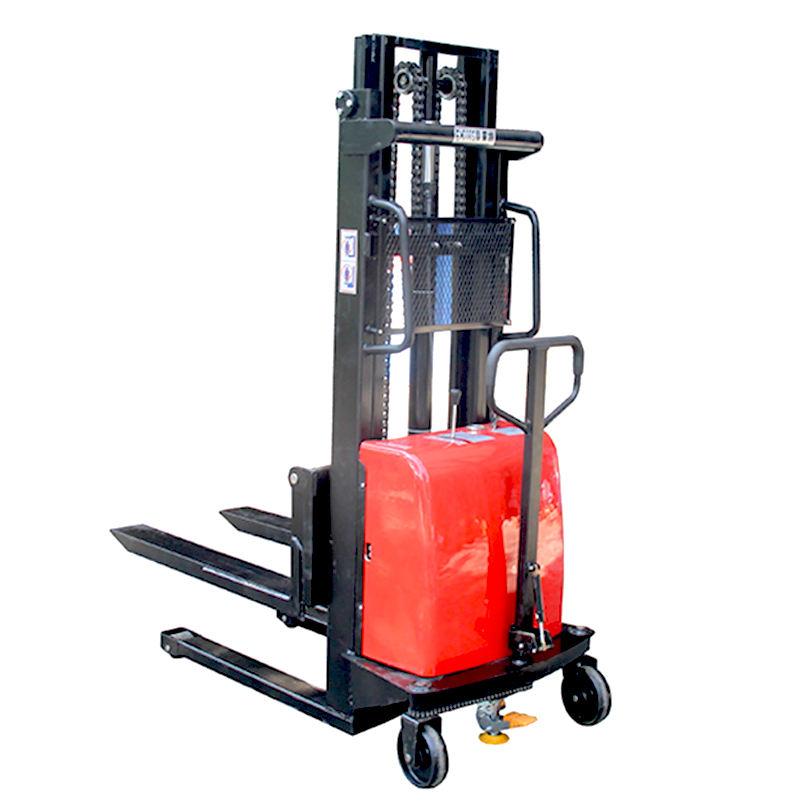
· Electric Stackers
· Manual Stackers
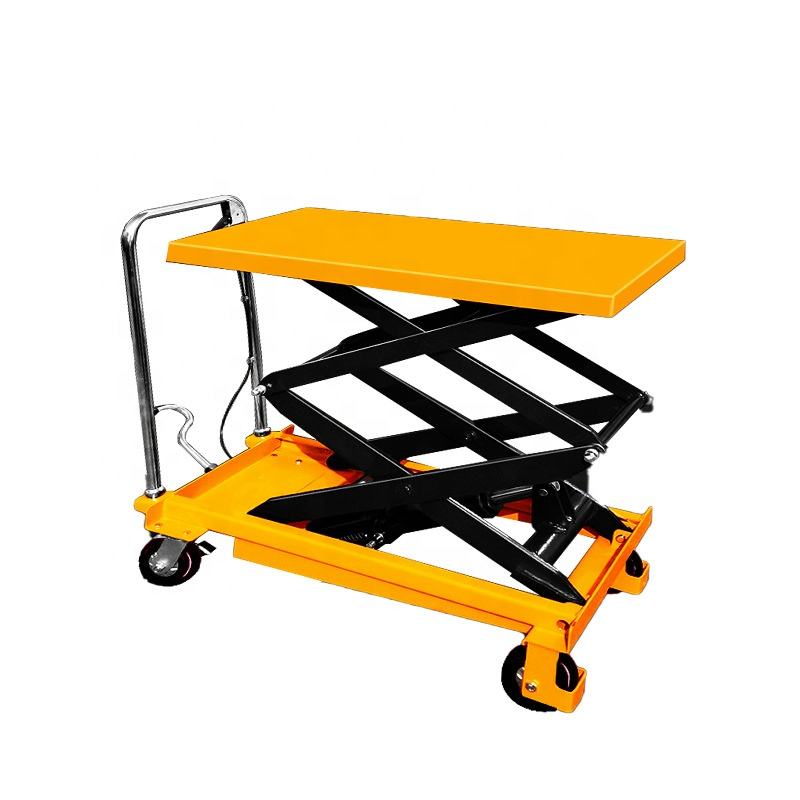
· Scissor Lift Tables
· Hydraulic Jacks
· Hand Chain Hoists
· Lever Hoists
· Electric Hoists
· Lifting Slings
Distributors can combine these products to provide broader material handling solutions rather than relying on a single equipment category.
Warehouse operations are becoming increasingly efficient and technology-driven. Electric pallet trucks, lithium battery technology, smart warehouse systems, and automated material handling solutions are influencing the way companies move goods.
Electric pallet trucks remain particularly attractive for:
· Frequent pallet handling
· Medium- and longer-distance warehouse movement
· Applications where operator effort should be reduced
· Loading and unloading operations
· Warehouses that need compact powered equipment
· Cost-sensitive applications that do not require a forklift
Different handling technologies can work together. A warehouse may use manual pallet trucks for occasional tasks, electric pallet trucks for frequent horizontal transport, and stackers or forklifts for vertical lifting.
An Electric Pallet Truck is a practical powered solution for moving palletized goods efficiently. Its battery-powered travel, compact structure, maneuverability, and reduced operator effort make it suitable for a wide range of warehouse and industrial applications.
When choosing an electric pallet truck, buyers should carefully evaluate load capacity, fork dimensions, battery system, motor power, travel performance, wheel material, safety features, operating environment, and expected workload.
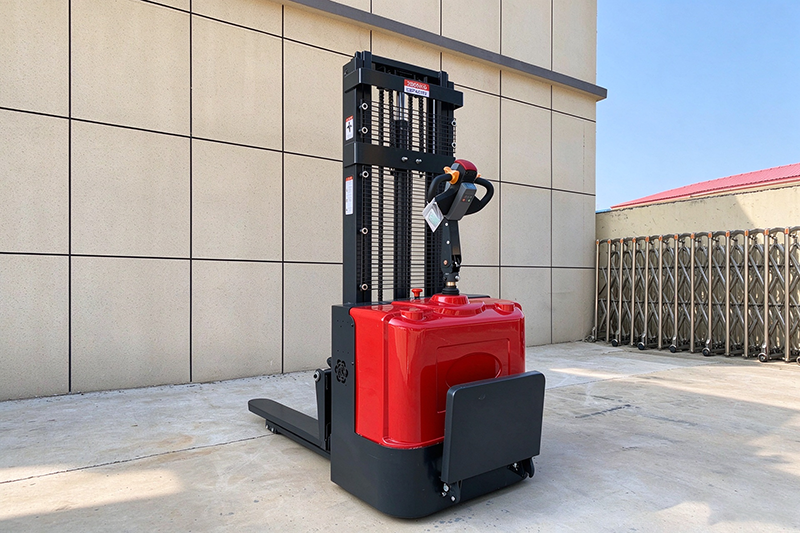
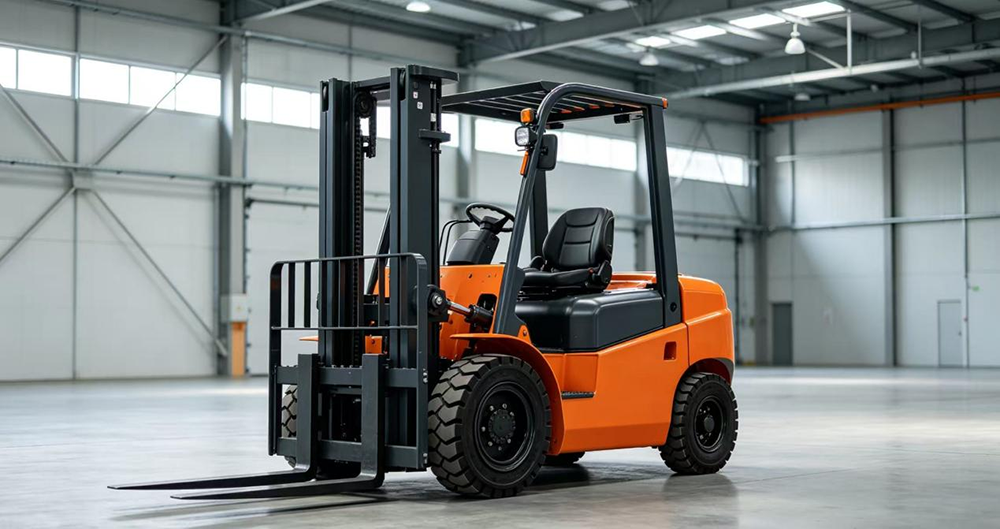
Modern warehouses, distribution centers, and manufacturing facilities need efficient ways to lift, move, and stack palletized goods. As businesses handle more products and work to optimize storage space, choosing the right material handling equipment becomes increasingly important.
2026-10-21View More →
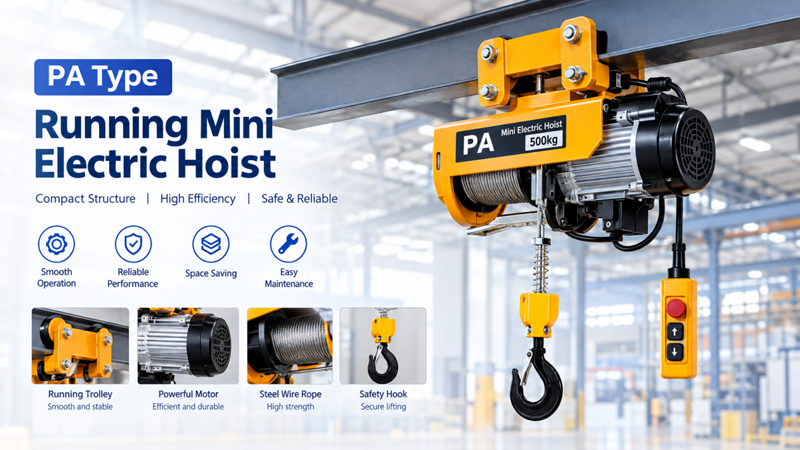
Learn about PA type running mini electric hoist, including key selection factors, typical applications, safety operation tips for small lifting jobs.
2026-10-20View More →
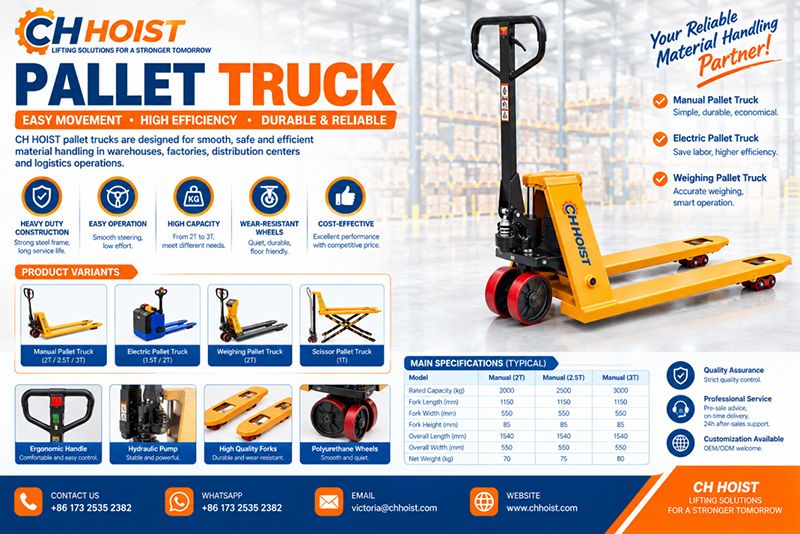
A pallet truck, also known as a pallet jack or pallet trolley, is one of the most practical tools for transporting palletized materials over short distances. Compared with moving goods manually, pallet trucks help reduce physical effort, improve workflow, and make warehouse operations more efficient.
2026-10-19View More →


 Tel:
+8613653129869
Tel:
+8613653129869
 Whatsapp:
+8613653129869
Whatsapp:
+8613653129869
 Email:
chuanghehoist@gmail.com
Email:
chuanghehoist@gmail.com
 Address:Donglu Village, Donglu Township, Qingyuan District, Baoding City, Hebei Province

 English
 Français
 Español



 Email
Email +8613653129869
 +8613653129869
 Home
Home Whatsapp
 chuanghehoist@gmail.com