


If you have any questions, please contact our online customer service staff immediately
 Click:430
Edit: Chuanghe Hoisting
Click:430
Edit: Chuanghe Hoisting Time:2026-08-31 14:58:25
Warehouse and logistics operations are changing rapidly.
As businesses handle more goods, process more orders, and face increasing pressure to improve efficiency, traditional manual material handling methods are no longer enough for many applications.
One of the most practical solutions is theElectric Pallet Truck.
Also known as anElectric Pallet Jack, Powered Pallet Truck, or Electric Pallet Mover, an electric pallet truck uses battery-powered driving and lifting systems to transport palletized goods with significantly less physical effort than a traditional manual pallet truck.
Today, electric pallet trucks are widely used in:
· Warehouses
· Logistics centers
· Manufacturing plants
· Distribution centers
· Supermarkets
· E-commerce facilities
· Workshops
· Loading and unloading areas
The main advantage is simple:the machine provides the power, while the operator controls the movement.
This can help reduce operator fatigue, improve handling efficiency, and make repetitive pallet transportation easier.
CH HOIST currently offers electric pallet truck solutions including Electric Pallet Truck LG-30 and Electric Pallet Truck LB-20, as part of its material handling equipment range.
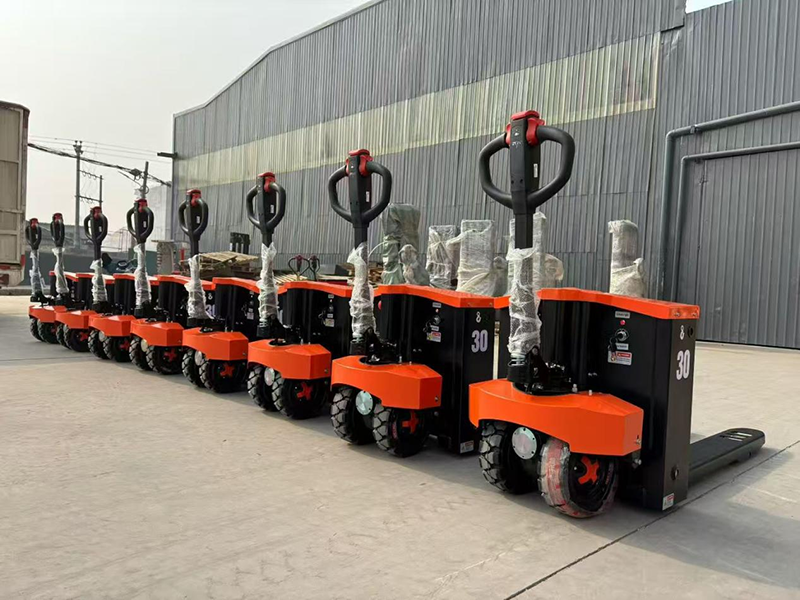
AnElectric Pallet Truck is a battery-powered material handling machine designed to lift and transport palletized loads.
Unlike a traditional hand pallet truck, which depends on the operator to manually push or pull the equipment, an electric pallet truck uses an electric drive motor to move the machine.
Depending on the model, the lifting function can also be electrically powered.
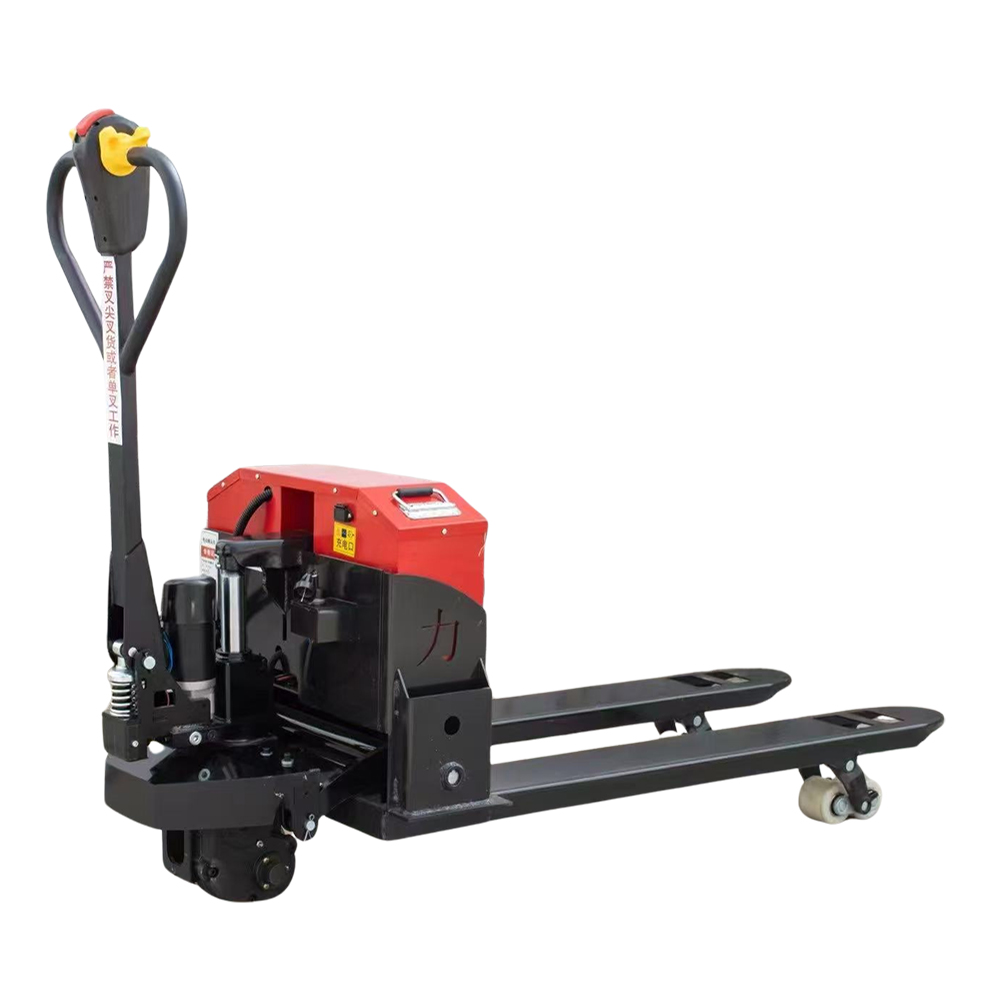
A typical electric pallet truck may include:
· Steel forks
· Electric drive motor
· Hydraulic lifting system
· Battery
· Controller
· Control handle
· Drive wheel
· Load rollers
· Electromagnetic or electronic braking system
· Emergency stop
· Safety protection system
The operator uses the control handle to operate the equipment.
Functions can include:
· Forward movement
· Reverse movement
· Lifting
· Lowering
· Speed control
· Braking
· Emergency stop
This design makes electric pallet trucks especially suitable for warehouses where pallets need to be moved repeatedly throughout the working day.
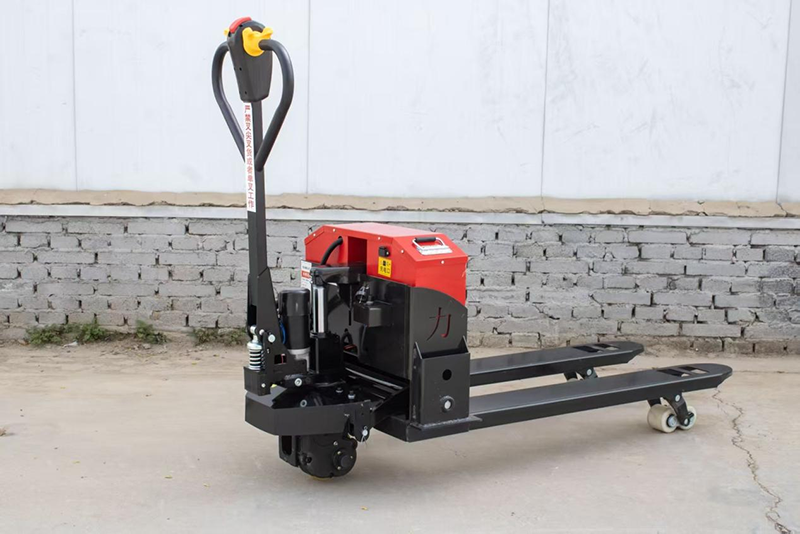
Understanding how the equipment works can help buyers choose the right model.
The battery provides electrical energy to the drive motor and control system.
Depending on the model and configuration, different battery technologies can be used.
When the operator activates the travel control, the electric motor transfers power to the drive wheel.
The machine moves forward or backward without requiring the operator to manually push or pull it.
When the lifting button is activated, the hydraulic system raises the forks.
The pallet is lifted slightly above the floor so that it can be transported.
The handle allows the operator to control the direction and speed of travel.
This provides more controlled movement compared with manually pulling a heavily loaded pallet.
The braking system helps slow and stop the pallet truck.
Modern electric pallet trucks can also incorporate emergency stop functions and other safety features.
The material handling industry is moving toward greater electrification.
CH HOIST's own industry content notes that electric pallet trucks are increasingly important in modern logistics as warehouses seek to improve productivity and reduce labor intensity.
There are several reasons for this trend.
Moving heavy pallets manually can be physically demanding.
An electric pallet truck provides powered travel, reducing the amount of force required from the operator.
Powered transportation can make repetitive pallet movement more efficient.
Reducing repeated pushing and pulling can help create a more comfortable working environment.
Compared with many forklifts, electric pallet trucks are compact and can be easier to maneuver in confined warehouse spaces.
For simple pallet transportation, a pallet truck can be a more appropriate solution than a full-size forklift.
Feature | Electric Pallet Truck | Manual Pallet Truck |
Power | Battery | Manual |
Driving | Electric | Manual |
Lifting | Powered / hydraulic | Manual hydraulic |
Operator effort | Low | Higher |
Handling speed | Higher | Moderate |
Repetitive work | Excellent | Suitable |
Initial cost | Higher | Lower |
Maintenance | Moderate | Simple |
Charging | Required | Not required |
Best application | Frequent handling | Short-distance handling |
Anelectric pallet truck becomes more attractive when the equipment is used frequently, loads are heavier, or transportation distances are longer.
For many warehouses, these two products are not competitors.
They can actually work together.
For example:
· Manual pallet trucks can be used for occasional movement.
· Electric pallet trucks can be used for high-frequency transportation.
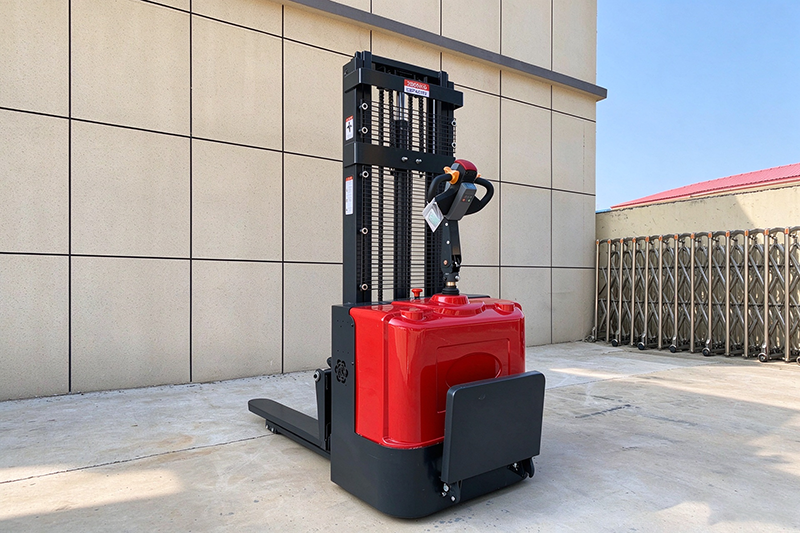
· Electric stackers can be used when pallet lifting and stacking are required.
This creates a flexible material handling system.
The drive motor is responsible for moving the machine.
A good drive system should provide:
· Smooth acceleration
· Stable travel
· Good efficiency
· Reliable operation
· Appropriate torque
Motor selection should take into account:
· Load capacity
· Travel distance
· Floor conditions
· Ramp requirements
· Operating frequency
The battery is one of the most important components.
Traditional electric pallet trucks commonly use lead-acid batteries, while lithium battery technology has become increasingly popular in modern material handling equipment.
Advantages:
· Lower initial cost
· Mature technology
· Widely available
Limitations:
· Heavier
· Longer charging time
· Maintenance requirements may be higher
Advantages can include:
· Faster charging
· Lower maintenance
· Higher energy density
· Longer service life
· Opportunity charging
Lithium battery systems are particularly attractive for operations where the pallet truck is used frequently.
However, buyers should evaluate total operating requirements rather than selecting a battery solely based on technology.
The hydraulic system controls the lifting function.
A good hydraulic system should provide:
· Stable lifting
· Smooth lowering
· Reliable sealing
· Low leakage risk
· Long service life
Hydraulic performance is particularly important because the system directly supports the pallet during lifting.
Regular inspection should be carried out to identify abnormal leakage, unusual noise, or changes in lifting performance.
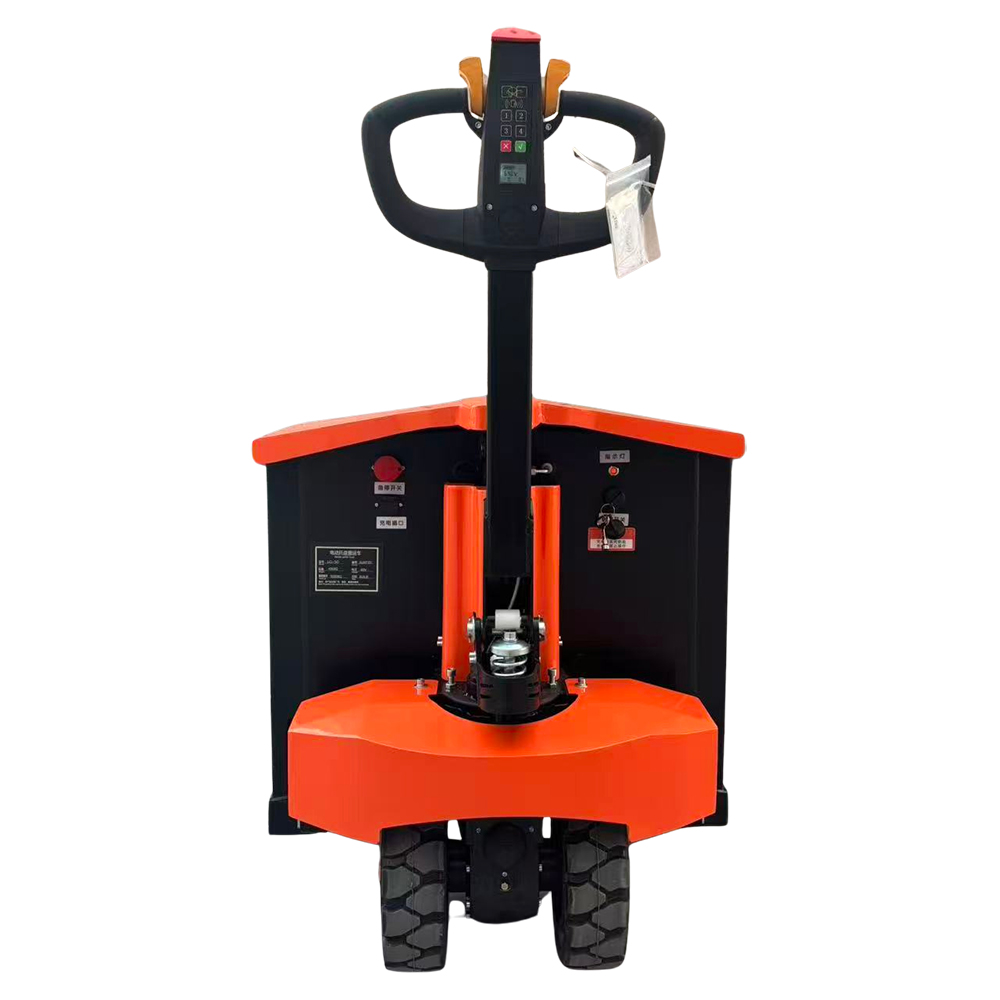
The control handle is the main interface between the operator and the machine.
Depending on the model, it may include controls for:
· Forward
· Reverse
· Lifting
· Lowering
· Speed
· Horn
· Emergency stop
An ergonomic handle can make repetitive operation more comfortable.
For warehouse equipment, control layout should be simple enough for operators to learn quickly.
Wheel selection has a major effect on handling performance.
Common wheel materials include:
Suitable for many indoor warehouse applications.
Advantages include:
· Low noise
· Good floor protection
· Smooth operation
· Good wear resistance
Often selected for hard floors and heavier industrial applications.
They can offer good load-bearing performance and durability.
Can provide better shock absorption and quieter operation.
The best wheel material depends on the floor and working environment.
Warehouses are one of the largest application areas.
Electric pallet trucks can be used to move:
· Cartons
· Pallets
· Raw materials
· Finished products
· Packaging materials
They are especially useful for repetitive short- and medium-distance transportation.
Distribution centers often need to move goods between:
· Receiving areas
· Storage zones
· Picking areas
· Loading docks
Electric pallet trucks can help improve internal transportation efficiency.
Factories use electric pallet trucks to transport components between production areas.
Typical applications include:
· Raw material transportation
· Production line supply
· Finished goods movement
· Packaging transportation
Electric pallet trucks can be used for moving pallets from receiving areas to storage rooms and sales areas.
Their compact structure can be useful where space is limited.
E-commerce warehouses often handle large numbers of orders and require frequent internal transportation.
Electric pallet trucks can support:
· Order fulfillment
· Pallet movement
· Loading
· Replenishment
As warehouse throughput increases, powered material handling becomes increasingly valuable.
Warehouse space is expensive.
Many modern facilities are designed to maximize storage density.
This means operators often need equipment that can maneuver efficiently in relatively narrow spaces.
Electric pallet trucks can be useful because their compact dimensions allow them to perform basic transportation tasks without requiring the larger operating space associated with many forklifts.
However, buyers should always check:
· Overall machine width
· Turning radius
· Fork dimensions
· Aisle width
· Pallet dimensions
before selecting a model.
Choosing the correct machine is more important than simply choosing the highest capacity.
Start with the maximum actual pallet weight.
Common electric pallet truck capacities may range from approximately 1.2 tons to several tons depending on the model and application.
Do not exceed the manufacturer's rated capacity.
Check:
· Length
· Width
· Entry direction
· Fork opening
· Fork length requirements
A pallet truck should match the pallet configuration.
For short distances, a compact walk-behind electric pallet truck may be sufficient.
For longer distances, buyers may prefer a model with:
· Higher travel speed
· Larger battery
· Improved operator ergonomics
How long will the equipment operate each day?
This affects battery selection.
For example:
Occasional use:
A standard battery configuration may be sufficient.
One-shift operation:
A larger battery may provide better productivity.
Multi-shift operation:
Lithium battery technology and fast-charging solutions may be worth considering.
Floor quality affects:
· Wheel selection
· Motor performance
· Stability
· Travel comfort
Smooth indoor floors and rough industrial floors may require different configurations.
Powered material handling equipment should always be operated by trained personnel according to the manufacturer's instructions and applicable workplace safety requirements.
Before operation:
· Inspect the forks.
· Check the wheels.
· Test the controls.
· Check the battery.
· Check the emergency stop.
· Confirm the load weight.
· Ensure the pallet is stable.
· Check the travel path.
During operation:
· Maintain a controlled speed.
· Avoid sharp turns at excessive speed.
· Keep the load stable.
· Watch for pedestrians.
· Keep visibility clear.
· Use appropriate safety procedures on ramps.
Never:
❌ Exceed rated capacity.
❌ Carry passengers unless specifically designed for that purpose.
❌ Lift unstable loads.
❌ Operate damaged equipment.
❌ Stand beneath raised forks.
❌ Make unauthorized modifications.
Safety should always come before speed.
Regular maintenance helps protect equipment performance.
Check:
· Charging condition
· Battery connections
· Signs of damage
· Abnormal heating
· Charging equipment
Lithium and lead-acid batteries have different maintenance requirements, so operators should follow the manufacturer's instructions.
Inspect for:
· Oil leakage
· Slow lifting
· Abnormal lowering
· Unusual sounds
Check wheels for:
· Wear
· Cracks
· Flat spots
· Loose components
Damaged wheels can affect stability and maneuverability.
Inspect:
· Wiring
· Connectors
· Controller
· Control handle
· Emergency stop
Electrical faults should be addressed by qualified personnel.
Efficiency is not only about moving faster.
It also means reducing unnecessary labor and making the workflow more consistent.
Imagine a warehouse where an operator must move 100 heavy pallets every day.
With a manual pallet truck, every movement requires physical pushing and pulling.
With an electric pallet truck, the drive motor performs the transportation work.
The operator can focus more on:
· Positioning
· Load control
· Warehouse organization
· Safety
This can improve workflow while reducing physical fatigue.
Electric pallet trucks are also an attractive product category for material handling equipment distributors.
Potential customers include:
· Forklift dealers
· Warehouse equipment distributors
· Logistics companies
· Industrial equipment suppliers
· Supermarket equipment suppliers
· E-commerce warehouse operators
· Factory equipment buyers
For distributors, the product can also be sold together with:
· Manual pallet trucks
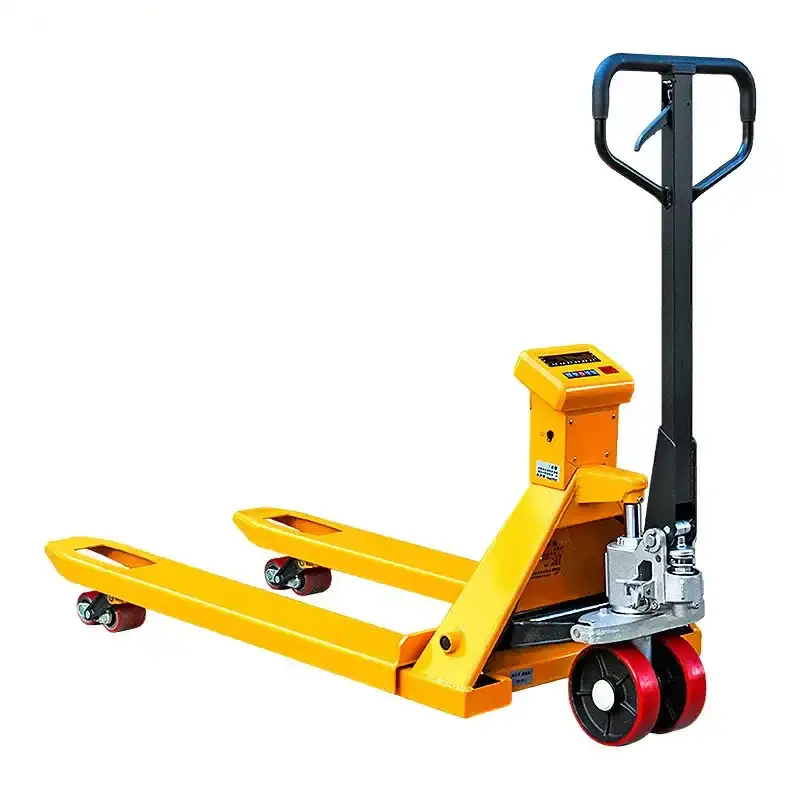
· Hand pallet trucks with scales
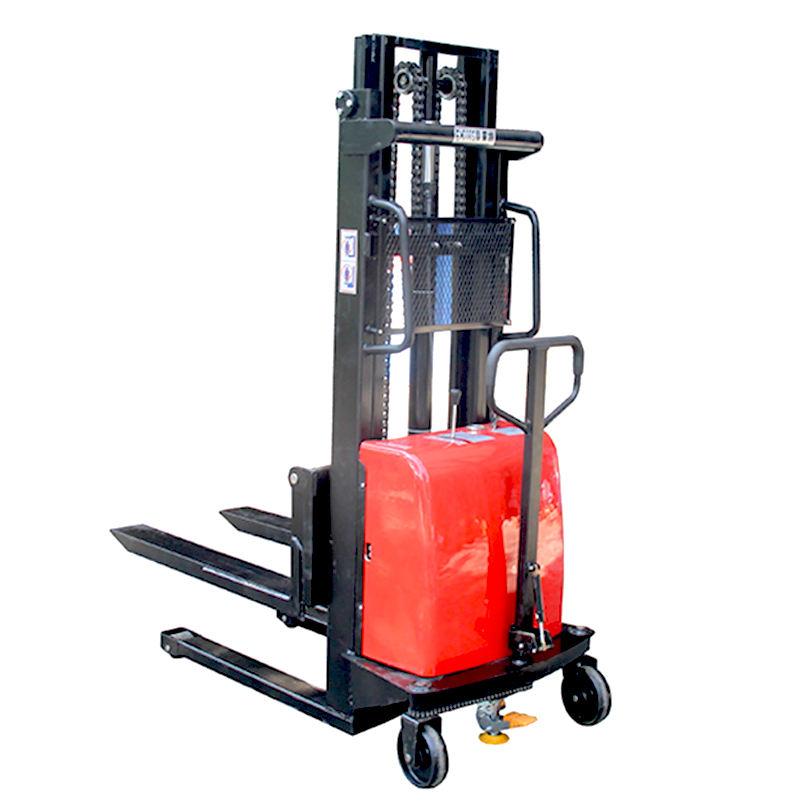
· Electric stackers
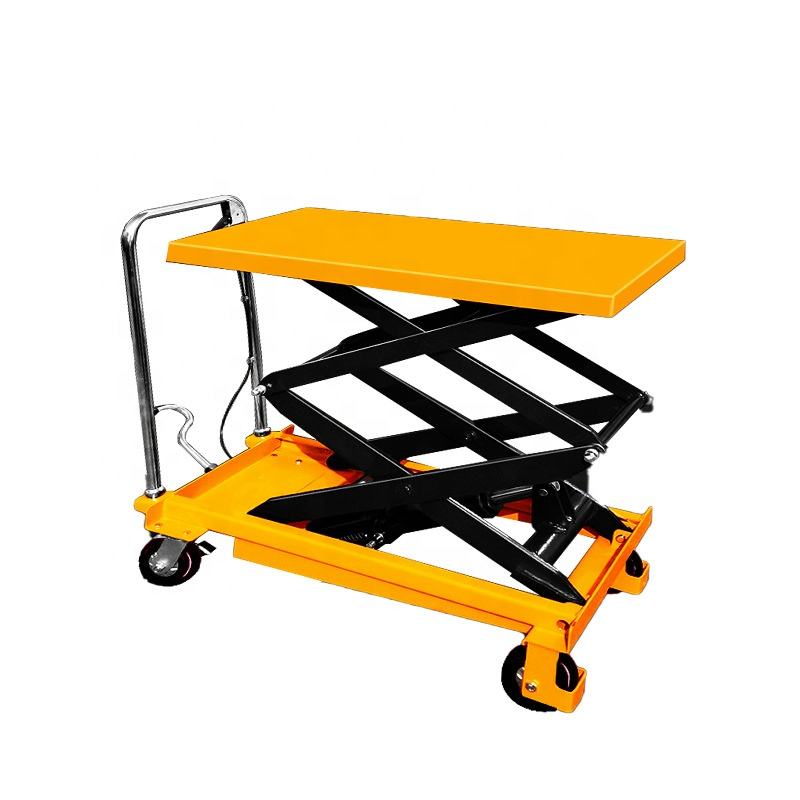
· Hydraulic lift tables
· Forklifts
· Hand chain hoists
· Lever hoists
· Electric hoists
This allows distributors to build a broader material handling product portfolio.
CH HOIST's current product range includesElectric Pallet Truck LG-30, Electric Pallet Truck LB-20, Hand Pallet Truck With Scale, Hydraulic Lift Table, and Electric Stacker Crane.
Different markets have different requirements.
A professional supplier should be able to discuss customization according to the application.
Potential customization areas can include:
· Fork length
· Fork width
· Load capacity
· Battery configuration
· Charger
· Wheel material
· Handle design
· Color
· Logo
· Packaging
For distributors, OEM branding can be particularly useful when building a local material handling equipment brand.
CH HOIST focuses on lifting and material handling equipment and provides products for international industrial customers.
Its current website lists a range of products including manual pallet trucks, electric pallet trucks, electric stackers, electric hoists, hand chain hoists, lever hoists, winches, lifting equipment, and rigging products.
The company also states that it has an experienced technical team and production equipment, with products exported to more than 100 countries.
For international buyers, a supplier with a broader product range can make sourcing easier because multiple categories can potentially be purchased from one supplier.
Electric pallet trucks and forklifts are not designed to replace each other in every application.
· Loads mainly stay at floor level.
· Transportation distances are short or moderate.
· Warehouse space is limited.
· High lifting heights are not required.
· You want a compact handling solution.
· Pallets must be stacked at significant heights.
· Loads need to be handled at racks.
· High ground clearance is required.
· Heavy industrial lifting is involved.
For many warehouses, an electric pallet truck is the more economical solution for horizontal transportation, while forklifts are reserved for vertical stacking and heavier lifting tasks.
The material handling industry is moving toward:
Electrification
Battery-powered equipment is increasingly replacing traditional fuel-powered equipment for many indoor applications.
Lithium Battery Technology
Fast charging and lower maintenance are making lithium-powered equipment increasingly attractive.
Smart Controls
Electronic controllers can improve speed control, braking, diagnostics, and operational safety.
Automation
Electric pallet trucks may increasingly become part of automated warehouse systems.
Ergonomic Design
Future equipment will continue to focus on reducing operator fatigue and improving usability.
These trends are likely to make electric pallet trucks an increasingly important part of modern warehouse operations.
TheElectric Pallet Truck is more than an upgraded manual pallet jack.
It represents an important step toward more efficient, ergonomic, and modern material handling.
By combining battery-powered travel, hydraulic lifting, compact dimensions, and simple operator controls, electric pallet trucks can help warehouses move palletized goods with less physical effort and greater efficiency.
When selecting an electric pallet truck, buyers should carefully evaluate:
· Load capacity
· Fork dimensions
· Battery type
· Operating hours
· Travel distance
· Wheel material
· Warehouse aisle width
· Floor conditions
· Safety features
· Maintenance requirements
· After-sales support
The right equipment should be selected according to the actual application rather than simply choosing the largest or most powerful model.
For distributors, importers, warehouses, factories, and logistics companies, electric pallet trucks can be an effective addition to a modern material handling system.
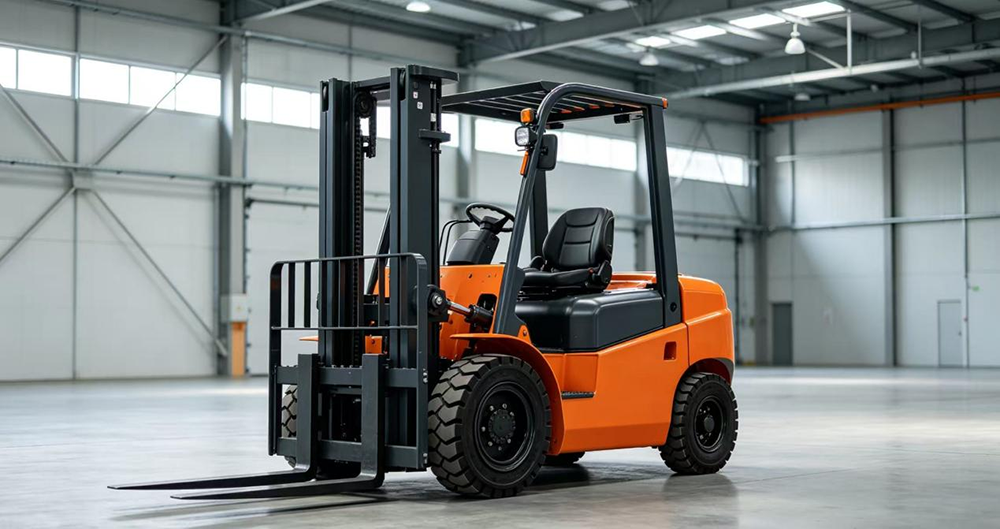
Modern warehouses, distribution centers, and manufacturing facilities need efficient ways to lift, move, and stack palletized goods. As businesses handle more products and work to optimize storage space, choosing the right material handling equipment becomes increasingly important.
2026-10-21View More →
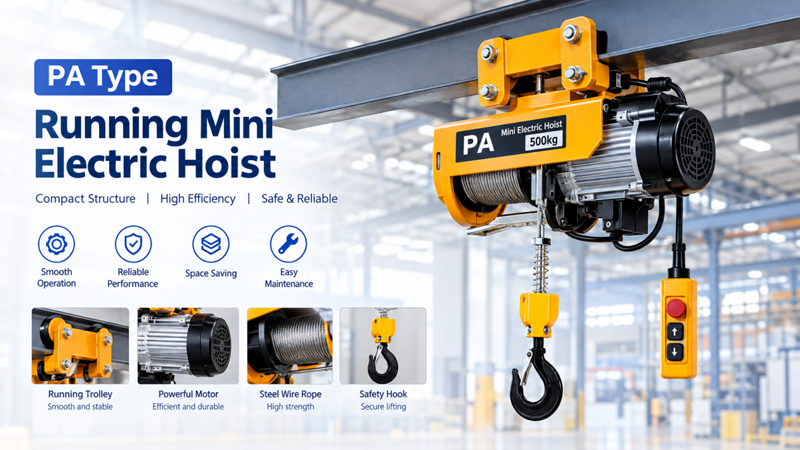
Learn about PA type running mini electric hoist, including key selection factors, typical applications, safety operation tips for small lifting jobs.
2026-10-20View More →
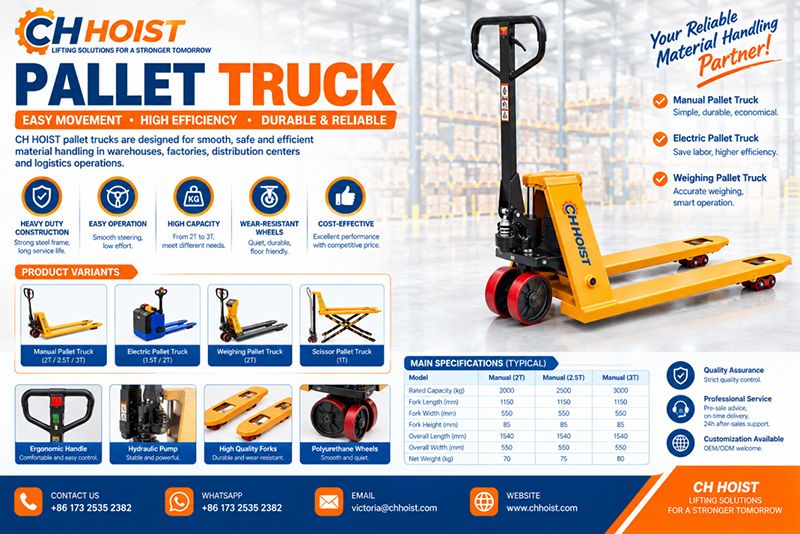
A pallet truck, also known as a pallet jack or pallet trolley, is one of the most practical tools for transporting palletized materials over short distances. Compared with moving goods manually, pallet trucks help reduce physical effort, improve workflow, and make warehouse operations more efficient.
2026-10-19View More →


 Tel:
+8613653129869
Tel:
+8613653129869
 Whatsapp:
+8613653129869
Whatsapp:
+8613653129869
 Email:
chuanghehoist@gmail.com
Email:
chuanghehoist@gmail.com
 Address:Donglu Village, Donglu Township, Qingyuan District, Baoding City, Hebei Province

 English
 Français
 Español



 Email
Email +8613653129869
 +8613653129869
 Home
Home Whatsapp
 chuanghehoist@gmail.com