


If you have any questions, please contact our online customer service staff immediately
 Click:493
Edit: Chuanghe Hoisting
Click:493
Edit: Chuanghe Hoisting Time:2026-08-26 14:46:30
In modern warehouses, factories, logistics centers, distribution facilities, and retail operations, moving palletized goods efficiently is an essential part of everyday work.
Not every material handling task requires a forklift or an electric pallet truck. For short-distance transportation and routine pallet movement, a Hand Pallet Truck can provide a simple, reliable, and economical solution.
Also known as a Manual Pallet Truck, Pallet Jack, Hand Pallet Jack, or Hydraulic Pallet Truck, this equipment is designed to lift pallets slightly above the floor and move them safely from one location to another.
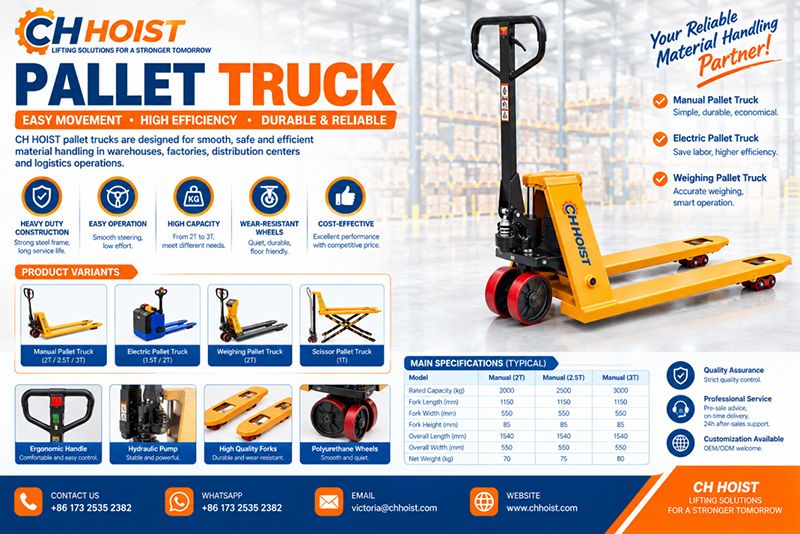
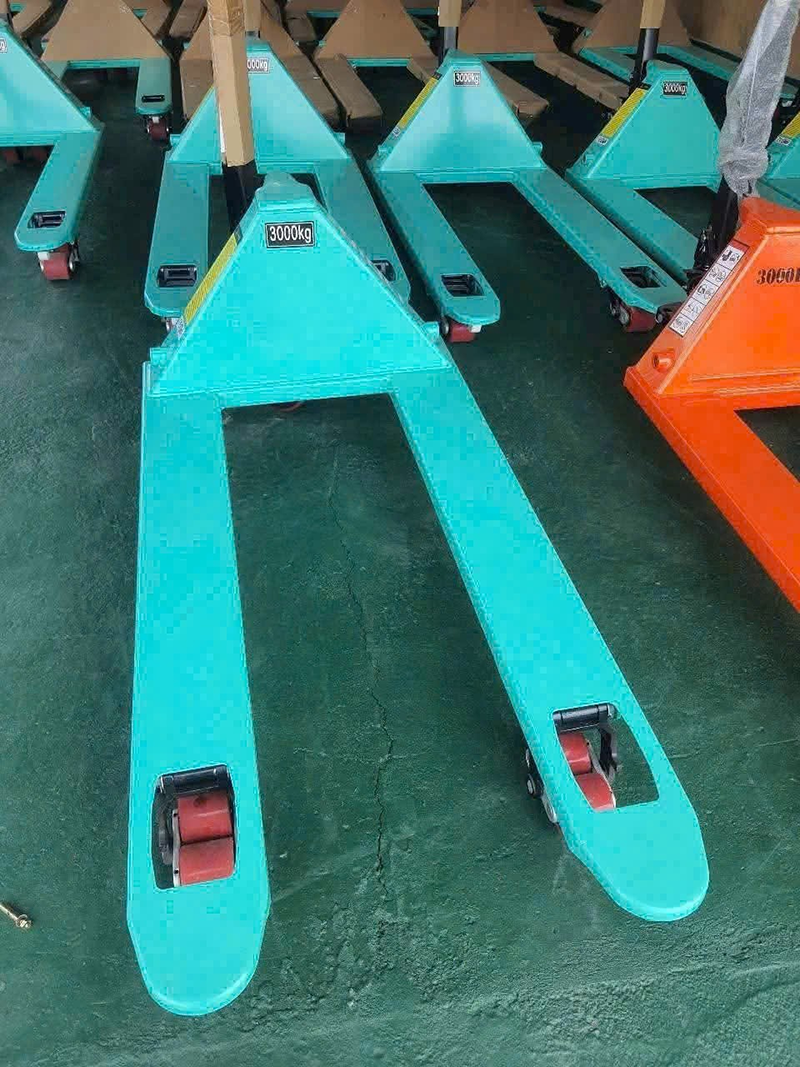
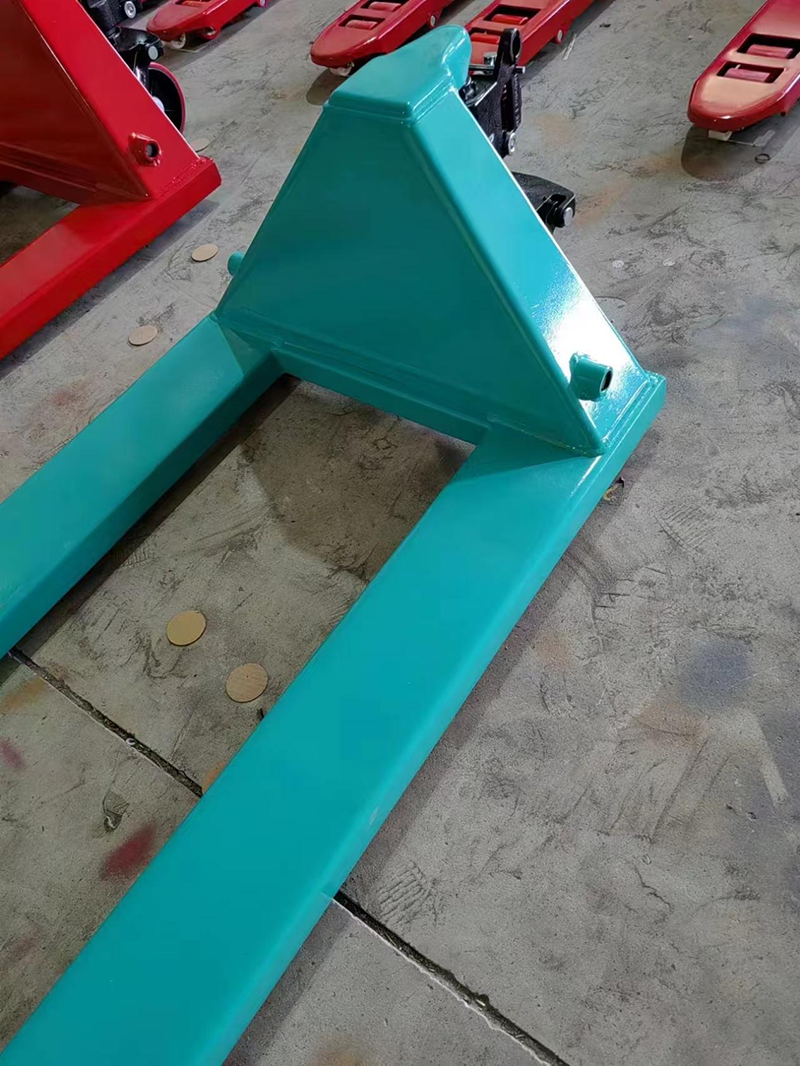
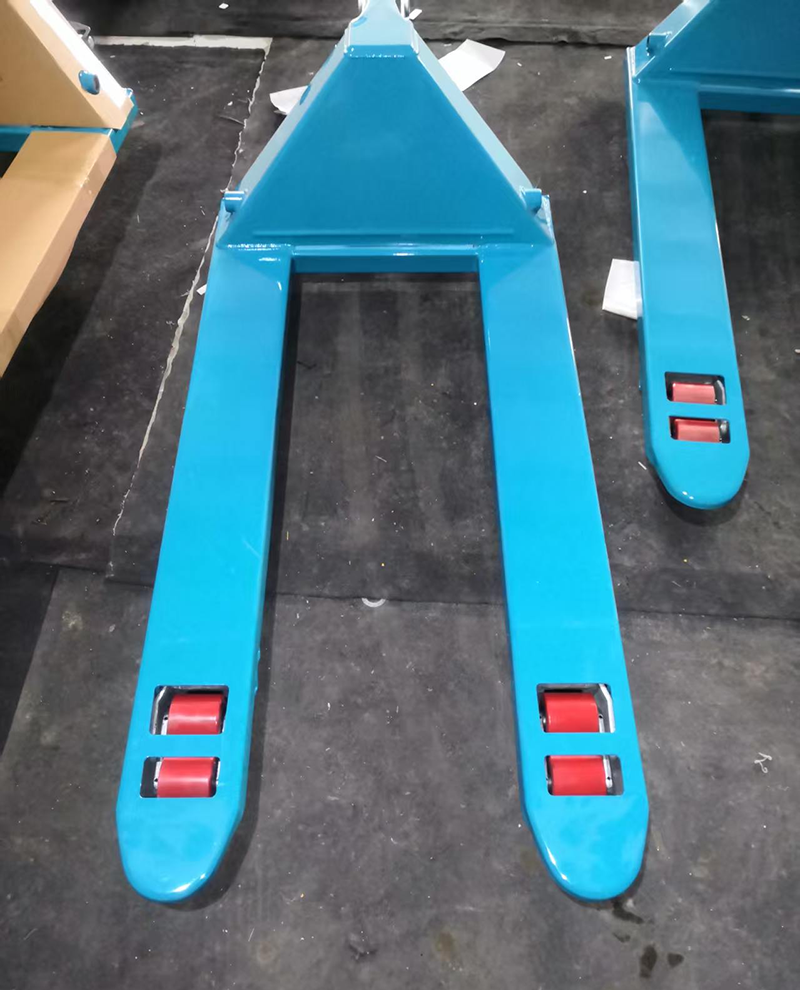
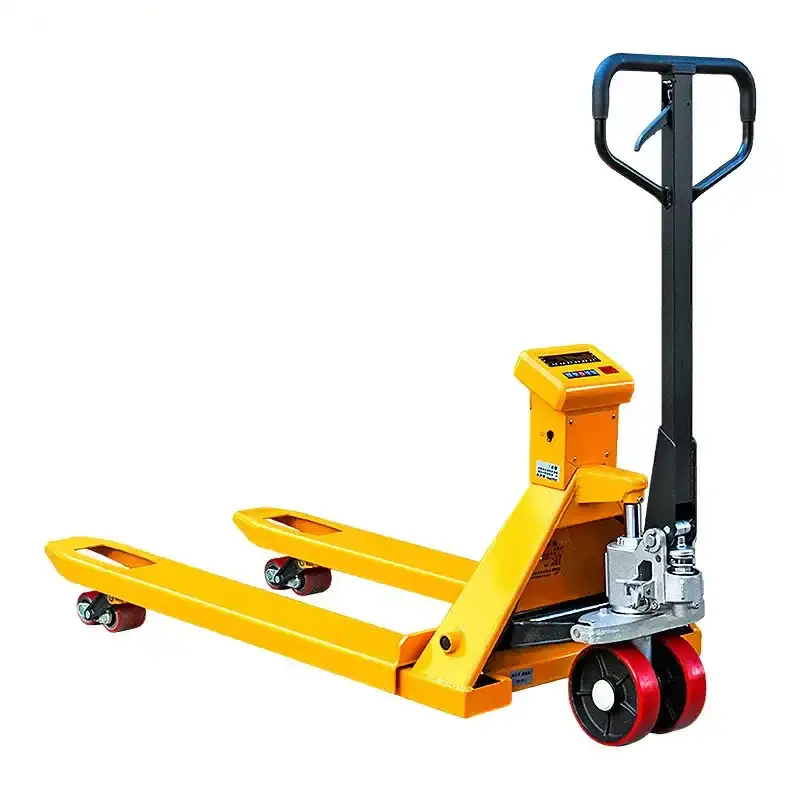
The pallet truck shown in the product photos is a 3,000 kg heavy-duty hand pallet truck, designed with a reinforced steel structure, long forks, hydraulic lifting system, and durable wheels. Its robust construction makes it suitable for demanding warehouse and industrial material handling applications.
For companies that need a dependable pallet handling solution without the complexity of powered equipment, a manual pallet truck remains one of the most practical choices.
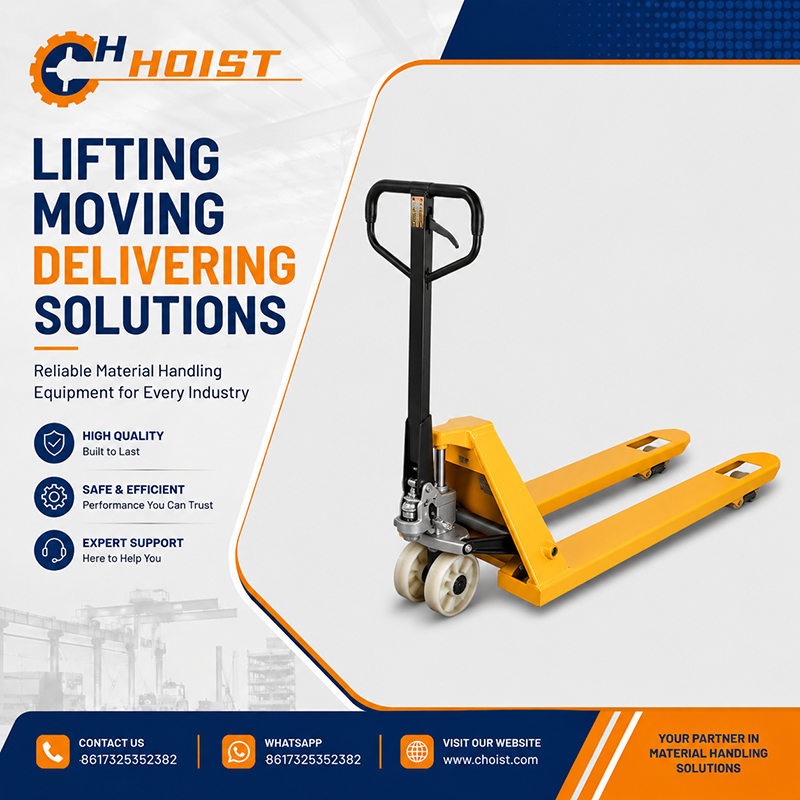
A Hand Pallet Truck is a manually operated material handling device used to lift and transport palletized loads.
Its operating principle is relatively simple.
The operator inserts the forks underneath a pallet and pumps the handle. The hydraulic pump raises the forks, lifting the pallet slightly from the floor. The operator can then pull the pallet truck to move the load.
A typical hand pallet truck consists of:
· Heavy-duty steel frame
· Forks
· Hydraulic pump
· Steering handle
· Steering wheels
· Load rollers
· Lowering control
· Hydraulic cylinder
· Connecting components
Because of its simple structure, a hand pallet truck can be used in many different working environments.
Unlike electric pallet trucks, it does not require a battery or charging station. This makes it particularly attractive for businesses looking for a low-cost and easy-to-maintain material handling solution.
Understanding how a manual pallet truck operates is important for both buyers and operators.
The operator first positions the pallet truck in front of the pallet.
The forks should be aligned with the pallet openings.
The forks are pushed completely underneath the pallet.
Proper positioning helps distribute the load across the forks.
The operator moves the handle up and down.
This action activates the hydraulic pump and generates hydraulic pressure.
The hydraulic system raises the forks until the pallet is lifted from the floor.
The lifting height is normally designed for transportation rather than high-level lifting.
Once the pallet is lifted, the operator can pull the pallet truck.
The steering handle controls the direction of movement.
After reaching the destination, the operator activates the lowering control.
The forks gradually return to the floor and the pallet is placed in its new position.
This simple process allows one operator to handle many pallet transportation tasks without using a forklift.
Load capacity is one of the most important factors when choosing a pallet truck.
The product shown in the photos is marked with a 3,000 kg load capacity, making it suitable for heavier warehouse and industrial applications.
A 3 ton pallet truck can be particularly useful when standard 2 ton equipment does not provide enough capacity.
However, rated capacity should never be treated as a target operating load.
The actual application should always be evaluated based on:
· Maximum load weight
· Load distribution
· Pallet condition
· Fork dimensions
· Floor conditions
· Transportation distance
· Frequency of use
The pallet truck should always be operated within its manufacturer's rated specifications.
One of the most important features of a professional pallet truck is the quality of its frame.
The product shown in the photos features a robust steel structure designed for heavy-duty material handling.
A strong frame helps the equipment withstand the forces generated during:
· Lifting
· Pulling
· Turning
· Starting and stopping
· Repeated warehouse operation
For industrial buyers, structural durability is especially important because pallet trucks may be used hundreds or thousands of times during their service life.
A well-designed frame can help improve equipment reliability and reduce long-term maintenance requirements.
Fork design directly affects pallet compatibility.
The long forks of a standard hand pallet truck allow the operator to enter deeper into a pallet and distribute the load across a larger supporting area.
When selecting fork dimensions, buyers should consider:
· Pallet length
· Pallet width
· Pallet entry direction
· Load dimensions
· Warehouse aisle width
Common fork lengths include approximately 900 mm, 1000 mm, 1150 mm, and 1220 mm, although customized dimensions may also be available depending on the manufacturer.
For international distributors, offering different fork configurations can help meet the requirements of different markets.
The hydraulic pump is one of the most important components of a hand pallet truck.
When the operator pumps the handle, hydraulic pressure is generated and transferred to the lifting cylinder.
A high-quality hydraulic system should provide:
· Smooth lifting
· Stable load support
· Controlled lowering
· Good sealing performance
· Reliable operation
· Long service life
Before purchasing a pallet truck, buyers should pay attention not only to the external appearance but also to the quality of the hydraulic system.
A pallet truck may have a strong frame, but if the hydraulic system is unreliable, daily operation can become difficult.
The wheels of a pallet truck have a direct impact on maneuverability, noise, and service life.
Depending on the application, pallet trucks can be equipped with different wheel materials.
Polyurethane wheels are popular for indoor warehouse applications.
They offer:
· Smooth movement
· Low noise
· Good floor protection
· Good wear resistance
Nylon wheels are often selected for hard industrial floors and applications involving heavier loads.
They can provide good durability and rolling performance.
Rubber wheels can provide improved shock absorption and are useful when quieter operation is preferred.
When choosing wheel material, buyers should consider the floor type rather than selecting wheels based only on price.
Hand pallet trucks are used across many industries.
Warehouses are one of the most common applications.
Operators can use pallet trucks for:
· Moving pallets
· Loading and unloading
· Reorganizing inventory
· Short-distance transportation
· Preparing goods for shipment
Distribution centers often need to move palletized goods between loading docks and storage areas.
A pallet truck can provide a flexible solution for short-distance movement.
Factories can use manual pallet trucks to transport:
· Raw materials
· Components
· Packaging
· Finished products
between different production areas.
Large retail operations use pallet trucks to move products from receiving areas into warehouses and sales areas.
Industrial workshops can use pallet trucks to move equipment, materials, spare parts, and finished products.
A manual pallet truck is especially useful around loading docks where goods need to be moved over short distances.
When purchasing material handling equipment, many customers compare manual and electric models.
Feature | Hand Pallet Truck | Electric Pallet Truck |
Power source | Manual | Battery |
Driving | Manual | Electric |
Lifting | Hydraulic | Powered |
Initial investment | Lower | Higher |
Maintenance | Simple | More complex |
Operator effort | Higher | Lower |
Charging | Not required | Required |
Best for | Short-distance handling | Frequent handling |
Operating environment | Flexible | Suitable power environment |
A manual pallet truck is generally a good choice when:
· Handling distances are short
· The workload is moderate
· Budget is important
· Electricity is unavailable
· Equipment simplicity is preferred
An electric pallet truck may be better when:
· Handling is frequent
· Transportation distances are longer
· Loads are moved continuously
· Reducing operator physical effort is a priority
Many warehouses can benefit from using both types of equipment.
Choosing a pallet truck should be based on the actual application.
Start by identifying the heaviest pallet that needs to be moved.
Never select a pallet truck based only on the average load.
For heavier industrial applications, a 3 ton pallet truck may provide additional capacity compared with a standard 2 ton model.
Different markets and industries use different pallet standards.
Before ordering, confirm:
· Pallet length
· Pallet width
· Fork entry height
· Fork spacing
The fork should be long enough to properly support the pallet without unnecessarily restricting maneuverability.
Select PU, nylon, or rubber wheels according to the warehouse floor and operating environment.
If the pallet truck will be used occasionally, a standard manual model may be sufficient.
If it will be used continuously throughout the day, buyers should consider a heavy-duty model or powered handling equipment.
The equipment may be used in:
· Standard warehouses
· Cold storage
· Manufacturing plants
· Outdoor loading areas
· Food processing facilities
· Industrial workshops
The working environment can influence material and wheel selection.
Although a manual pallet truck is relatively simple to operate, safe handling procedures remain essential.
Before operation:
✔ Check the hydraulic system.
✔ Inspect the forks for visible damage.
✔ Check steering and load wheels.
✔ Confirm the load weight.
✔ Ensure the pallet is stable.
✔ Make sure the travel path is clear.
During transportation:
✔ Keep the load centered.
✔ Move at a controlled speed.
✔ Avoid sudden turns.
✔ Keep the forks at a safe low height.
✔ Watch for pedestrians.
Never:
❌ Exceed the rated capacity.
❌ Carry people on the forks.
❌ Use damaged equipment.
❌ Move unstable loads.
❌ Place hands or feet under raised forks.
❌ Allow people to stand beneath a raised load.
Safe operation should always follow the manufacturer's instructions and the safety rules applicable to the workplace.
Regular maintenance can help extend the service life of a pallet truck.
Check for:
· Hydraulic oil leakage
· Slow lifting
· Abnormal lowering
· Unusual operating resistance
Inspect the forks for:
· Bending
· Cracks
· Deformation
· Excessive wear
Check whether the wheels rotate smoothly.
Look for:
· Cracks
· Flat spots
· Excessive wear
· Loose components
Make sure the lifting, neutral, and lowering controls operate correctly.
Appropriate lubrication of moving components can help reduce friction and improve operating performance.
For material handling equipment distributors, manual pallet trucks are an important product category.
The reason is simple: pallets are used in almost every modern logistics and warehousing operation.
Potential customers include:
· Warehouses
· Logistics companies
· Factories
· Supermarkets
· Retailers
· Packaging companies
· Distribution centers
· Industrial equipment dealers
In addition, pallet trucks can be sold together with complementary products.
For example, a distributor can offer a complete material handling portfolio including:
· Manual Pallet Trucks
· Electric Pallet Trucks
· Electric Stackers
· Manual Stackers
· Scissor Lift Tables
· Hydraulic Jacks
· Hand Chain Hoists
· Lever Hoists
· Electric Hoists
· Lifting Slings
This creates opportunities for cross-selling and long-term customer relationships.
For importers and distributors, choosing the right manufacturer is as important as choosing the right product.
A reliable supplier should be able to provide:
Consistent manufacturing quality is essential for distributors who sell equipment under their own brand or to long-term customers.
Different customers may require different:
· Capacities
· Fork lengths
· Fork widths
· Wheel materials
· Handle designs
Customization can help distributors develop products that match their local market requirements.
Every pallet truck should undergo appropriate inspection before shipment.
An experienced supplier should understand packaging, container loading, documentation, and international shipping requirements.
Warehouse automation is growing rapidly.
Electric pallet trucks, stackers, forklifts, AGVs, and automated storage systems are becoming increasingly common.
However, manual pallet trucks still have an important role.
Why?
Because not every movement requires a powered machine.
For short-distance handling, a hand pallet truck can be:
Simple — No complicated electronic controls.
Economical — Lower purchase and operating costs.
Flexible — Easy to use in different locations.
Reliable — Fewer electronic components.
Easy to maintain — Straightforward mechanical structure.
For many small and medium-sized businesses, these advantages remain highly valuable.
The future of material handling will likely involve a combination of manual, electric, and automated technologies.
Manual pallet trucks will continue to serve basic handling applications, while electric equipment will become increasingly important for higher workloads.
The industry is also moving toward:
· Lithium battery technology
· Ergonomic designs
· Improved hydraulic systems
· Lower-noise wheels
· Smart warehouse integration
· Automated material handling
· Improved operator safety
For distributors, maintaining a balanced product portfolio will become increasingly important.
A Hand Pallet Truck is one of the most practical and widely used tools in modern material handling.
The 3 ton heavy-duty pallet truck shown in the product photos demonstrates how a simple mechanical structure can provide strong load capacity, flexible operation, and reliable performance for industrial applications.
From warehouses and logistics centers to factories, workshops, retail stores, and loading docks, pallet trucks help businesses move palletized goods efficiently without requiring expensive powered equipment.
When selecting a pallet truck, buyers should consider load capacity, fork dimensions, hydraulic pump quality, wheel material, working environment, operating frequency, and after-sales support.
For distributors and wholesalers, manual pallet trucks also represent a strong opportunity because they have a broad range of applications and can be combined with other warehouse and lifting equipment.
The right pallet truck does not simply move a pallet. It can help improve daily workflow, reduce unnecessary manual handling, and make warehouse operations more efficient.
Modern warehouses, distribution centers, and manufacturing facilities need efficient ways to lift, move, and stack palletized goods. As businesses handle more products and work to optimize storage space, choosing the right material handling equipment becomes increasingly important.
2026-10-21View More →
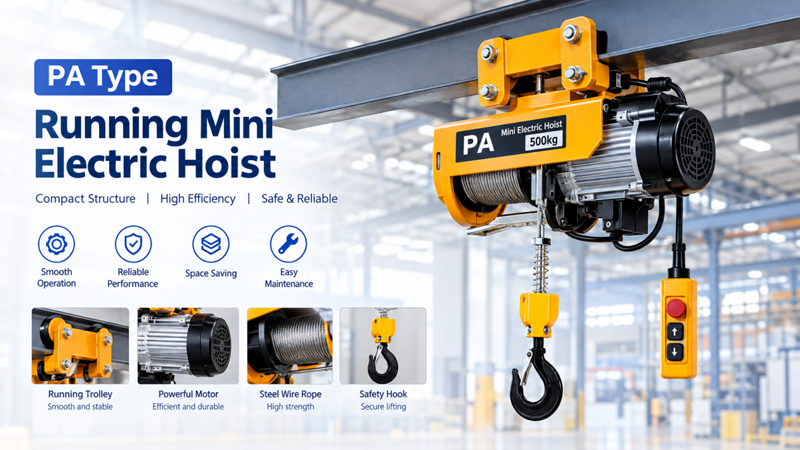
Learn about PA type running mini electric hoist, including key selection factors, typical applications, safety operation tips for small lifting jobs.
2026-10-20View More →
A pallet truck, also known as a pallet jack or pallet trolley, is one of the most practical tools for transporting palletized materials over short distances. Compared with moving goods manually, pallet trucks help reduce physical effort, improve workflow, and make warehouse operations more efficient.
2026-10-19View More →


 Tel:
+8613653129869
Tel:
+8613653129869
 Whatsapp:
+8613653129869
Whatsapp:
+8613653129869
 Email:
chuanghehoist@gmail.com
Email:
chuanghehoist@gmail.com
 Address:Donglu Village, Donglu Township, Qingyuan District, Baoding City, Hebei Province

 English
 Français
 Español



 Email
Email +8613653129869
 +8613653129869
 Home
Home Whatsapp
 chuanghehoist@gmail.com