


If you have any questions, please contact our online customer service staff immediately
 Click:379
Edit: Chuanghe Hoisting
Click:379
Edit: Chuanghe Hoisting Time:2026-09-05 15:52:50
When heavy loads need to be lifted in a workshop, construction site, warehouse, maintenance area, or installation project, not every application requires an electric hoist or crane.
Sometimes, the best solution is simpler.
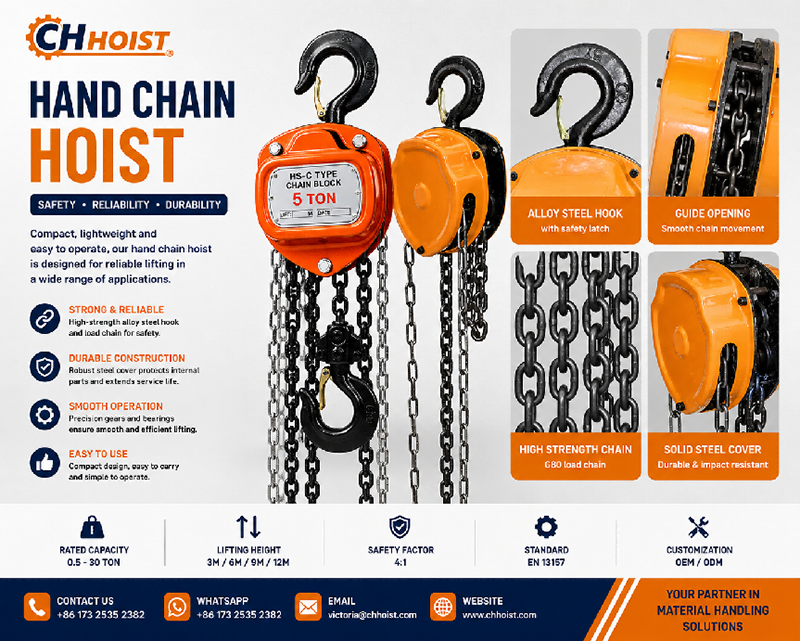
A Hand Chain Hoist can provide reliable lifting without electricity, batteries, or complicated control systems. This makes manual chain hoists particularly useful in locations where portability, simplicity, and cost-effectiveness are important.
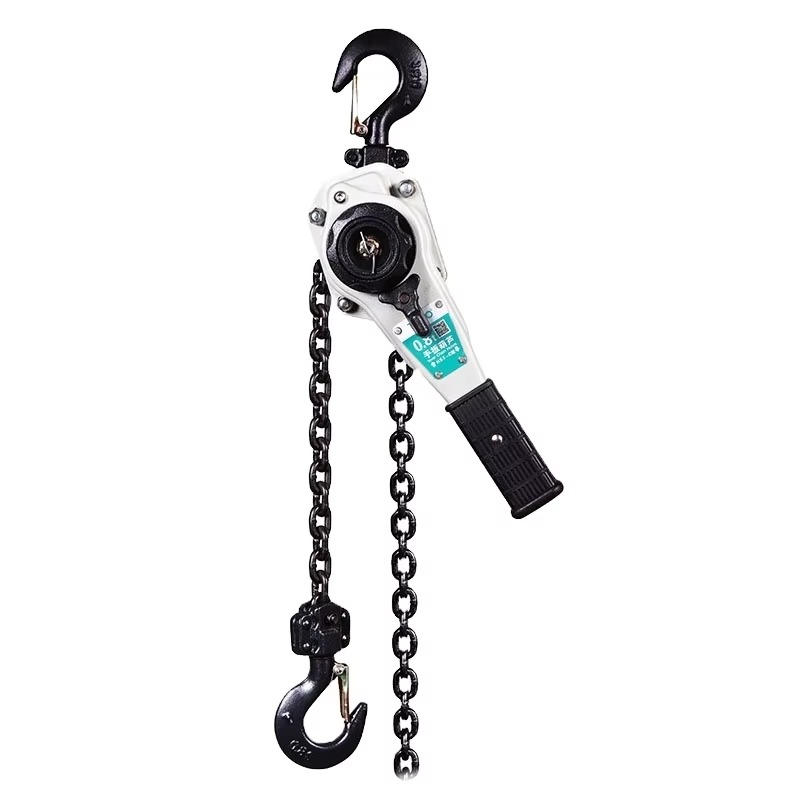
The HS-C Hand Chain Hoist is designed for manual lifting applications where operators need a practical and dependable lifting tool.
Manual chain hoists are widely used for:
· Machinery installation
· Factory maintenance
· Construction
· Steel structure installation
· Workshops
· Warehouses
· Equipment repair
· Agricultural applications
· General industrial lifting
For distributors and industrial equipment buyers, hand chain hoists are also an important product category because they have a wide range of applications and can complement electric hoists, lever hoists, winches, lifting slings, shackles, and other rigging equipment.
CH HOIST currently lists hand chain hoists as one of its core Manual Chain Hoist product categories, alongside lever hoists.
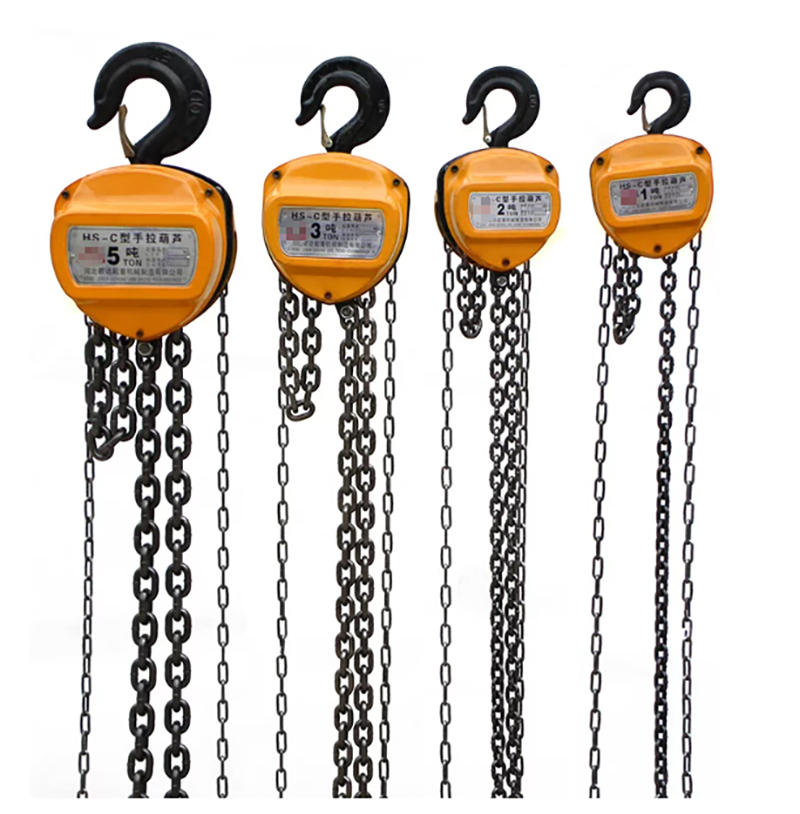
An HS-C Hand Chain Hoist is a manually operated lifting device that uses mechanical transmission and a hand chain to raise and lower loads.
Unlike an electric chain hoist, a hand chain hoist does not require an electrical power source.
The operator pulls the hand chain, which transfers mechanical force through the internal gear system. The load chain then moves through the chain wheel and raises or lowers the load.
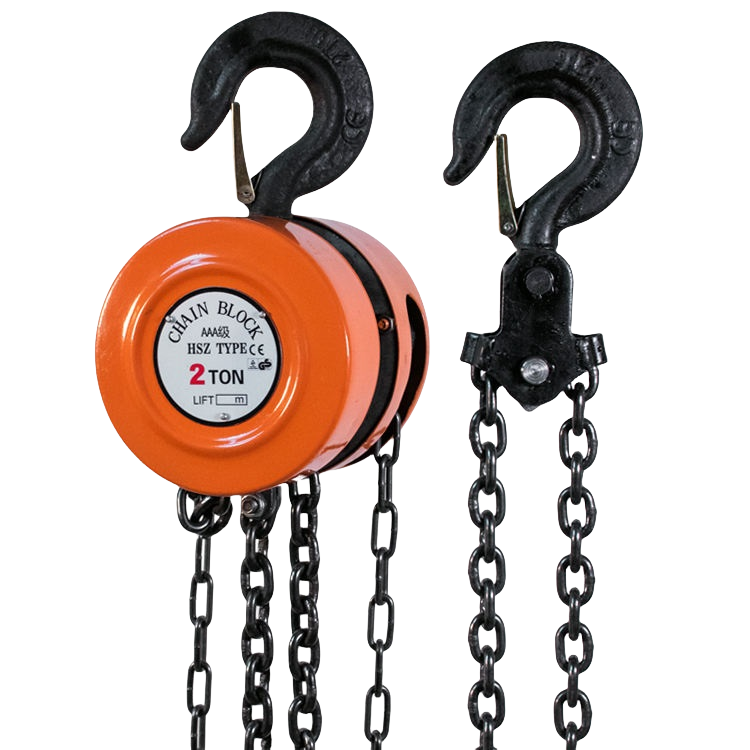
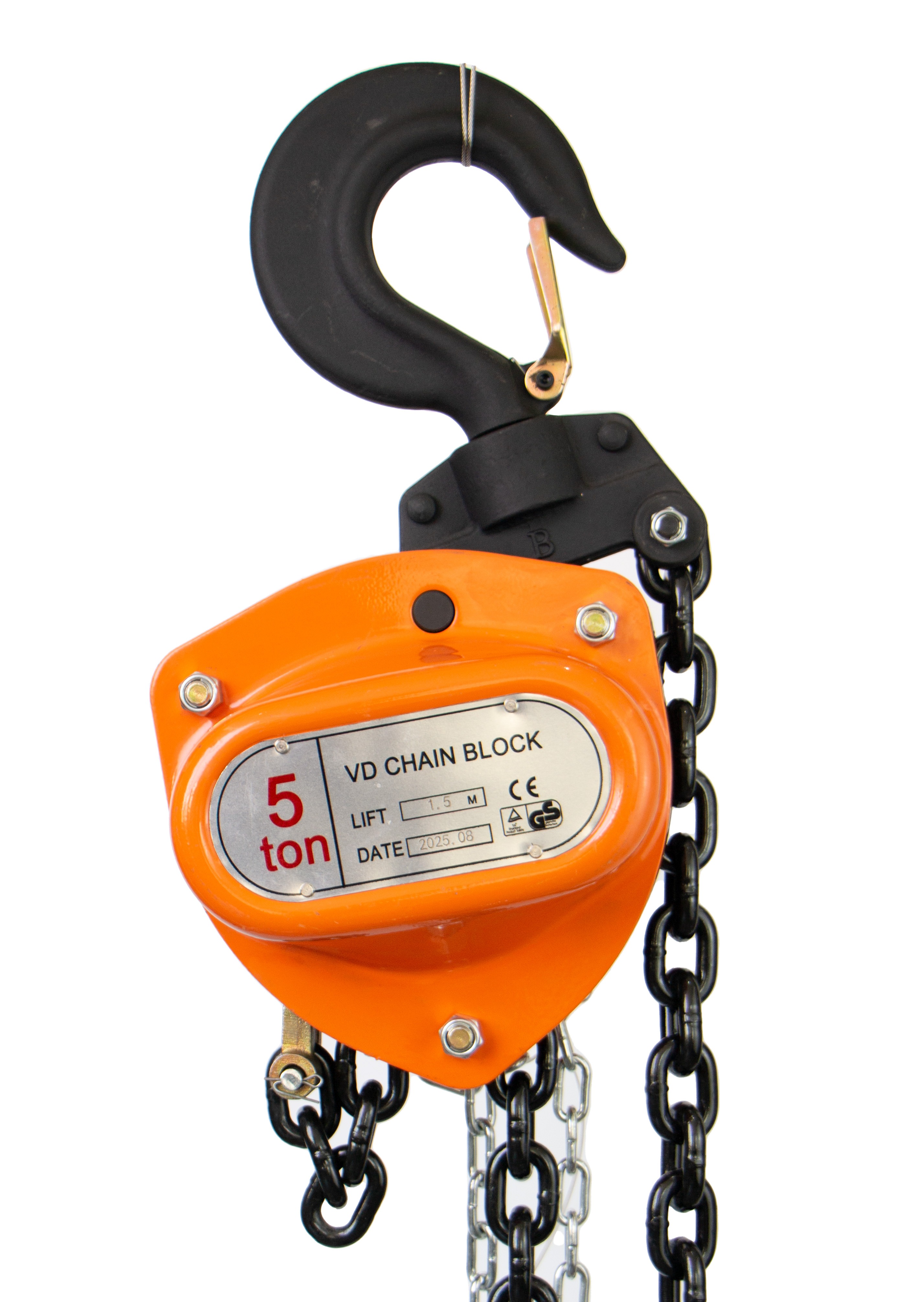
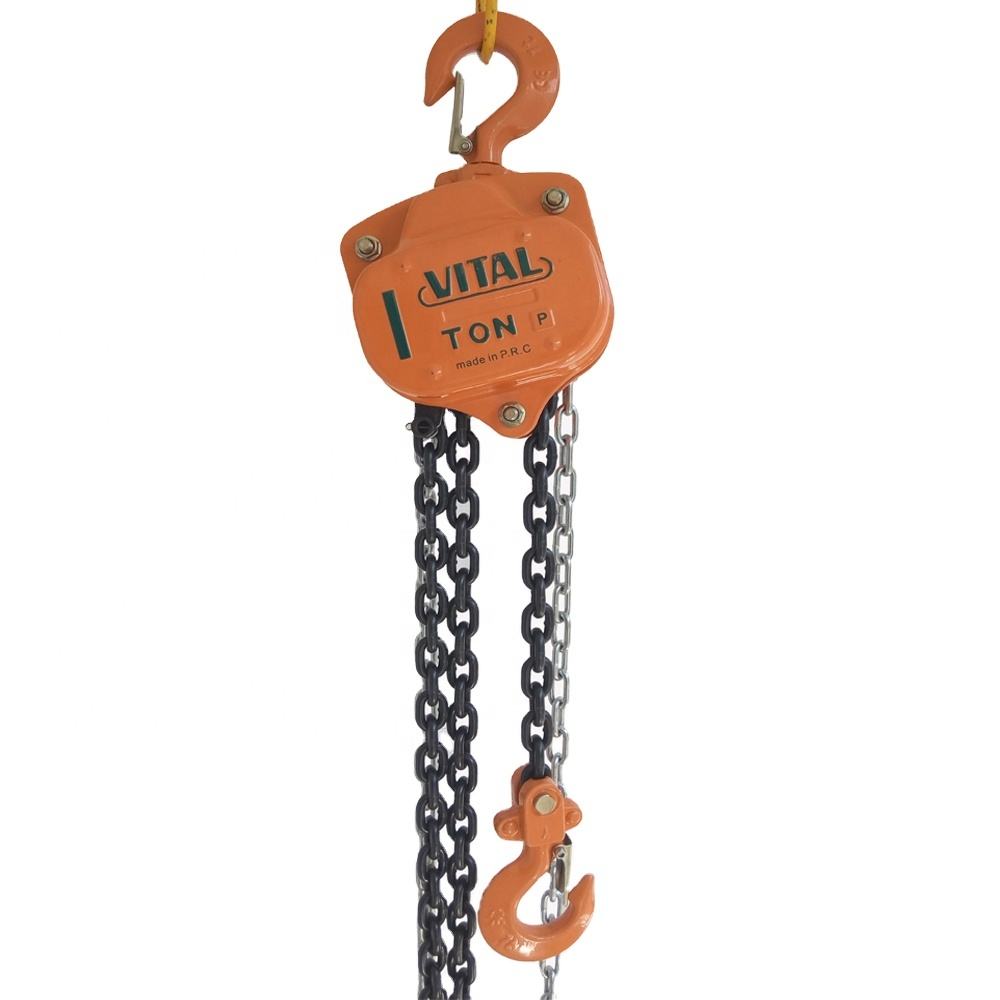
A typical hand chain hoist consists of:
· Upper hook
· Lower hook
· Load chain
· Hand chain
· Chain wheel
· Gears
· Brake system
· Lifting mechanism
· Side plates
· Chain guide
· Hook safety latch
The relatively simple mechanical design is one of the biggest advantages of manual chain hoists.
There are fewer electrical components to maintain, and the equipment can be used in locations where electricity is unavailable.
The operating principle of a manual chain hoist is simple but highly effective.
The upper hook is connected to a suitable supporting point.
This could be:
· Crane beam
· Gantry crane
· Jib crane
· Lifting frame
· Structural support
The supporting structure must be suitable for the intended load.
The lower hook is attached to the load using an appropriate connection method.
The load should be properly balanced before lifting.
The operator pulls the hand chain.
The movement rotates the internal chain wheel.
The gear mechanism converts the operator's relatively small manual input into a larger lifting force.
This mechanical advantage allows one operator to lift loads that would otherwise be impossible to lift manually.
The chain wheel engages the load chain.
As the chain moves through the lifting mechanism, the lower hook moves upward or downward.
When the operator stops pulling the hand chain, the braking mechanism helps hold the suspended load in position.
This is one of the most important safety functions of a manual chain hoist.
With electric and battery-powered lifting equipment becoming increasingly common, why do manual chain hoists remain popular?
The answer is flexibility.
A hand chain hoist can operate without an electrical power supply.
This is particularly useful in:
· Construction sites
· Remote locations
· Outdoor projects
· Temporary work areas
· Maintenance applications
The operating principle is straightforward.
An experienced operator can quickly learn the basic lifting and lowering procedure.
Compared with larger lifting equipment, a manual chain hoist can be relatively easy to transport between work locations.
This is valuable for maintenance teams and contractors who work at different sites.
A manual chain hoist does not require:
· Electricity
· Battery charging
· Fuel
· Complex electronic controls
This can help reduce operating costs.
A mechanical lifting device generally has fewer electronic components than powered lifting equipment.
Routine inspection, lubrication, chain inspection, and brake checks can help maintain reliable performance.
One of the most common purchasing questions is whether to choose a manual or electric chain hoist.
Feature | HS-C Hand Chain Hoist | Electric Chain Hoist |
Power source | Manual | Electricity |
Operator effort | Higher | Lower |
Portability | Excellent | Depends on model |
Electricity required | No | Yes |
Repetitive lifting | Moderate | Excellent |
Maintenance | Relatively simple | More complex |
Initial investment | Generally lower | Generally higher |
Remote locations | Excellent | Requires power |
Best application | Occasional/manual lifting | Frequent lifting |
A hand chain hoist is often a good choice when lifting operations are:
· Occasional
· Portable
· Performed in areas without electricity
· Relatively low-frequency
An electric chain hoist is more suitable when:
· Loads are lifted repeatedly
· Productivity is a major concern
· The lifting cycle is frequent
· Operator effort needs to be minimized
The right choice depends on the actual application.
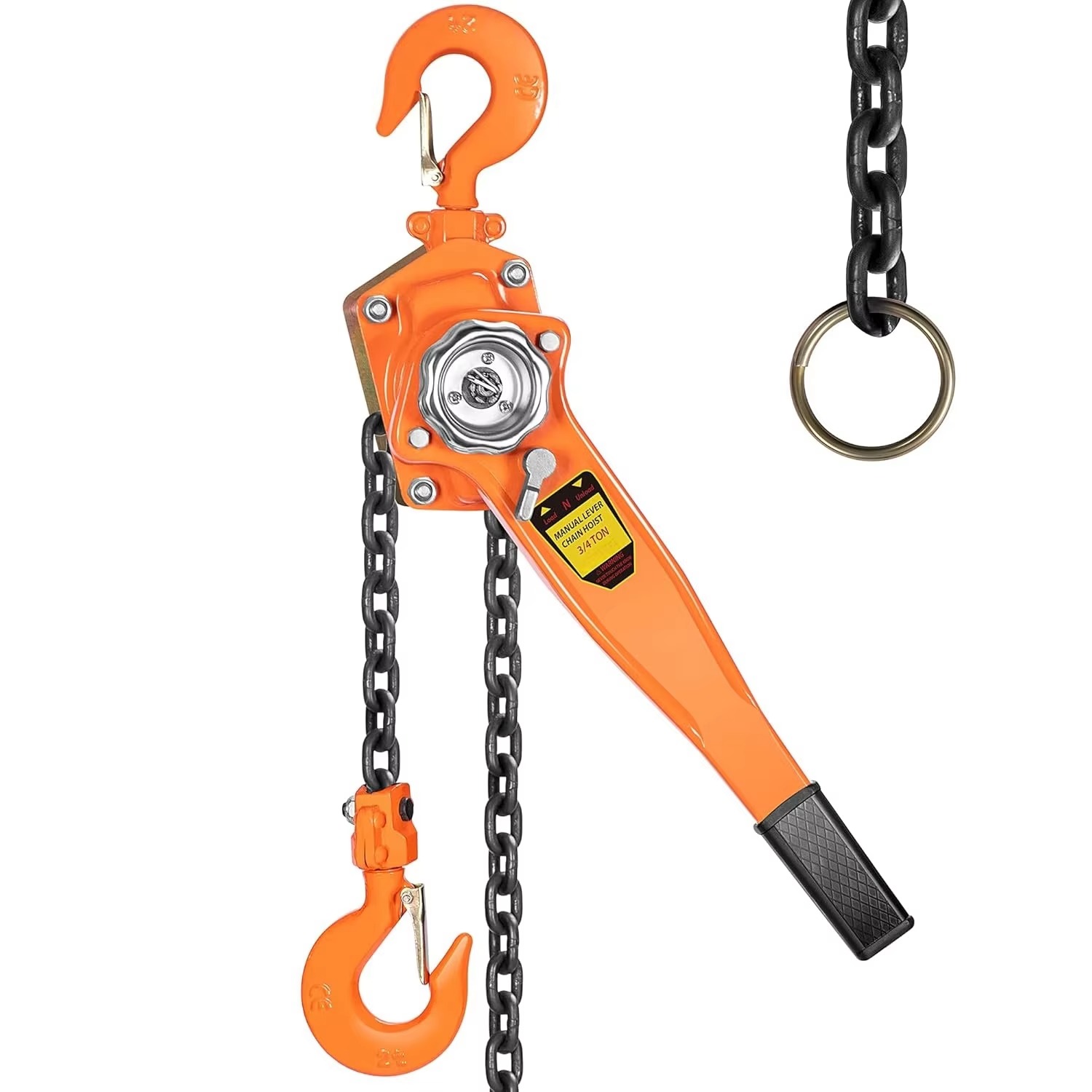
Hand chain hoists and lever hoists are both manual lifting products, but their applications are different.
The operator pulls a vertical hand chain to lift the load.
It is commonly used for:
· Vertical lifting
· Workshop lifting
· Equipment installation
· General load handling
The operator moves a lever back and forth.
Lever hoists are especially useful for:
· Pulling
· Tensioning
· Positioning
· Rigging
· Horizontal or angled pulling applications
CH HOIST also offers lever hoists with high-strength construction, G80 load chains, dual-pawl braking systems, and optional overload protection.
For many professional users, having both products available provides greater flexibility.
The load chain is one of the most important components of any chain hoist.
It carries the suspended load and must be suitable for the rated capacity of the equipment.
A professional hand chain hoist should use an appropriate high-strength load chain and should undergo suitable inspection and testing.
Current industry buyers increasingly pay close attention to chain grade, heat treatment, load testing, and durability when evaluating manual hoists.
The gear system provides the mechanical advantage required for manual lifting.
The operator applies relatively low force to the hand chain, while the gear mechanism increases the mechanical lifting force.
Important considerations include:
· Gear material
· Heat treatment
· Manufacturing precision
· Lubrication
· Wear resistance
A good gear system contributes to smooth operation and long service life.
The braking system is critical for load control.
When the operator stops pulling the hand chain, the brake should help maintain the load position.
A reliable brake should provide:
· Stable holding
· Controlled operation
· Good durability
· Consistent performance
The brake should be inspected regularly according to the manufacturer's maintenance requirements.
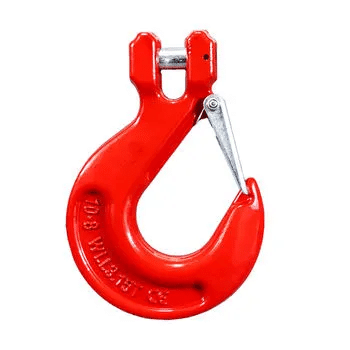
The hooks connect the hoist to the supporting structure and load.
A suitable hook should provide sufficient strength for the rated capacity and should include an appropriate safety latch.
Operators should regularly check hooks for:
· Cracks
· Deformation
· Excessive wear
· Corrosion
· Damaged safety latches
A damaged hook should not continue to be used.
The hand chain allows the operator to control the hoist.
It should move smoothly through the mechanism without excessive resistance.
If the hand chain suddenly becomes difficult to operate, this may indicate:
· Overloading
· Chain problems
· Gear problems
· Brake problems
· Internal mechanical issues
The equipment should be inspected before continued operation.
Factories frequently need to lift and reposition machinery components.
Hand chain hoists can assist with:
· Motor installation
· Pump maintenance
· Gearbox replacement
· Equipment assembly
· Component positioning
Construction sites often lack permanent lifting infrastructure.
A portable manual chain hoist can be useful for selected lifting tasks when a suitable support point is available.
Applications can include:
· Steel structure installation
· Equipment positioning
· Pipe installation
· Machinery maintenance
Maintenance teams need reliable equipment that can be transported to different locations.
A manual chain hoist can be useful when replacing:
· Motors
· Pumps
· Valves
· Gearboxes
· Mechanical components
Hand chain hoists can be used for selected lifting and positioning operations where overhead support structures are available.
In agricultural workshops and machinery maintenance areas, manual lifting equipment can help handle:
· Engines
· Machinery components
· Pumps
· Agricultural equipment
Equipment installation often requires accurate positioning.
A hand chain hoist can provide controlled manual lifting for certain installation operations.
Selecting the correct capacity is essential.
First identify the heaviest load that needs to be lifted.
Never select equipment based only on the average load.
For example, if most loads are 1 ton but the maximum load is 2 tons, the lifting system must be selected according to the actual requirements and applicable safety standards.
Determine how high the load needs to be lifted.
Standard chain lengths are available for many applications, while customized chain lengths may be possible depending on the product.
How often will the hoist be used?
A standard manual chain hoist may be sufficient.
If the hoist operates many times every day, buyers should pay greater attention to:
· Mechanical durability
· Brake performance
· Chain quality
· Gear quality
· Maintenance support
The distance between the supporting structure and the load can affect the required chain length and overall working clearance.
Different environments create different requirements.
For example:
· Indoor workshops
· Outdoor construction
· Dusty environments
· Humid environments
· Corrosive environments
The surface treatment, lubrication, and maintenance schedule should be appropriate for the environment.
A manual hoist may look simple, but it is still lifting equipment and must be treated as such.
Before lifting:
✔ Inspect the load chain.
✔ Check the hooks.
✔ Check the safety latches.
✔ Inspect the brake.
✔ Confirm the rated capacity.
✔ Check the supporting structure.
✔ Make sure the load is stable.
During lifting:
✔ Lift smoothly.
✔ Keep the load balanced.
✔ Avoid sudden movements.
✔ Keep people away from the suspended load.
✔ Monitor the hoist for unusual sounds or resistance.
Never:
❌ Exceed the rated capacity.
❌ Lift people with equipment not designed for personnel lifting.
❌ Use damaged chains.
❌ Use deformed hooks.
❌ Stand underneath a suspended load.
❌ Pull the hand chain violently.
❌ Modify the hoist without authorization.
❌ Use an unsuitable supporting structure.
Safety should always be the first consideration.
One of the most serious mistakes is exceeding the rated capacity.
The lifting capacity should never be treated as an approximate number.
Manual chain hoists are generally designed for appropriate vertical lifting applications.
Side loading can create forces that the equipment and support structure were not designed to withstand.
An unstable load can swing unexpectedly.
The load should be properly connected and balanced before lifting.
Chains should be inspected regularly.
If a chain shows significant wear, deformation, corrosion, or other damage, it should be removed from service according to the manufacturer's requirements.
Even a high-quality hoist cannot compensate for an unsuitable support point.
The supporting structure must be capable of safely handling the expected load.
Proper maintenance can extend service life and improve reliability.
Look for:
· Wear
· Deformation
· Corrosion
· Cracks
· Damaged links
Check:
· Hook opening
· Deformation
· Cracks
· Corrosion
· Safety latch condition
The brake should hold the load correctly and operate consistently.
Any abnormal behavior should be investigated.
Appropriate lubrication can help reduce friction and wear.
Follow the manufacturer's maintenance recommendations regarding lubricant type and frequency.
Abnormal noise, vibration, or resistance during operation may indicate internal mechanical problems.
Industrial lifting technology continues to develop.
Electric hoists are becoming more efficient. Lithium battery equipment is becoming more common. Warehouse automation is expanding.
But manual chain hoists remain highly relevant.
Why?
Because industrial environments are not always standardized.
A construction site may not have electricity.
A maintenance team may need equipment that can be transported easily.
A workshop may only need lifting equipment occasionally.
A distributor may need an economical product with a wide range of applications.
In these situations, a manual chain hoist can still be one of the most practical solutions.
For international distributors, the HS-C hand chain hoist can be positioned as part of a broader lifting equipment portfolio.
Potential customers include:
· Industrial equipment distributors
· Rigging suppliers
· Construction equipment suppliers
· Crane dealers
· Warehouse equipment companies
· Machinery maintenance companies
· Steel structure contractors
A distributor can also combine hand chain hoists with:
· Lever hoists
· Electric chain hoists
· Wire rope electric hoists
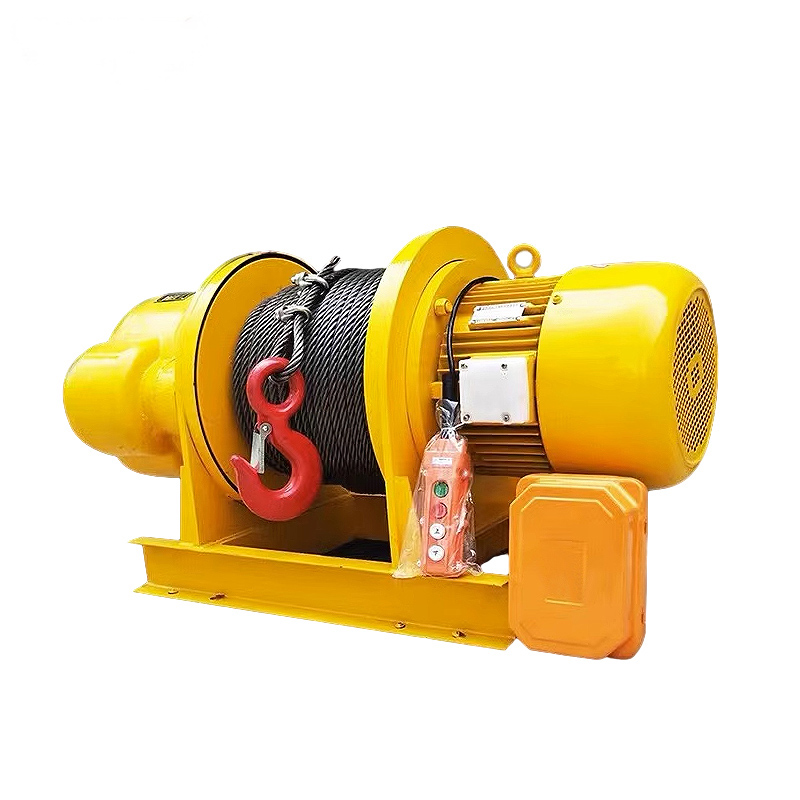
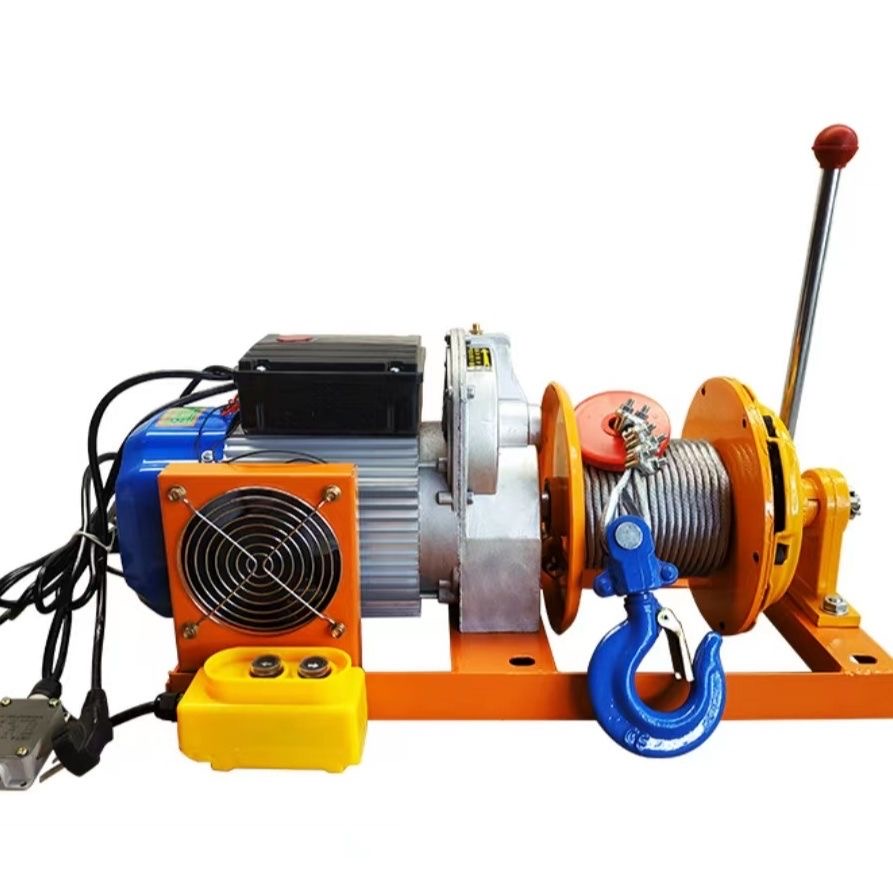
· Electric winches
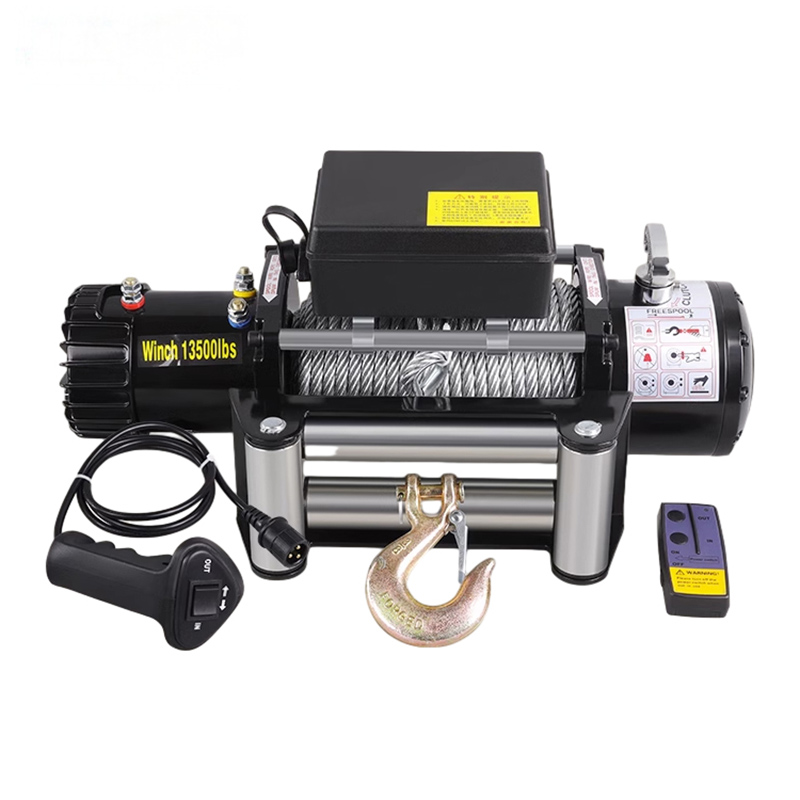
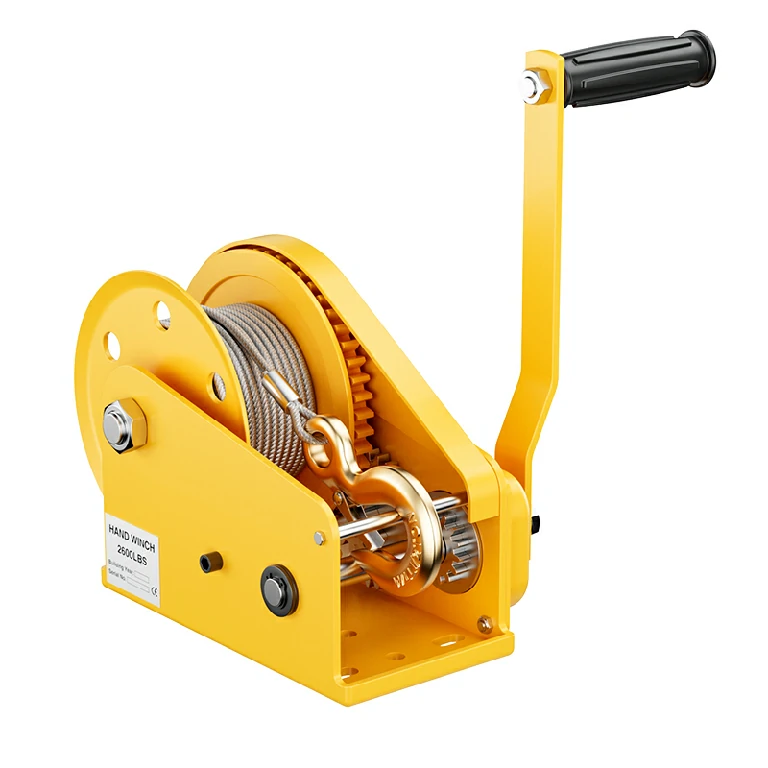
· Hand winches
· Lifting slings
· Shackles
· Lifting clamps
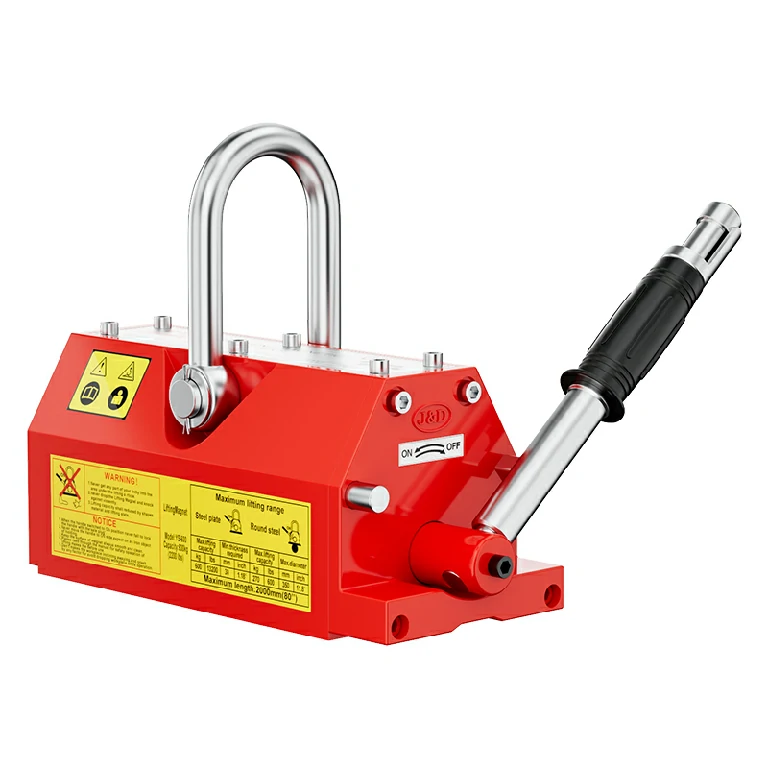
· Permanent magnetic lifters
This creates opportunities to provide customers with complete lifting solutions rather than a single product.
CH HOIST's product catalog currently includes multiple manual chain hoist models, including HSZ, VD and VT series products, as well as lever hoists.
Before placing an order, buyers should ask several important questions.
Confirm the exact rated load.
Check whether the standard chain length meets your application.
Ask about chain material, grade, treatment, and inspection.
Ask about the brake and hook safety latch.
For distributors, spare parts availability can be an important consideration.
Ask about:
· Logo
· Color
· Chain length
· Packaging
· Product labeling
Depending on the target market, buyers may require specific certifications or documentation.
Manual chain hoists have applications across many international markets.
Potential markets include:
· Argentina
· Brazil
· Mexico
· Vietnam
· Thailand
· Indonesia
· Philippines
· India
· Pakistan
· UAE
· Saudi Arabia
· Kazakhstan
· Uzbekistan
· Tanzania
· Ghana
Different markets may have different preferences regarding capacity, chain length, color, packaging, certification, and labeling.
For distributors, a flexible supplier can make it easier to adapt the product to local market requirements.
CH HOIST is focused on lifting and material handling equipment and provides products for industrial customers and international distributors.
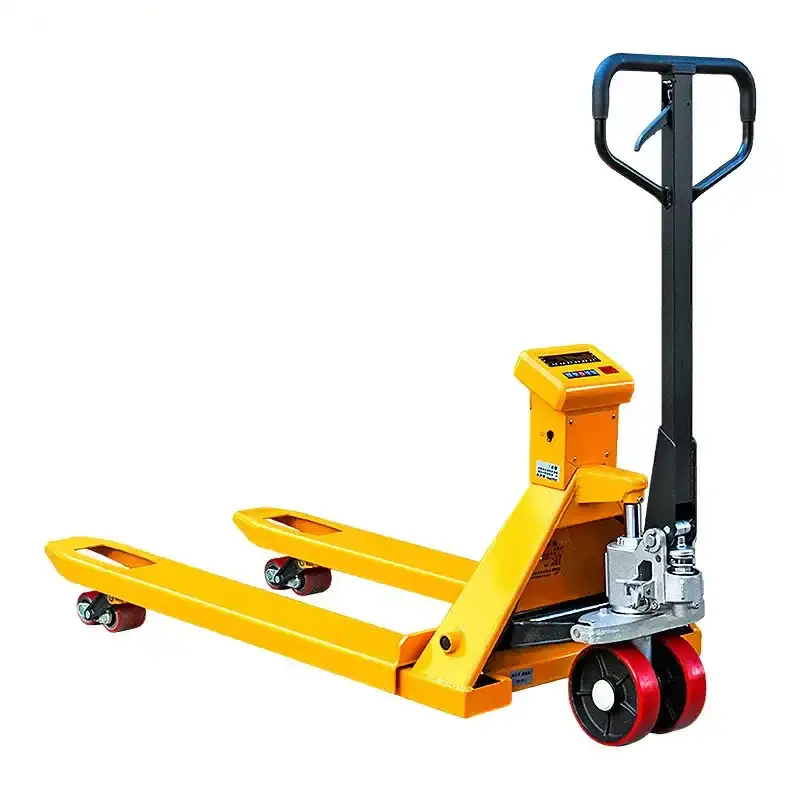
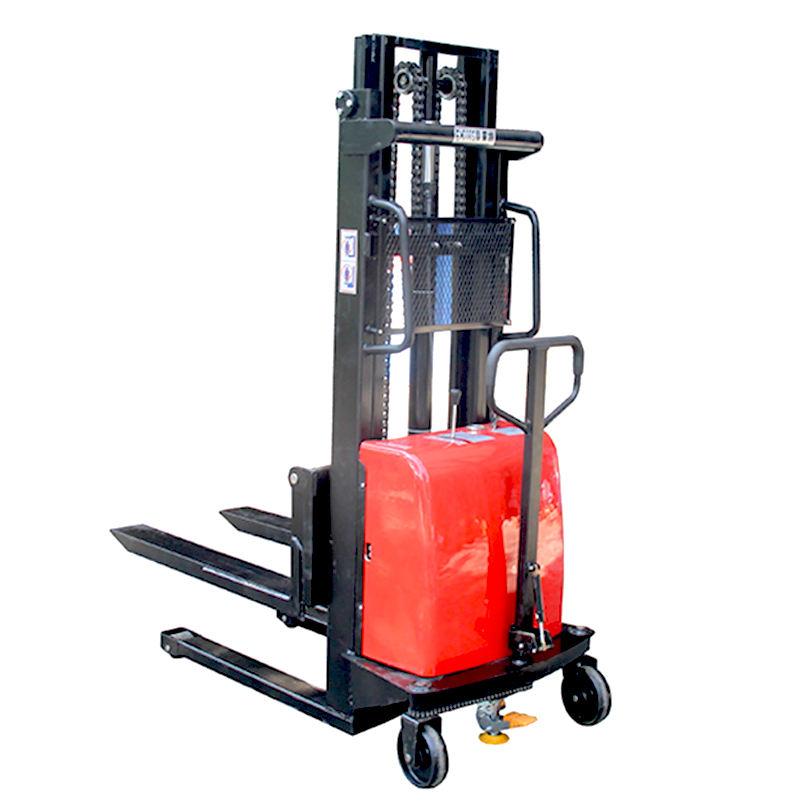
Its current product range includes manual chain hoists, lever hoists, electric hoists, electric pallet trucks, stackers, winches, lifting slings, shackles, and other lifting equipment.
The company's website also highlights factory-direct sales, technical capabilities, OEM/ODM support, and international supply.
For buyers looking to develop a broader lifting equipment product line, this can be an advantage.
The HS-C Hand Chain Hoist represents one of the simplest and most practical approaches to manual lifting.
It does not require electricity.
It does not require a battery.
It does not require complicated electronic controls.
Instead, it relies on a carefully designed mechanical transmission system, load chain, hooks, and braking mechanism to provide controlled manual lifting.
For workshops, construction projects, maintenance teams, warehouses, machinery installation, and industrial applications, this combination of simplicity, portability, flexibility, and low operating requirements continues to make manual chain hoists valuable.
When choosing an HS-C hand chain hoist, buyers should focus on more than price.
Consider:
Rated capacity + chain quality + brake performance + hook quality + lifting height + working environment + maintenance + supplier support.
The right manual hoist can become a dependable tool for years of industrial lifting work.
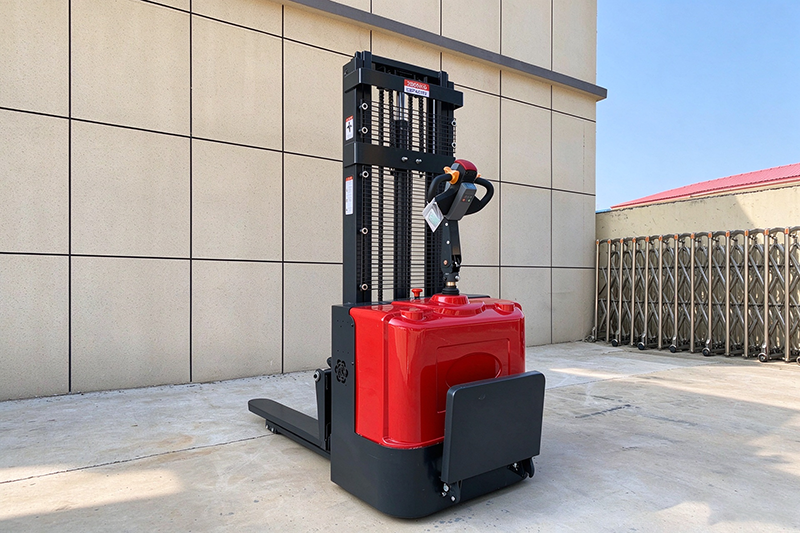
Modern warehouses, distribution centers, and manufacturing facilities need efficient ways to lift, move, and stack palletized goods. As businesses handle more products and work to optimize storage space, choosing the right material handling equipment becomes increasingly important.
2026-10-21View More →
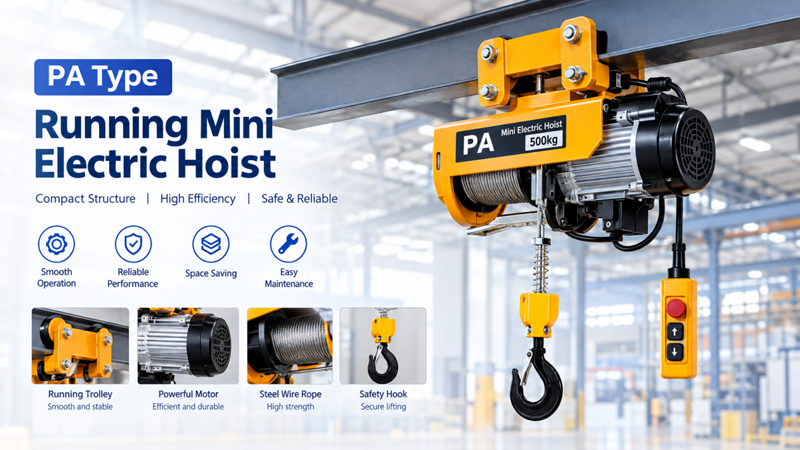
Learn about PA type running mini electric hoist, including key selection factors, typical applications, safety operation tips for small lifting jobs.
2026-10-20View More →
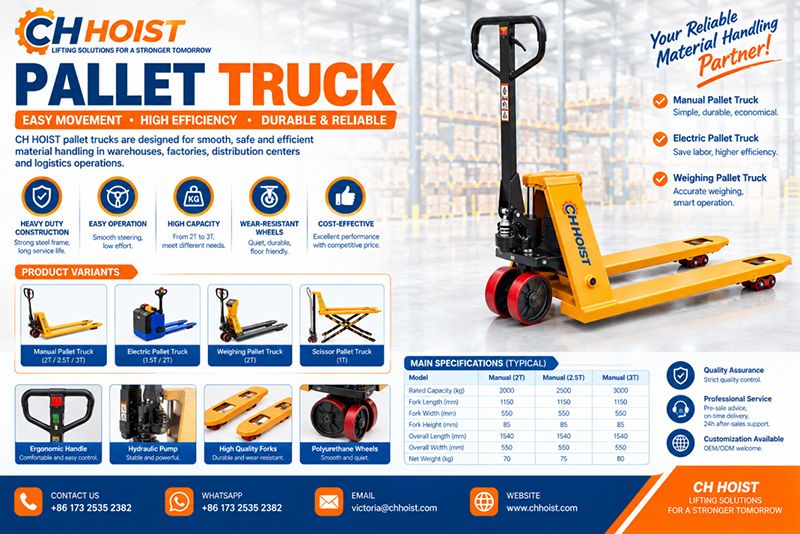
A pallet truck, also known as a pallet jack or pallet trolley, is one of the most practical tools for transporting palletized materials over short distances. Compared with moving goods manually, pallet trucks help reduce physical effort, improve workflow, and make warehouse operations more efficient.
2026-10-19View More →


 Tel:
+8613653129869
Tel:
+8613653129869
 Whatsapp:
+8613653129869
Whatsapp:
+8613653129869
 Email:
chuanghehoist@gmail.com
Email:
chuanghehoist@gmail.com
 Address:Donglu Village, Donglu Township, Qingyuan District, Baoding City, Hebei Province

 English
 Français
 Español



 Email
Email +8613653129869
 +8613653129869
 Home
Home Whatsapp
 chuanghehoist@gmail.com