

If you have any questions, please contact our online customer service staff immediately
 Click:310
Edit: Chuanghe Hoisting
 Time:2026-09-18 09:29:53
Not every warehouse needs a large forklift or a fully electric material handling machine.
For small and medium-sized warehouses, workshops, factories, retail stores and logistics facilities, there are many applications where the main requirement is simple:
Lift a pallet, move it over a short distance, and position it at the required height.
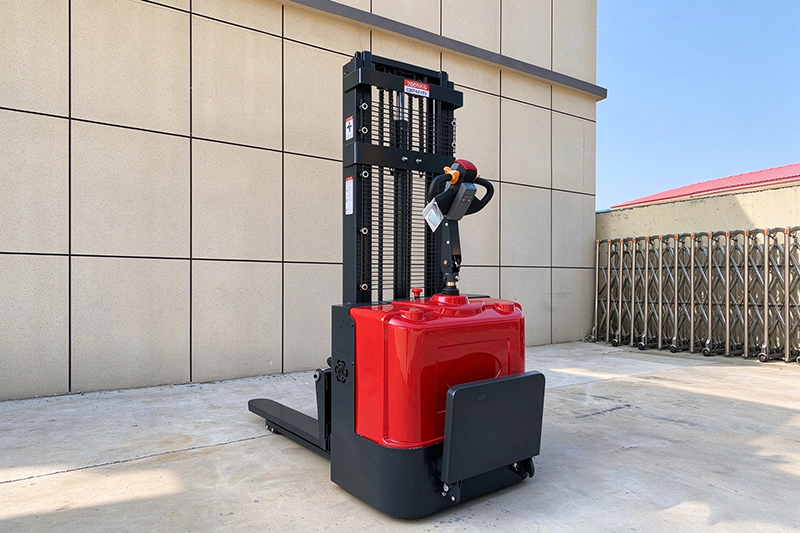
This is where the Hydraulic Manual Stacker Forklift becomes a practical material handling solution.
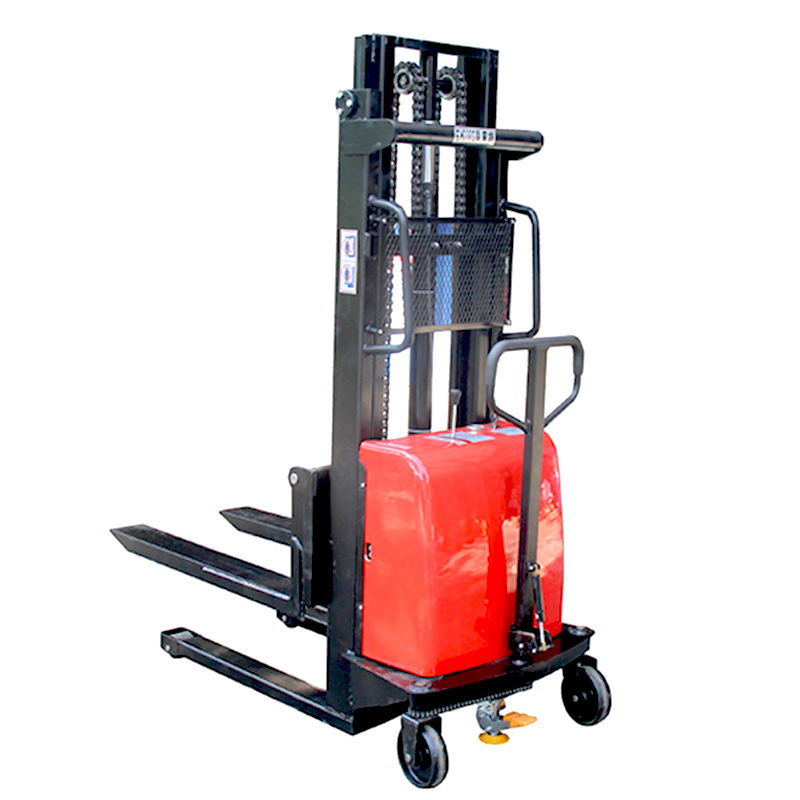
A hydraulic manual stacker combines a steel lifting structure, forks, wheels and a hydraulic lifting mechanism to raise palletized goods without requiring a battery-powered drive system.
Compared with a conventional forklift, it is more compact and mechanically simpler. Compared with a manual pallet truck, it provides an important additional function: vertical lifting and pallet stacking.
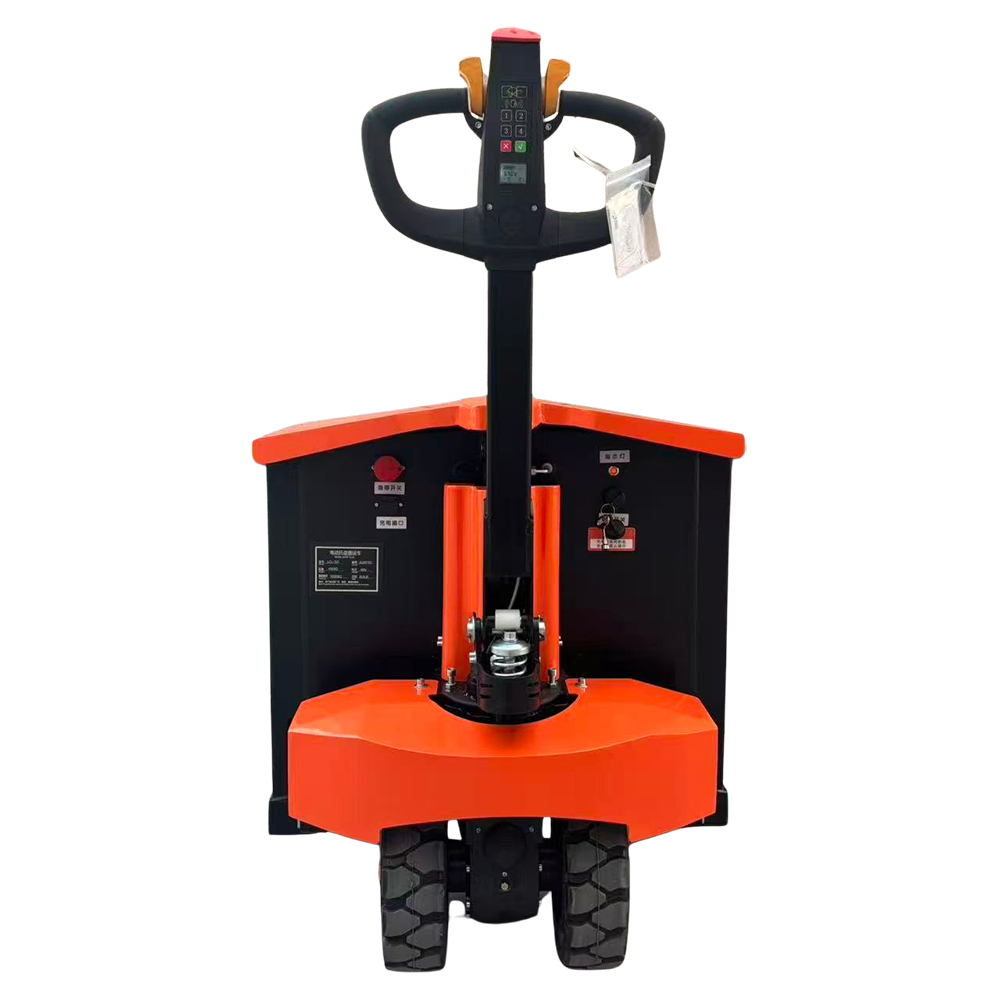
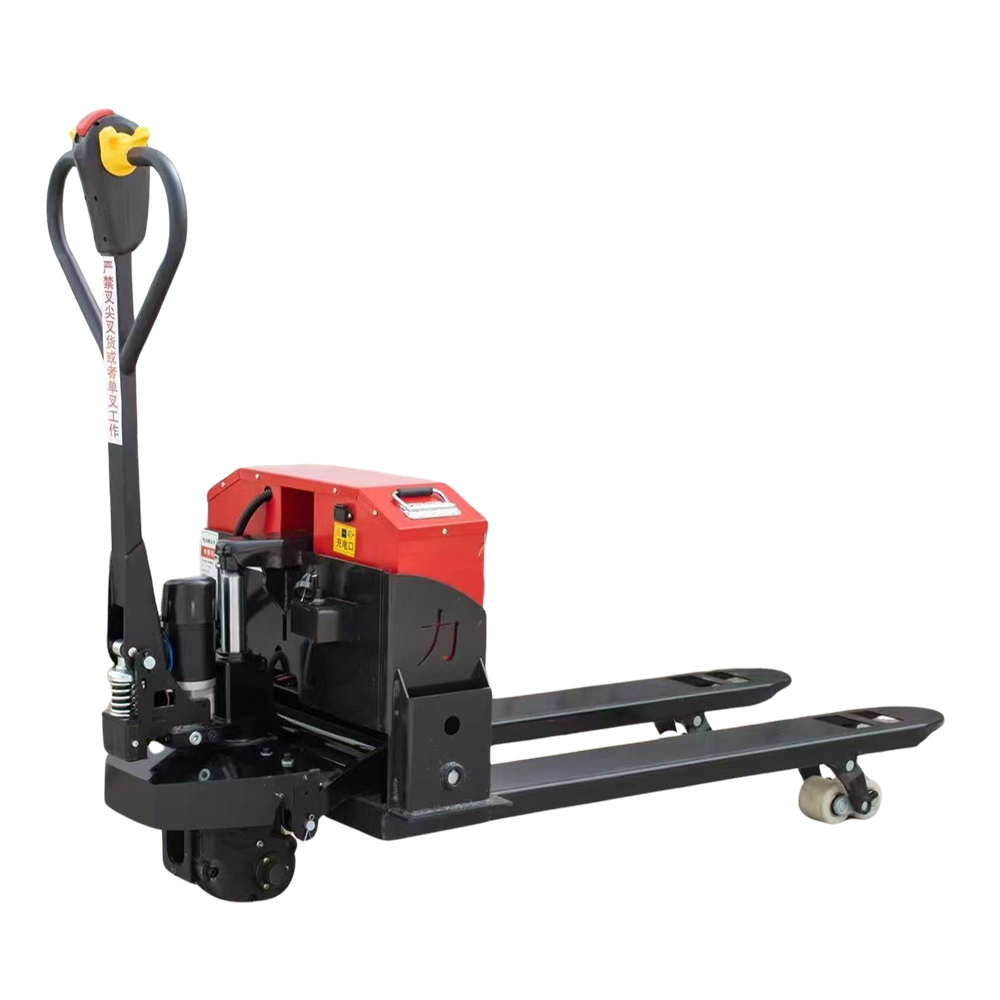
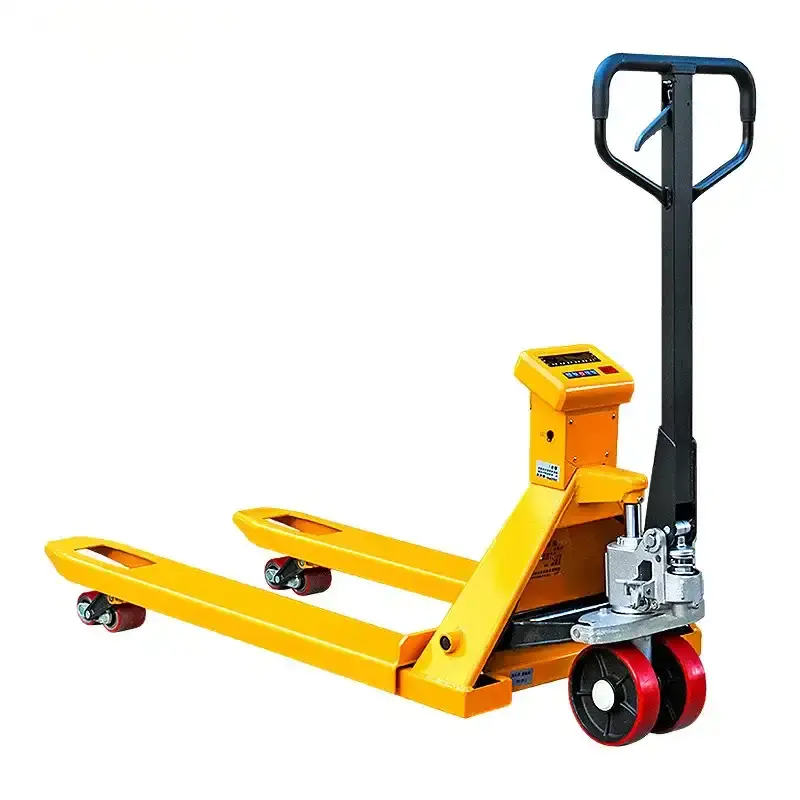
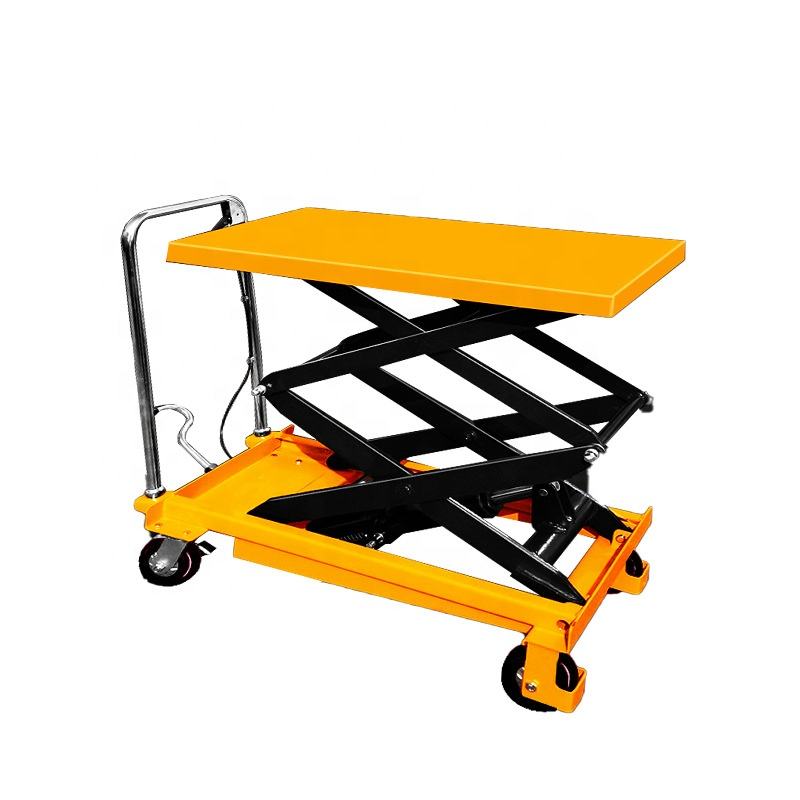
CH HOIST currently lists a Hydraulic Manual Stacker Forklift as part of its material handling product range, alongside manual pallet trucks, electric pallet trucks, hydraulic lift tables and electric stackers.
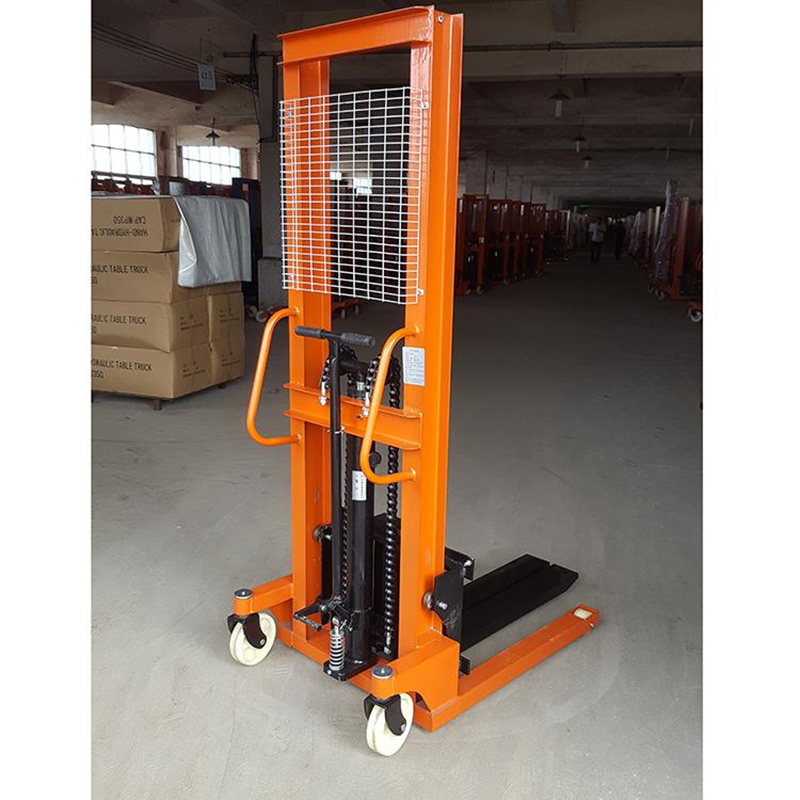
A hydraulic manual stacker forklift is a manually operated pallet lifting machine designed to lift and move palletized loads.
The operator generally uses a hydraulic pump mechanism to raise the forks.
The basic working process is:
Approach the pallet → Insert the forks → Pump the hydraulic handle → Raise the load → Move the stacker → Position the load → Lower the forks
Unlike a fully electric stacker, the lifting function is manually operated through a hydraulic mechanism.
This makes the equipment particularly attractive for applications where:
· Pallet handling is not extremely frequent
· Working distances are relatively short
· Electricity or battery charging is inconvenient
· A simple mechanical solution is preferred
· The warehouse has limited space
· Initial equipment cost needs to be controlled
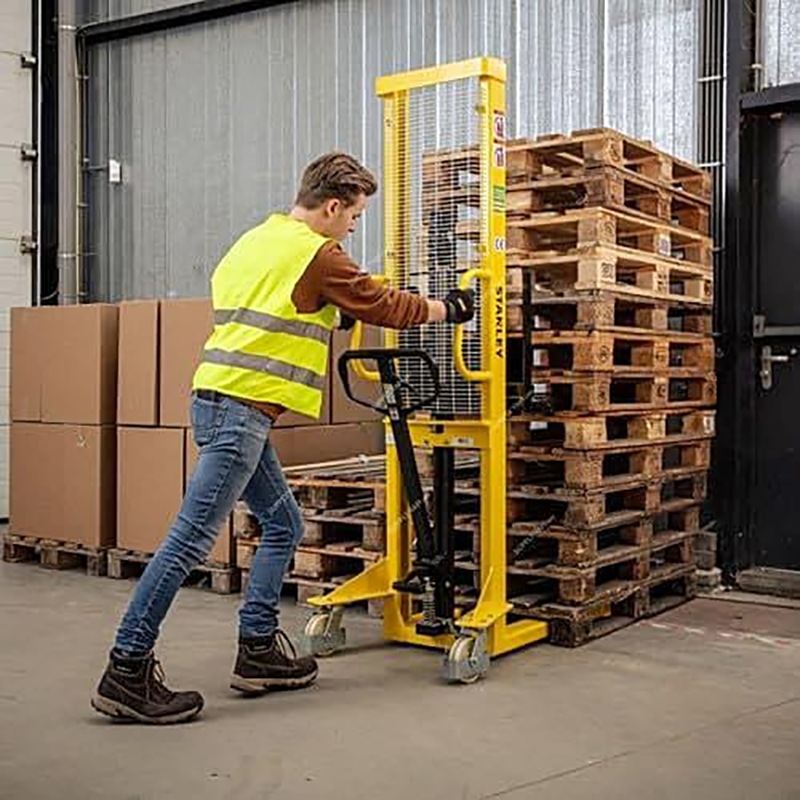
Although the structure is relatively simple, several components work together to provide stable lifting.
The hydraulic pump is the core lifting mechanism.
When the operator operates the pump handle, hydraulic pressure is generated and transmitted through the hydraulic system.
This pressure raises the lifting mechanism and forks.
The hydraulic system allows the operator to lift a pallet without manually lifting the load itself.
The mast provides the vertical structure required for lifting.
Depending on the specific design, the mast configuration determines the available lifting height.
A strong mast is essential because it must withstand the forces generated when a pallet is lifted.
The forks are positioned underneath the pallet.
Fork dimensions should be compatible with the pallets being handled.
Before purchasing, buyers should confirm:
· Fork length
· Fork width
· Fork spacing
· Rated capacity
· Load center
These specifications can vary according to the model.
The handle provides control of the machine.
It can be used to:
· Steer the stacker
· Operate the hydraulic pump
· Position the machine
· Control lowering
An ergonomic handle can make repeated operation easier.
Wheels support the stacker and allow it to move around the working area.
Wheel selection should take into account:
· Floor condition
· Indoor or outdoor use
· Load weight
· Required maneuverability
· Operating frequency
For warehouse applications, smooth and durable wheels can help improve handling comfort.
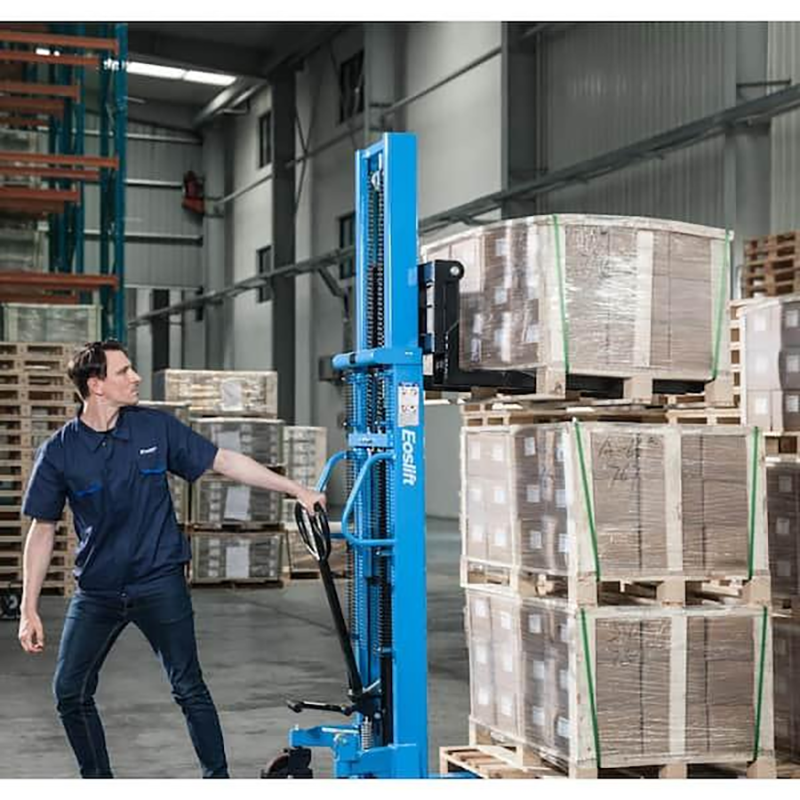
One of the main advantages of a manual hydraulic stacker is its relatively straightforward design.
It does not require:
· Traction batteries
· Drive motors
· Complex electronic controllers
· Battery charging systems
This can simplify operation and maintenance.
Unlike electric stackers, a manual hydraulic stacker does not depend on a rechargeable battery for its lifting operation.
This can be useful in facilities where:
· Handling frequency is low
· Charging infrastructure is unavailable
· Equipment is used intermittently
· Simple mechanical equipment is preferred
Manual stackers are generally designed for relatively compact working environments.
They can be useful in:
· Small warehouses
· Workshops
· Retail stockrooms
· Manufacturing plants
· Storage rooms
· Maintenance areas
The actual turning radius and dimensions should always be checked against the facility layout before purchase.
4. Lower Equipment Complexity
Because the machine does not require a powered travel system, its construction can be simpler than that of a fully electric stacker.
For some users, this means easier daily operation and a more straightforward maintenance routine.
Not every warehouse handles pallets continuously.
If a business only needs to lift or position pallets occasionally, purchasing a large electric forklift may not be necessary.
A manual hydraulic stacker can provide the required lifting function without introducing unnecessary equipment complexity.
These two products are often confused.
They serve different primary purposes.
Feature | Manual Pallet Truck | Hydraulic Manual Stacker |
Main function | Pallet transportation | Pallet lifting and stacking |
Horizontal movement | Yes | Yes |
Vertical lifting | Limited | Yes |
Stacking pallets | No | Yes |
Hydraulic system | Yes | Yes |
Battery | No | No |
Manual operation | Yes | Yes |
Typical application | Short-distance transport | Lifting + short-distance transport |
A manual pallet truck is primarily a horizontal transportation tool.
A manual stacker adds vertical lifting capability.
Therefore, if the warehouse only needs to move pallets from point A to point B, a pallet truck may be sufficient.
If pallets need to be raised to a higher position, a stacker becomes more appropriate.
The choice between manual and electric equipment depends heavily on workload.
Feature | Manual Hydraulic Stacker | Electric Stacker |
Travel | Manual | Electric or powered, depending on model |
Lifting | Manual hydraulic | Electric |
Battery | Not required | Required |
Operator effort | Higher | Lower |
Equipment complexity | Lower | Higher |
Initial investment | Generally lower | Generally higher |
Frequent handling | Less suitable | More suitable |
Occasional handling | Suitable | Suitable |
Maintenance | Relatively simple | More components |
Charging | Not required | Required |
CH HOIST's current product range includes both Hydraulic Manual Stacker Forklift and Electric Stacker Crane, allowing different warehouse applications to use different equipment configurations.
The right choice depends on the customer's workload rather than simply whether one machine is newer or more technologically advanced.
Small warehouses may not require large forklifts.
A manual stacker can provide pallet lifting capability while maintaining a relatively compact footprint.
Typical tasks include:
· Pallet positioning
· Storage handling
· Short-distance transportation
· Loading and unloading
· Replenishment
Factories often need to move raw materials, components and finished goods.
A manual stacker can be useful for occasional pallet lifting around production areas.
Retail backrooms can use manual stackers to handle palletized inventory.
This is particularly useful when goods need to be lifted from floor level to a suitable storage position.
Small logistics operations may require simple pallet handling equipment for loading areas, temporary storage and internal transportation.
Manual stackers can also be used in workshops where heavy components or palletized materials need to be raised and positioned.
Choosing the correct model requires more than looking at the maximum capacity.
Here are the key factors buyers should evaluate.
Determine the maximum weight that needs to be lifted.
For example:
· 500 kg
· 1000 kg
· 1500 kg
· 2000 kg
The exact capacity depends on the specific model.
Do not select equipment based only on the average load. The rated capacity must be appropriate for the actual operating conditions.
This is one of the most important specifications.
Ask:
How high does the pallet actually need to be lifted?
Possible applications include:
· Floor-level positioning
· Low-level storage
· Workbench loading
· Rack loading
· Production-line feeding
The required lifting height should be determined before ordering.
Load center is another critical factor.
A machine's rated capacity is associated with a specific load center.
If the load extends significantly beyond the intended load center, the actual safe capacity can be affected.
Therefore, buyers should provide the supplier with:
· Pallet dimensions
· Load dimensions
· Load weight
· Load distribution
Forks should match the pallets used by the customer.
Important dimensions include:
· Fork length
· Fork width
· Fork spacing
· Fork thickness
Incorrect fork dimensions can make pallet entry difficult or create stability problems.
Measure the available operating space.
A manual stacker may be suitable for narrow areas, but the actual overall dimensions and turning requirements must be checked.
Consider whether the machine will operate on:
· Smooth concrete
· Warehouse floors
· Rough concrete
· Ramps
· Uneven surfaces
Floor conditions affect maneuverability and wheel selection.
Although a manual stacker is mechanically simple, it still handles heavy loads and must be operated correctly.
Never exceed the manufacturer's rated load.
The maximum safe capacity depends on the machine configuration and load conditions.
The pallet should be positioned evenly across the forks.
An off-center load can affect stability.
Before operation, inspect the forks for:
· Bending
· Cracks
· Deformation
· Excessive wear
Damaged forks should not be used.
Inspect for:
· Hydraulic oil leakage
· Abnormal lowering
· Slow lifting
· Unusual noise
· Damaged hydraulic components
Any abnormal condition should be addressed before continued operation.
Palletized goods should be stable before transportation.
Loose or poorly distributed cargo can create additional risks during lifting and movement.
A manual stacker is designed for material handling, not passenger transportation.
Never allow people to stand on the forks or use the equipment as a personnel lifting platform unless the machine is specifically designed and certified for that purpose.
One of the benefits of a manual hydraulic stacker is its relatively straightforward maintenance requirements.
A basic inspection program should include:
Check:
· Oil level where applicable
· Hydraulic leakage
· Pump operation
· Lowering function
Check:
· Bending
· Cracks
· Wear
· Deformation
Inspect:
· Mast structure
· Rollers
· Guides
· Chains where applicable
· Lubrication points
Check:
· Wear
· Cracks
· Flat spots
· Rotation
· Fasteners
Inspect the main frame and connection points for visible damage or looseness.
Regular maintenance helps keep the equipment operating smoothly and can extend its service life.
Warehouse technology is developing quickly.
Electric pallet trucks, electric stackers, forklifts, AGVs and automated storage systems are becoming increasingly common.
However, not every material handling application requires advanced automation.
For a company that only needs to lift several pallets per day, a manual stacker can still be a practical option.
The key advantages are:
Simple operation + No charging + Compact structure + Hydraulic lifting + Flexible application
This makes manual stackers particularly relevant for small and medium-sized businesses.
CH HOIST itself describes manual hydraulic handling equipment as part of its broader material handling offering.
For material handling equipment distributors, manual stackers can complement a broader warehouse equipment portfolio.
Potential customers include:
· Forklift dealers
· Warehouse equipment distributors
· Industrial equipment suppliers
· Logistics equipment companies
· Factory equipment suppliers
· Retail equipment suppliers
· Construction equipment distributors
A distributor can offer several products to different customer segments:
Manual Pallet Truck
↓
Hydraulic Manual Stacker
↓
Electric Pallet Truck
↓
Electric Stacker
↓
Forklift
This product structure allows customers to select equipment according to their actual workload, lifting requirements and budget.
CH HOIST's current product catalog includes manual pallet trucks, electric pallet trucks, hydraulic lift tables, electric stackers and hydraulic manual stackers, providing a broader material handling product portfolio.
One important reason companies consider manual stackers is equipment simplicity.
If the application does not require:
· High travel speeds
· Long-distance transportation
· Continuous operation
· High-frequency pallet movement
· High-level rack handling
then a manual stacker may provide sufficient functionality.
Instead of purchasing equipment with capabilities that are rarely used, businesses can select a machine based on their actual operational requirements.
This is particularly important for:
· Small warehouses
· Small manufacturers
· Retail businesses
· Workshops
· Maintenance departments
· Low-volume logistics operations
Before placing an order, buyers should confirm the following specifications:
· Product model
· Rated capacity
· Maximum lifting height
· Overall dimensions
· Net weight
· Fork length
· Fork width
· Fork spacing
· Load center
· Hydraulic pump type
· Lifting mechanism
· Lowering mechanism
· Hydraulic components
· Wheel material
· Wheel dimensions
· Steering wheel configuration
· Load roller configuration
· Indoor/outdoor use
· Floor condition
· Working frequency
· Pallet type
· Load type
· Spare parts
· Packaging
· Delivery time
· Warranty
· OEM requirements
· Technical support
Confirming these points before purchasing can reduce the risk of selecting equipment that does not match the actual application.
CH HOIST is a manufacturer and supplier of lifting and material handling equipment.
Its official product range includes Hydraulic Manual Stacker Forklift, together with manual pallet trucks, electric pallet trucks, hydraulic lift tables and electric stacker cranes.
The company's broader product portfolio also includes:
· Electric Hoists
· Manual Chain Hoists
· Lever Hoists
· Winches
· Cranes
· Lifting Slings
· Rigging Equipment
· Permanent Magnetic Lifters
· Material Handling Equipment
This broader product range can be useful for distributors looking to source multiple lifting and warehouse equipment categories from one supplier.
For exact manual stacker specifications, buyers should confirm the rated capacity, lifting height, fork dimensions, wheel configuration and overall dimensions for the specific model before ordering.
It is a manually operated material handling machine that uses a hydraulic lifting system to raise palletized loads.
A pallet truck is mainly designed for horizontal pallet transportation, while a manual stacker is designed for both transportation and vertical lifting.
No. A conventional manual hydraulic stacker does not require an electric drive motor or rechargeable battery for its basic lifting operation.
It can be, provided the specific model is rated for the required load and the load center and operating conditions are within the manufacturer's specifications.
It can be a practical solution for many small warehouses, particularly where pallet lifting is occasional and high-speed powered transportation is not required.
The decision should be based on handling frequency, load weight, lifting height, travel distance, operator workload, available charging facilities and budget.
The Hydraulic Manual Stacker Forklift is a simple but versatile solution for pallet lifting and warehouse material handling.
It provides a useful middle ground between a basic manual pallet truck and a powered electric stacker.
For businesses that need:
Pallet lifting + Short-distance movement + Simple operation + No battery charging + Compact handling equipment
a manual hydraulic stacker can be a practical choice.
For distributors and importers, it can also serve as an important product category alongside manual pallet trucks, electric pallet trucks, electric stackers and forklifts.
The most important step is to match the machine to the real application.
Before purchasing, always confirm:
Load Capacity | Lifting Height | Load Center | Fork Dimensions | Overall Size | Wheel Configuration | Working Environment
Modern warehouses, distribution centers, and manufacturing facilities need efficient ways to lift, move, and stack palletized goods. As businesses handle more products and work to optimize storage space, choosing the right material handling equipment becomes increasingly important.
2026-10-21View More →
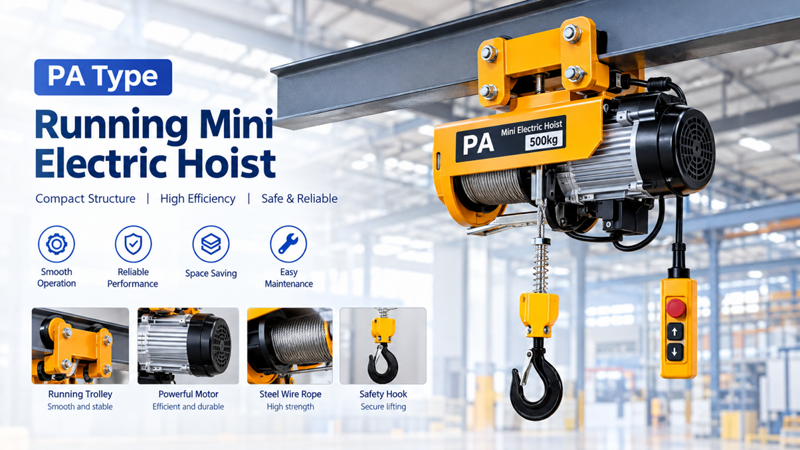
Learn about PA type running mini electric hoist, including key selection factors, typical applications, safety operation tips for small lifting jobs.
2026-10-20View More →
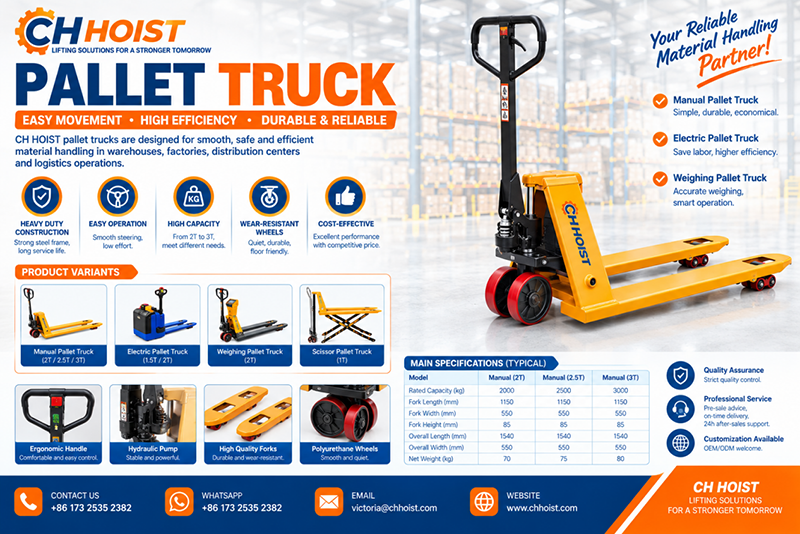
A pallet truck, also known as a pallet jack or pallet trolley, is one of the most practical tools for transporting palletized materials over short distances. Compared with moving goods manually, pallet trucks help reduce physical effort, improve workflow, and make warehouse operations more efficient.
2026-10-19View More →


 Tel:
+8613653129869
 Whatsapp:
+8613653129869
 Email:
chuanghehoist@gmail.com
 Address:Donglu Village, Donglu Township, Qingyuan District, Baoding City, Hebei Province

 English
 Français
 Español

 Email
 +8613653129869
 +8613653129869

 Home
 Whatsapp
 chuanghehoist@gmail.com