


If you have any questions, please contact our online customer service staff immediately
 Click:600
Edit: Chuanghe Hoisting
Click:600
Edit: Chuanghe Hoisting Time:2026-08-11 11:42:12
Efficient material handling is essential for warehouses, factories, logistics centers, supermarkets, and distribution facilities. Every day, thousands of pallets need to be moved from one location to another, often over relatively short distances. Without the right handling equipment, these simple tasks can consume significant time and labor.
A Pallet Truck, also known as a Hand Pallet Truck, Manual Pallet Truck, or Pallet Jack, is one of the most practical solutions for everyday pallet handling.
Unlike forklifts and electric material handling equipment, a manual pallet truck has a simple mechanical and hydraulic structure. It does not require electricity or fuel, is easy to operate, and requires relatively little maintenance.
For companies looking for a cost-effective warehouse handling solution, the pallet truck remains an essential piece of equipment.
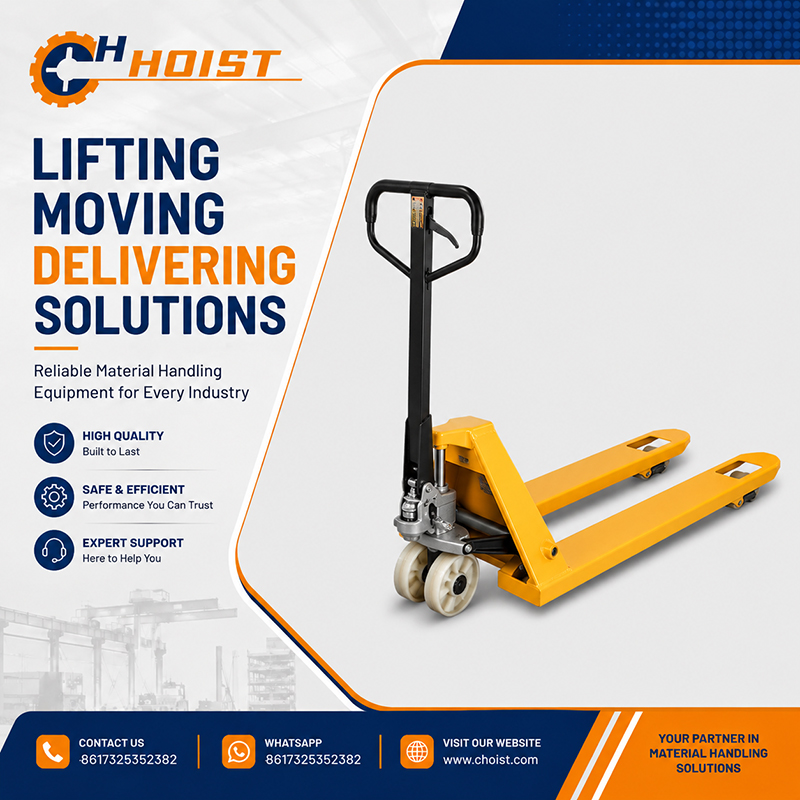
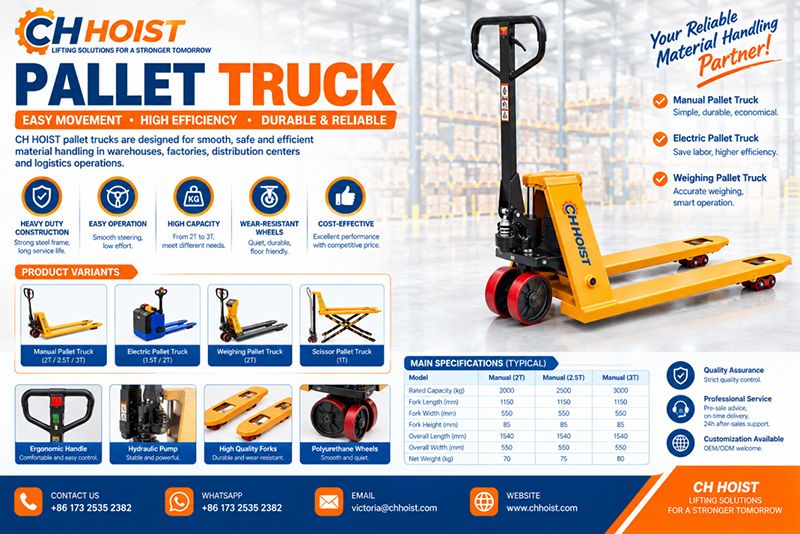
A pallet truck is a material handling device designed to lift and move palletized goods over short distances.
The basic structure consists of:
· Hydraulic pump
· Forks
· Steering handle
· Load wheels
· Steering wheels
· Lowering valve
· Steel frame
The operator inserts the forks underneath a pallet and pumps the handle to raise the load. Once the pallet is lifted from the floor, the operator can pull or push the pallet truck to the desired location.
This simple operating principle makes the pallet truck particularly suitable for warehouses and industrial environments where pallets need to be moved frequently.
Understanding how a pallet truck works can help buyers select the right model and use it safely.
The operator positions the pallet truck in front of the pallet and inserts the forks completely underneath it.
Proper fork positioning is important for maintaining load stability.
The operator moves the handle up and down.
The hydraulic pump generates pressure and raises the forks.
The forks lift the pallet slightly above the floor.
The load does not need to be lifted to a great height because the primary purpose of a pallet truck is horizontal transportation.
The operator pulls or pushes the pallet truck to the required destination.
The steering handle allows the operator to control the direction.
After reaching the destination, the operator activates the lowering control and carefully lowers the pallet onto the floor.
The pallet truck can then be removed from underneath the pallet.
There are many reasons why manual pallet trucks remain widely used despite the development of electric material handling equipment.
A manual pallet truck does not require complicated controls.
After basic training, most warehouse operators can quickly learn how to use it.
One major advantage is that a standard manual pallet truck does not require:
· Electricity
· Batteries
· Charging stations
· Fuel
This allows it to operate whenever and wherever it is needed.
Compared with forklifts and powered pallet trucks, manual pallet trucks have a much lower initial investment.
This makes them attractive to:
· Small businesses
· Warehouses
· Retail stores
· Workshops
· Logistics companies
The structure is relatively simple, with fewer electrical components than powered equipment.
Routine maintenance normally focuses on:
· Hydraulic components
· Wheels
· Bearings
· Forks
· Lubrication points
A pallet truck is much smaller than a forklift.
This allows it to operate in:
· Narrow aisles
· Loading areas
· Small warehouses
· Production workshops
Pallet trucks are commonly used to move goods between storage locations.
Typical applications include:
· Pallet transportation
· Inventory handling
· Loading and unloading
· Short-distance movement
In logistics facilities, pallet trucks help workers move goods efficiently between trucks, loading docks, and storage areas.
Factories use pallet trucks to transport:
· Raw materials
· Components
· Finished products
· Packaging materials
between different production areas.
Pallet trucks are useful for moving large quantities of packaged goods from receiving areas to storage rooms and sales areas.
A manual pallet jack can be used for short-distance movement around loading docks and warehouses.
When purchasing material handling equipment, buyers often ask whether they should choose a manual pallet truck or a full electric pallet truck.
Both have their advantages.
Feature | Manual Pallet Truck | Electric Pallet Truck |
Power | Manual | Battery |
Driving | Manual | Electric |
Lifting | Hydraulic | Electric/Hydraulic |
Initial Cost | Lower | Higher |
Maintenance | Simple | More complex |
Operator Effort | Higher | Lower |
Best Application | Short-distance handling | Frequent handling |
Charging Required | No | Yes |
For warehouses with relatively short transportation distances and moderate workloads, a manual pallet truck can offer excellent value.
For high-frequency handling, long distances, or heavy daily workloads, an electric pallet truck may be more suitable.
Choosing the right model requires more than simply looking at the rated capacity.
Common pallet truck capacities include:
· 2,000 kg
· 2,500 kg
· 3,000 kg
· 5,000 kg
The selected capacity should be suitable for the maximum load that will actually be handled.
Avoid regularly operating at the maximum rated capacity.
Fork length should match the pallet dimensions.
A common fork length is approximately 1,150 mm, but other sizes are available depending on the application.
Buyers should consider:
· Pallet dimensions
· Fork entry openings
· Load dimensions
· Warehouse layout
Fork spacing and overall fork width can affect compatibility with different pallet designs.
Wheel material has a significant effect on performance.
Suitable for smooth indoor warehouse floors and applications where lower noise is desirable.
Suitable for hard industrial floors and heavier loads.
Useful where better shock absorption and quieter operation are required.
The hydraulic pump is one of the most important components.
A reliable pump should provide:
· Smooth lifting
· Controlled lowering
· Good sealing
· Long service life
For demanding industrial applications, a Heavy-Duty Pallet Truck can provide additional load capacity and structural strength.
Heavy-duty models may feature:
· Reinforced steel frame
· Stronger hydraulic pump
· Heavy-duty forks
· Larger load wheels
· Improved durability
These models are suitable for applications involving heavier machinery, steel products, industrial materials, and high-frequency warehouse operations.
Although a pallet truck is relatively simple, safe operation is essential.
Before using the equipment, operators should:
✔ Check the hydraulic system.
✔ Inspect the forks.
✔ Check wheel condition.
✔ Confirm the load weight.
✔ Make sure the pallet is stable.
✔ Check that the travel path is clear.
During operation:
✔ Keep the load centered.
✔ Move at a controlled speed.
✔ Avoid sharp turns.
✔ Keep the forks low while traveling.
✔ Pay attention to pedestrians.
Never:
❌ Exceed the rated capacity.
❌ Carry passengers.
❌ Use damaged forks.
❌ Operate with an unstable load.
❌ Place any part of the body underneath a raised load.
The pallet truck should always be operated according to the manufacturer's instructions and workplace safety procedures.
Regular maintenance helps improve reliability and extend equipment life.
Inspect the hydraulic system for:
· Oil leakage
· Slow lifting
· Abnormal lowering
· Unusual noises
Check wheels regularly for:
· Cracks
· Excessive wear
· Deformation
· Poor rotation
Inspect the forks for bending, cracks, or other visible damage.
Damaged forks should not be used.
Make sure the lifting, neutral, and lowering functions operate correctly.
Appropriate lubrication of moving parts can reduce friction and improve operating performance.
For material handling equipment distributors, the manual pallet truck is a practical product to include in a warehouse equipment portfolio.
It has a broad customer base because almost every warehouse that uses pallets requires some form of pallet handling equipment.
Potential customers include:
· Logistics companies
· Manufacturing companies
· Retailers
· Supermarkets
· Warehouses
· Construction companies
· Packaging companies
· Industrial equipment distributors
Pallet trucks can also be sold together with complementary equipment such as:
· Electric pallet trucks
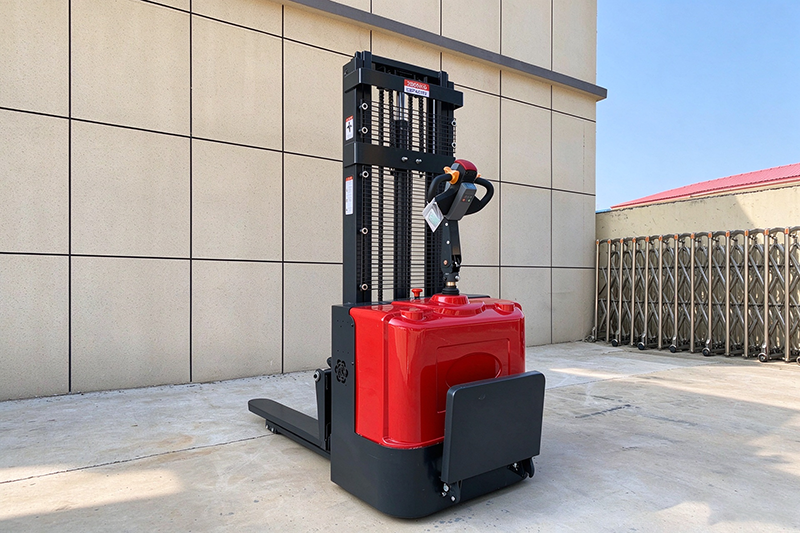
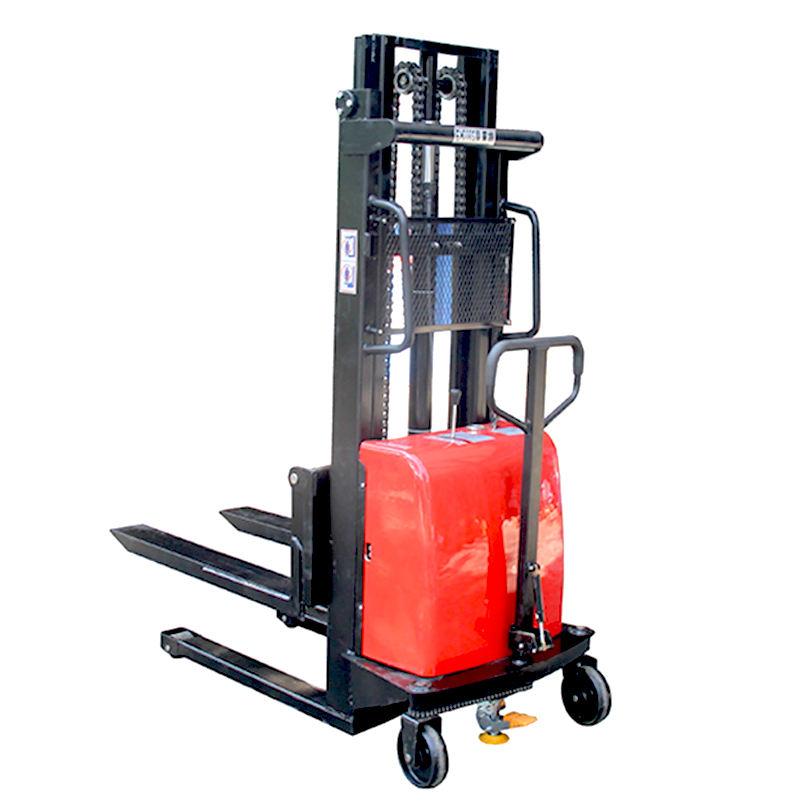
· Electric stackers
· Manual stackers
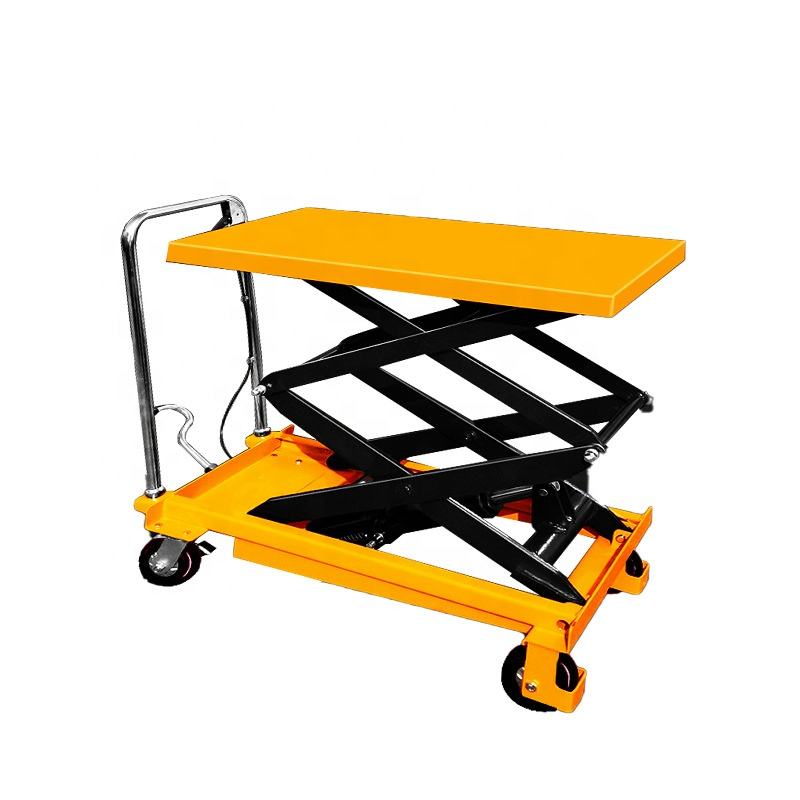
· Scissor lift tables
· Hydraulic jacks
· Hand chain hoists
· Lever hoists
· Lifting slings
This creates opportunities for distributors to provide complete material handling solutions rather than selling a single product.
Warehouse operations are becoming increasingly automated and efficient.
Electric pallet trucks, lithium battery technology, smart warehouse systems, and automated guided vehicles are changing the way companies handle materials.
However, this does not mean manual pallet trucks will disappear.
Instead, different handling technologies will continue to serve different applications.
Manual pallet trucks remain particularly attractive for:
· Small warehouses
· Low-frequency handling
· Short-distance transportation
· Backup handling
· Cost-sensitive applications
At the same time, companies with higher handling volumes can combine manual pallet trucks with electric pallet trucks and stackers to create a more flexible material handling system.
A Pallet Truck is one of the simplest and most practical solutions for moving palletized goods.
Its compact structure, low purchase cost, simple operation, easy maintenance, and independence from electricity make it suitable for a wide range of warehouse and industrial applications.
When choosing a pallet truck, buyers should carefully evaluate load capacity, fork dimensions, wheel material, hydraulic pump quality, operating environment, and expected workload.
For distributors and wholesalers, pallet trucks also offer excellent market potential because they are widely used across logistics, manufacturing, retail, warehousing, and transportation industries.
A reliable pallet truck may be a simple piece of equipment, but it can make everyday material handling faster, easier, and more efficient.
Modern warehouses, distribution centers, and manufacturing facilities need efficient ways to lift, move, and stack palletized goods. As businesses handle more products and work to optimize storage space, choosing the right material handling equipment becomes increasingly important.
2026-10-21View More →
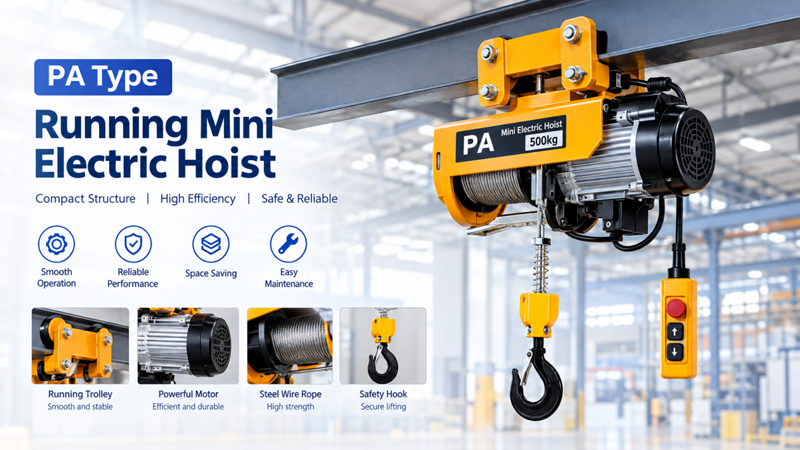
Learn about PA type running mini electric hoist, including key selection factors, typical applications, safety operation tips for small lifting jobs.
2026-10-20View More →
A pallet truck, also known as a pallet jack or pallet trolley, is one of the most practical tools for transporting palletized materials over short distances. Compared with moving goods manually, pallet trucks help reduce physical effort, improve workflow, and make warehouse operations more efficient.
2026-10-19View More →


 Tel:
+8613653129869
Tel:
+8613653129869
 Whatsapp:
+8613653129869
Whatsapp:
+8613653129869
 Email:
chuanghehoist@gmail.com
Email:
chuanghehoist@gmail.com
 Address:Donglu Village, Donglu Township, Qingyuan District, Baoding City, Hebei Province

 English
 Français
 Español



 Email
Email +8613653129869
 +8613653129869
 Home
Home Whatsapp
 chuanghehoist@gmail.com