In an era where automation, robotics, and smart warehouses are becoming increasingly common, it would be easy to assume that traditional material handling equipment is gradually losing its relevance. Yet, if you visit warehouses, factories, distribution centers, retail stockrooms, and logistics facilities across the world, you will quickly discover a different reality. One of the most frequently used pieces of equipment on the warehouse floor is still the manual pallet truck.
Despite decades of technological advancement, the manual pallet truck remains an essential tool for businesses of every size. From small family-owned warehouses handling a few dozen pallets per day to large logistics centers processing thousands of shipments, the ability to move goods efficiently, safely, and economically continues to make manual pallet trucks indispensable.
The reason is simple. Most businesses do not need a sophisticated solution for every material handling task. They need equipment that works every day, requires minimal maintenance, costs little to operate, and can be used by almost anyone with basic training. This is exactly where manual pallet trucks excel.
The Equipment That Almost Every Warehouse Owns
Many warehouse managers will tell you that while forklifts and electric pallet trucks often receive the most attention, manual pallet trucks frequently perform the highest number of individual movements throughout the day.
Think about a typical warehouse operation. A pallet arrives at the loading dock, is repositioned for inspection, moved into storage, transferred to a picking area, and eventually relocated to an outbound shipping zone. Not every movement requires a forklift. In fact, using a large powered machine for every short-distance task would be inefficient and unnecessarily expensive.
This is where the manual pallet truck proves its value. It allows operators to quickly lift and transport palletized goods across short distances without fuel, batteries, charging stations, or specialized licensing requirements.
For many businesses, purchasing a manual pallet truck is often one of the first investments made when establishing warehouse operations because it immediately improves productivity while requiring very little capital expenditure.
Understanding How a Manual Pallet Truck Works
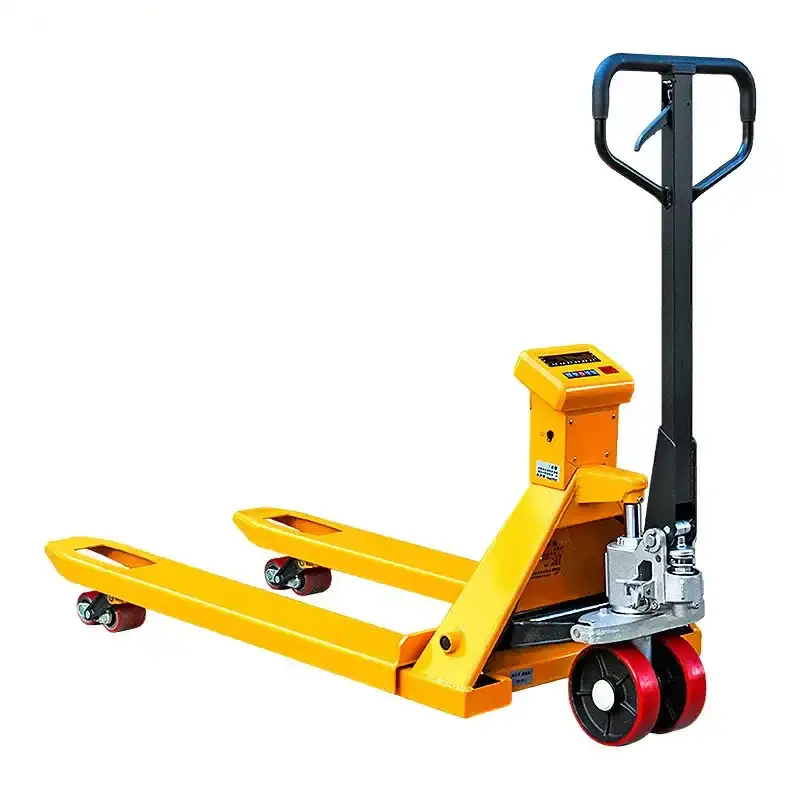
At first glance, a manual pallet truck appears deceptively simple. However, its effectiveness comes from a well-engineered combination of leverage, hydraulics, and durable steel construction.
The operator inserts the forks beneath a pallet and pumps the handle several times. This action activates a hydraulic system that raises the forks slightly off the ground. Once elevated, the pallet can be moved with surprisingly little effort, even when carrying loads weighing several thousand kilograms.
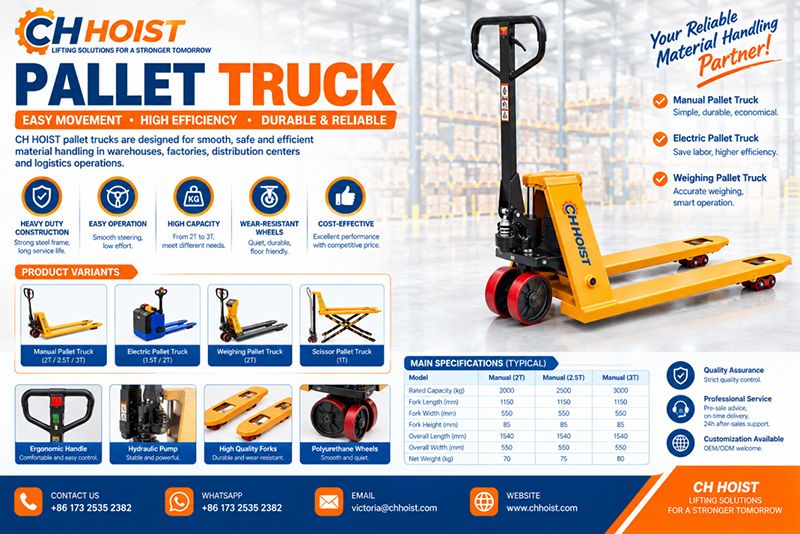
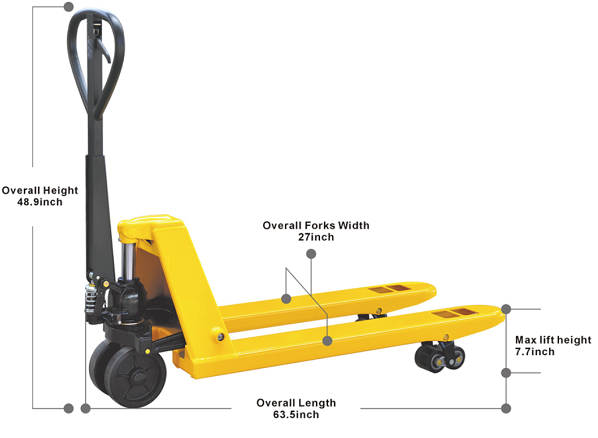
Most standard models feature:
· Heavy-duty steel forks
· Hydraulic pump unit
· Ergonomic operating handle
· Steering wheels
· Load rollers
· Lowering control mechanism
Although the design has remained largely unchanged for decades, manufacturers continue to improve hydraulic performance, steering precision, wheel durability, and operator comfort.
A well-built pallet truck may perform tens of thousands of lifting cycles throughout its service life while maintaining reliable operation.
Why Businesses Continue Choosing Manual Pallet Trucks
When procurement managers evaluate warehouse equipment, they typically consider three factors: cost, reliability, and return on investment.
Manual pallet trucks consistently perform well in all three categories.
Unlike electric alternatives, they do not require expensive battery systems, electronic controllers, charging infrastructure, or dedicated maintenance personnel. The purchase price is only a fraction of the cost of powered equipment, making them particularly attractive for small and medium-sized enterprises.
What often surprises first-time buyers is how long a quality pallet truck can remain in service. In many warehouses, pallet trucks purchased seven to ten years ago continue operating daily with only routine maintenance and occasional wheel replacement.
This level of durability contributes significantly to their popularity, particularly in industries where controlling operating costs is critical.
The Real Cost Advantage
When comparing material handling solutions, the initial purchase price tells only part of the story.
The true cost of ownership includes:
· Equipment acquisition
· Maintenance
· Repairs
· Operator training
· Energy consumption
· Downtime
A manual pallet truck performs exceptionally well when evaluated from this perspective.
Since there are no batteries to replace, no electrical systems to diagnose, and no charging stations to maintain, ongoing costs remain remarkably low. Many businesses discover that the annual maintenance expense of a manual pallet truck is negligible compared with powered alternatives.
For startups, wholesalers, distributors, and regional logistics operators, this cost efficiency can have a meaningful impact on profitability.
Applications Across Multiple Industries
One reason manual pallet trucks remain relevant is their adaptability. Few pieces of material handling equipment can operate effectively across such a wide variety of industries.
In manufacturing facilities, pallet trucks transport raw materials between production areas and storage locations. In warehouses, they assist with order preparation, stock replenishment, and outbound shipping operations.
Retail chains rely on pallet trucks to move inventory from receiving docks into storage rooms. Food distribution centers use them to handle packaged goods. Pharmaceutical facilities utilize specialized stainless-steel models to meet hygiene requirements.
Even highly automated warehouses continue to employ manual pallet trucks for tasks that require flexibility and human judgment.
The versatility of the equipment allows businesses to deploy it wherever short-distance pallet movement is required.
Capacity Options for Different Workloads
Not every operation handles the same type of cargo. As a result, pallet trucks are available in various load capacities.
Common options include:
· 2 Ton
· 2.5 Ton
· 3 Ton
· 5 Ton
Among these, the 2.5-ton model has become the industry standard because it comfortably accommodates most palletized loads encountered in daily warehouse operations.
Industry estimates suggest that more than sixty percent of pallet truck purchases worldwide fall within the 2–2.5-ton range due to the balance between lifting capability and maneuverability.
Heavy-duty industries such as steel processing, machinery manufacturing, and construction materials distribution often select higher-capacity models to accommodate denser loads.
Choosing the Right Wheels Matters More Than Many Buyers Realize
One of the most overlooked aspects of pallet truck selection is wheel material.
Experienced warehouse operators understand that wheel choice can significantly affect handling performance, operator comfort, and equipment lifespan.
Polyurethane wheels are popular because they provide smooth movement, low noise levels, and excellent floor protection. They are commonly used in warehouses with epoxy-coated floors and indoor logistics facilities.
Nylon wheels offer exceptional durability and low rolling resistance. They perform particularly well on smooth, hard surfaces and can handle heavy loads efficiently.
Rubber wheels provide better shock absorption and are often preferred in environments where floor conditions are less than ideal.
Selecting the correct wheel material can improve operational efficiency while reducing maintenance costs over time.
Safety Is About More Than Equipment Design
Although manual pallet trucks are generally considered safe, accidents can still occur when equipment is misused.
One common mistake involves overloading. Operators sometimes attempt to transport loads that exceed the truck's rated capacity, placing excessive stress on the hydraulic system and increasing the risk of failure.
Another issue arises when pallets are loaded unevenly. An unstable load may shift during movement, creating hazards for both operators and nearby personnel.
Experienced warehouse managers often emphasize that pallet truck safety begins long before the equipment starts moving. Proper load preparation, routine inspections, and operator awareness are just as important as the design of the equipment itself.
A culture of safe handling practices can significantly reduce workplace incidents while improving overall productivity.
What Procurement Managers Look For Today
The purchasing criteria for pallet trucks have evolved over the years.
Price remains important, but buyers increasingly evaluate overall product quality, long-term durability, and supplier reliability.
Many procurement professionals now ask questions such as:
How thick is the steel frame?
What type of hydraulic pump is installed?
Can replacement parts be supplied quickly?
Does the manufacturer offer OEM customization?
Are international certifications available?
Can the supplier support large-volume orders?
These considerations reflect a growing focus on long-term value rather than simply selecting the lowest-cost option available.
The Growing Demand for Customized Solutions
As warehouses become more specialized, standard pallet trucks are not always sufficient.
Many businesses now require customized configurations, including:
· Extended forks
· Short forks
· Low-profile designs
· Stainless steel construction
· Galvanized finishes
· Cold-storage versions
· High-capacity models
Customization enables businesses to optimize equipment performance for specific operating environments.
For example, cold-storage facilities often require pallet trucks capable of operating at temperatures below -30°C, while food-processing plants may require corrosion-resistant stainless-steel construction.
The ability to tailor equipment to unique operational requirements has become a significant competitive advantage for manufacturers.
Looking Ahead: Why Manual Pallet Trucks Are Not Disappearing
Predictions about warehouse automation often create the impression that traditional equipment will soon become obsolete. However, industry realities suggest otherwise.
Automation excels in repetitive, high-volume environments where workflows remain consistent. Yet many warehouses continue to face changing inventory profiles, fluctuating demand, seasonal peaks, and operational variability.
In these situations, flexibility remains valuable.
Manual pallet trucks offer a level of adaptability that automated systems often cannot match. They can be deployed immediately, relocated easily, and operated without complex infrastructure.
As long as businesses need an economical and dependable method of moving palletized goods, manual pallet trucks will continue to play an important role within modern supply chains.
Conclusion
The manual pallet truck has earned its place as one of the most trusted tools in material handling. Its continued popularity is not based on tradition alone but on practical performance. It delivers a rare combination of simplicity, reliability, affordability, and operational efficiency that few alternatives can match.
Whether operating in a warehouse, factory, logistics center, retail distribution facility, or industrial production plant, businesses continue to rely on manual pallet trucks because they solve everyday handling challenges effectively and economically.
At CHHOIST, we understand that material handling equipment must do more than meet technical specifications. It must withstand demanding working conditions, support productivity goals, and deliver dependable performance year after year. Our manual pallet trucks are manufactured using high-strength steel, precision hydraulic systems, and rigorous quality-control standards to ensure long service life and reliable operation.
With load capacities from 2 to 5 tons, OEM customization support, CE certification, competitive lead times, and global export experience, CHHOIST is committed to providing professional material handling solutions for distributors, wholesalers, warehouses, and industrial users worldwide.



 Click:962
Edit: Chuanghe Hoisting
Click:962
Edit: Chuanghe Hoisting Time:2026-06-18 17:09:06


 Tel:
+8613653129869
Tel:
+8613653129869 Whatsapp:
+8613653129869
Whatsapp:
+8613653129869 Email:
chuanghehoist@gmail.com
Email:
chuanghehoist@gmail.com Address:Donglu Village, Donglu Township, Qingyuan District, Baoding City, Hebei Province
 English
 Français
 Español



 Email
Email +8613653129869
 +8613653129869
 Home
Home Whatsapp
 chuanghehoist@gmail.com