In today's industrial environment, efficiency, safety, and reliability are critical factors in material handling operations. Whether in manufacturing plants, warehouses, construction sites, workshops, logistics centers, or steel fabrication facilities, lifting heavy loads quickly and safely is essential for maintaining productivity. Among various lifting devices available in the market, the Electric Chain Hoist has become one of the most widely used and trusted solutions.
Designed to lift, lower, and position loads with precision, electric chain hoists offer significant advantages over manual lifting equipment. Their compact structure, powerful performance, and ease of operation make them indispensable tools for modern industries.
This article provides a comprehensive overview of electric chain hoists, including their working principles, components, advantages, applications, and key considerations when selecting the right model.
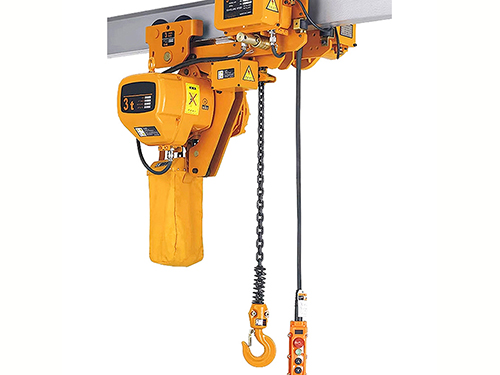
What Is an Electric Chain Hoist?
An Electric Chain Hoist is a powered lifting device that uses an electric motor to drive a load chain, enabling the lifting and lowering of heavy materials. Unlike manual chain blocks that rely on human effort, electric chain hoists automate the lifting process, significantly reducing labor intensity and improving operational efficiency.
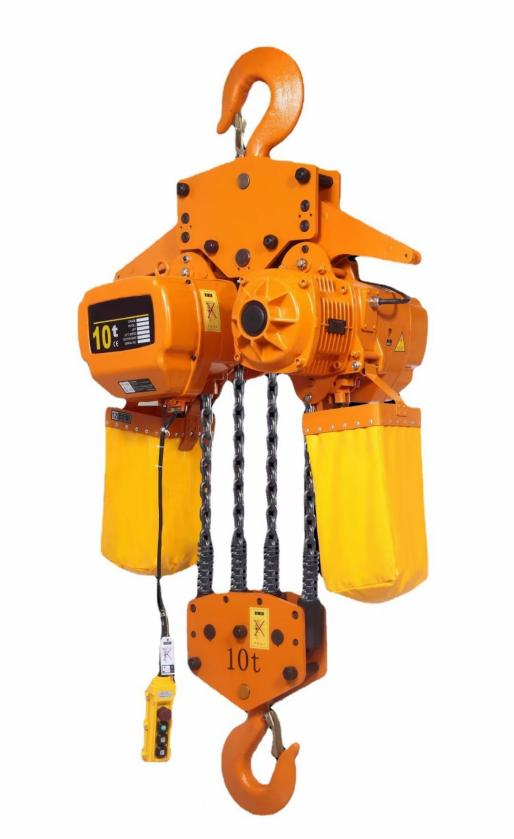
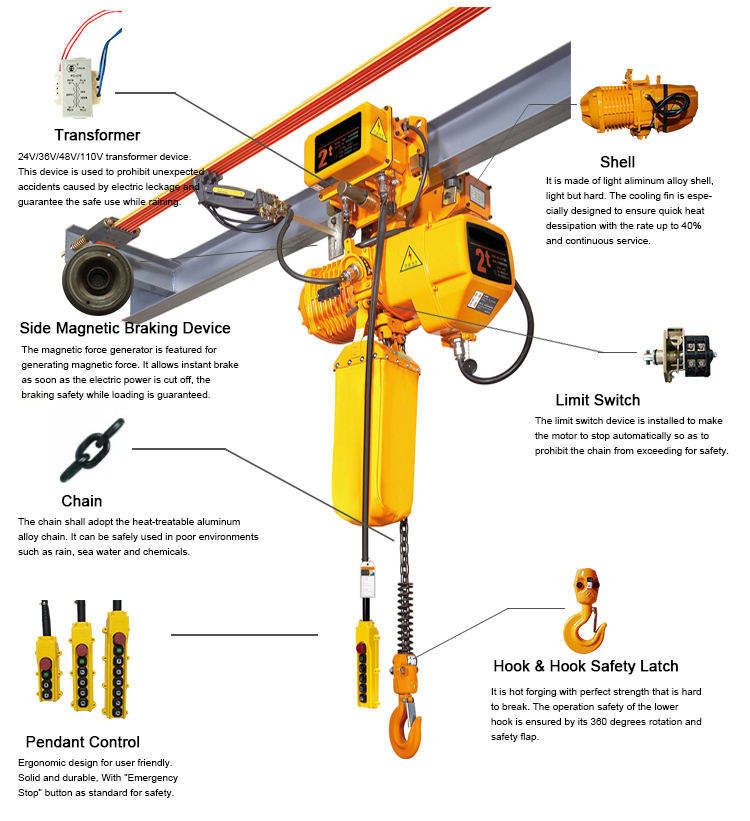
The hoist consists of a motor, gearbox, brake system, load chain, chain guide, hook assembly, and electrical control components. When activated through a pendant control or wireless remote control, the motor drives the chain wheel, which moves the load chain and lifts the attached load.
Electric chain hoists are available in a wide range of lifting capacities, typically from 250 kg to 50 tons or even higher for specialized industrial applications.
How Does an
Electric Chain Hoist Work?
The operating principle of an electric chain hoist is relatively straightforward but highly effective.
When the operator presses the control button:
1.The electric motor starts rotating.
2.The motor transfers power through a reduction gearbox.
3.The gearbox reduces speed while increasing torque.
4.The chain sprocket drives the load chain.
5.The load hook moves upward or downward according to the control command.
6.An electromagnetic brake automatically engages when power is cut off, securely holding the load in position.
Advanced models may also include variable frequency drive (VFD) technology for smoother operation, reduced load swing, and precise positioning.
Main Components of an Electric Chain Hoist
Electric Motor
The motor serves as the power source of the hoist. High-quality electric chain hoists typically use copper-wound motors that offer excellent heat dissipation, durability, and energy efficiency.
Load Chain
The load chain is responsible for carrying the lifting load. Premium-grade alloy steel chains are heat-treated to achieve superior tensile strength and wear resistance.
Gearbox
The reduction gearbox converts motor speed into lifting torque. Precision-machined gears ensure smooth operation and extended service life.
Electromagnetic Brake
Safety is a top priority in lifting operations. The brake system automatically locks the load when power is interrupted, preventing accidental load drops.
Hook Assembly
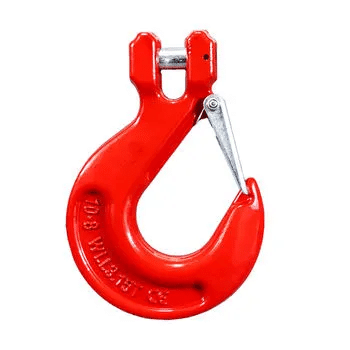
Forged steel hooks provide high strength and durability. Many models are equipped with safety latches to prevent accidental disengagement of loads.
Control System
Operators can control lifting and lowering functions through:
Pendant controls
Wireless remote controls
Radio frequency control systems
Crane integrated control systems
Advantages of Electric Chain Hoists
Increased Productivity
Electric chain hoists dramatically reduce lifting time compared to manual chain blocks. Faster lifting cycles translate directly into higher productivity.
Enhanced Safety
Modern electric chain hoists incorporate multiple safety features, including:
Overload protection
Emergency stop functions
Upper and lower limit switches
Thermal motor protection
Chain guide protection
Brake monitoring systems
These features minimize workplace accidents and equipment damage.
Precise Load Positioning
Electric chain hoists allow operators to position loads accurately, which is especially important in assembly lines, machine maintenance, and precision manufacturing.
Compact Design
Compared with electric wire rope hoists, electric chain hoists are generally more compact and lightweight, making them ideal for facilities with limited headroom.
Low Maintenance Requirements
The enclosed design protects internal components from dust and contaminants, reducing maintenance frequency and operational downtime.
Long Service Life
High-quality electric chain hoists are engineered for years of continuous service, even in demanding industrial environments.
Common Applications of Electric Chain Hoists
Manufacturing Industry
Factories use electric chain hoists for moving raw materials, machinery components, molds, and finished products throughout the production process.
Warehousing and Logistics
Electric chain hoists facilitate loading, unloading, and inventory management operations, improving workflow efficiency.
Construction Industry
Construction companies rely on electric chain hoists to lift structural steel, equipment, concrete components, and building materials.
Automotive Industry
Vehicle assembly plants use electric chain hoists for engine installation, transmission handling, and assembly line operations.
Steel Fabrication Workshops
Heavy steel beams, plates, and fabricated structures can be safely moved using electric chain hoist systems.
Maintenance and Repair Facilities
Electric chain hoists assist technicians in lifting motors, pumps, gearboxes, and industrial equipment during maintenance procedures.
Shipbuilding Industry
Shipyards utilize electric chain hoists for handling engines, steel sections, piping systems, and marine equipment.
Electric Chain Hoist vs. Electric Wire Rope Hoist
Many buyers wonder whether to choose an electric chain hoist or an electric wire rope hoist.
Electric Chain Hoist Advantages:
More compact structure
Lower maintenance costs
Better for shorter lifting heights
Ideal for light and medium-duty applications
Easier installation
Electric Wire Rope Hoist Advantages:
Higher lifting capacities
Greater lifting heights
Faster lifting speeds
Better suited for heavy-duty industrial operations
For lifting capacities under 20 tons and moderate lifting heights, electric chain hoists are often the most economical and efficient solution.
Factors to Consider When Choosing an Electric Chain Hoist
Lifting Capacity
Determine the maximum load weight that will be handled. Always select a hoist with sufficient safety margin.
Lifting Height
Consider the distance the load must travel vertically.
Power Supply
Verify local electrical requirements:
220V single phase
380V three phase
415V three phase
440V three phase
Custom voltage options
Duty Cycle
Evaluate how frequently the hoist will operate. Heavy-duty applications require higher-duty classifications.
Working Environment
Special environments may require:
Dust-proof designs
Explosion-proof models
Corrosion-resistant coatings
Outdoor weather protection
Speed Requirements
Different applications may require:
Single-speed lifting
Dual-speed lifting
Variable-speed control
Safety Guidelines for Electric Chain Hoist
Operation
To maximize safety and equipment lifespan, operators should follow these best practices:
Never exceed the rated load capacity.
Inspect chains and hooks before operation.
Avoid side pulling or angled lifting.
Keep personnel clear of suspended loads.
Conduct regular maintenance inspections.
Verify proper brake operation.
Replace worn components immediately.
Ensure operators receive proper training.
A well-maintained electric chain hoist significantly reduces operational risks and extends equipment life.
Future Trends in Electric Chain Hoist Technology
As Industry 4.0 continues to reshape manufacturing and logistics, electric chain hoists are becoming increasingly intelligent.
Emerging technologies include:
Smart load monitoring systems
IoT connectivity
Predictive maintenance capabilities
Real-time operating data collection
Remote diagnostics
Energy-efficient motor technologies
Automated lifting solutions
These innovations help businesses improve productivity while reducing maintenance costs and downtime.
Conclusion
Electric chain hoists have become an essential component of modern material handling systems. Their combination of reliability, efficiency, compact design, and advanced safety features makes them suitable for a wide range of industrial applications.
Whether used in manufacturing plants, warehouses, construction projects, steel fabrication workshops, or maintenance facilities, electric chain hoists provide a cost-effective solution for lifting and moving heavy loads safely and efficiently.
By selecting a high-quality electric chain hoist that matches your operational requirements, businesses can enhance workplace safety, increase productivity, and achieve long-term operational success.



 Click:1190
Edit: Chuanghe Hoisting
Click:1190
Edit: Chuanghe Hoisting Time:2026-06-12 17:24:32


 Tel:
+8613653129869
Tel:
+8613653129869 Whatsapp:
+8613653129869
Whatsapp:
+8613653129869 Email:
chuanghehoist@gmail.com
Email:
chuanghehoist@gmail.com Address:Donglu Village, Donglu Township, Qingyuan District, Baoding City, Hebei Province
 English
 Français
 Español



 Email
Email +8613653129869
 +8613653129869
 Home
Home Whatsapp
 chuanghehoist@gmail.com