Why Are Permanent Magnetic Lifters Becoming More Popular in Modern Steel Handling?
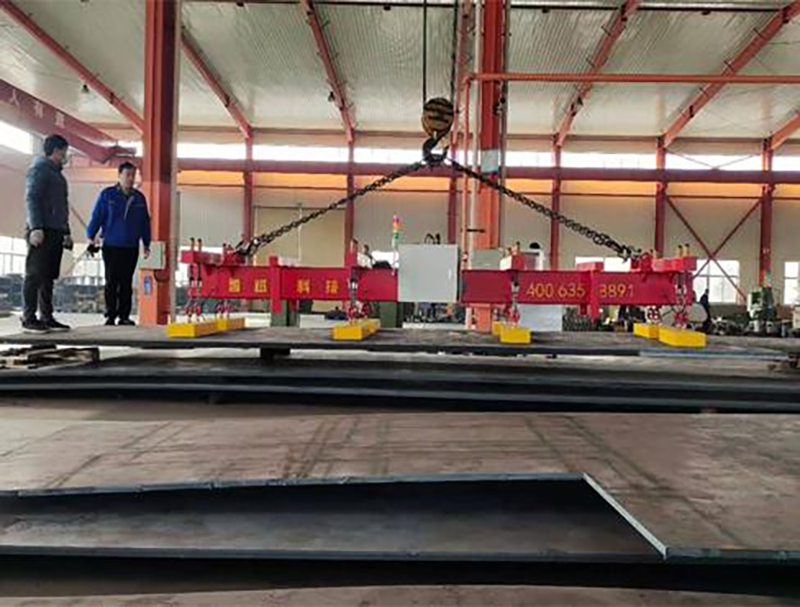
In industries such as steel fabrication, shipbuilding, machinery manufacturing, warehousing, and construction, moving heavy steel materials safely and efficiently is a daily challenge.
Traditional lifting methods often rely on chains, slings, or clamps, which can require more setup time and may increase the risk of surface damage or unstable loads.
A
Permanent Magnetic Lifter provides a faster and cleaner solution. By using high-strength permanent magnets, it can securely hold steel plates, blocks, and cylindrical materials without electricity or complex rigging.
Because of its compact structure, quick operation, and low maintenance requirements, the permanent magnetic lifter has become one of the most practical lifting tools for steel handling operations worldwide.
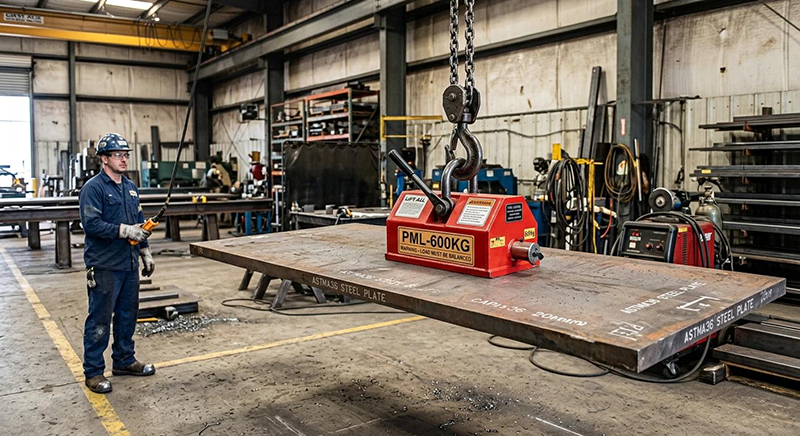
What Is a Permanent Magnetic Lifter?
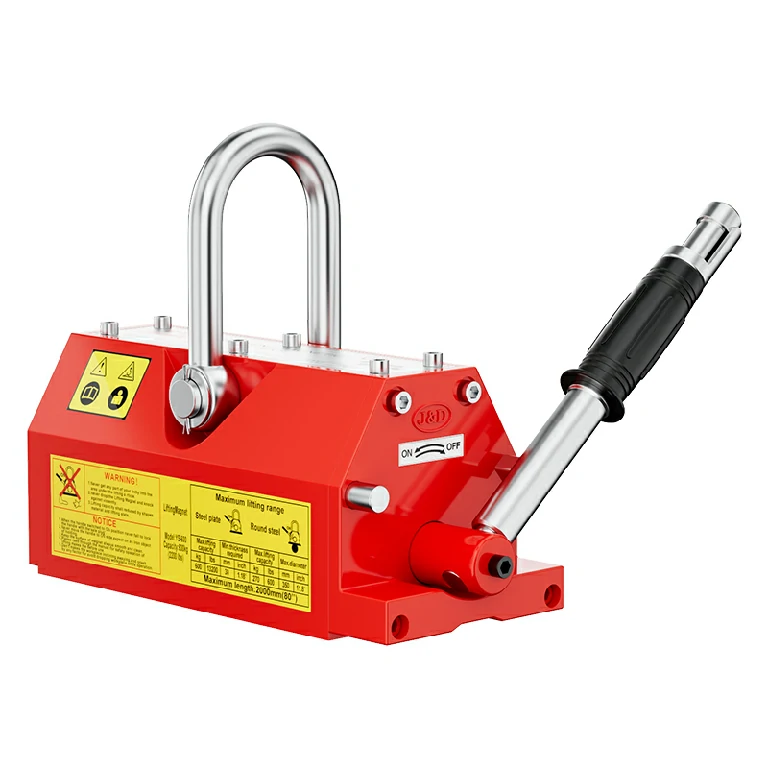
A Permanent Magnetic Lifter, also called a magnetic lifting device or magnetic hoist, is a manual lifting tool that uses high-performance permanent magnets to lift ferromagnetic materials.
Unlike electromagnetic lifters, it requires no external power source.
It is commonly used for handling:
l Steel plates
l Iron blocks
l Round steel bars
l Machine components
l Steel pipes
l Metal sheets
The magnetic force is activated and released by a simple rotating handle, allowing quick attachment and removal.
How Does a Permanent Magnetic Lifter Work?
The working principle is based on a controlled magnetic circuit.
When the operator turns the handle:
l The internal magnetic circuit aligns.
l A strong magnetic field reaches the contact surface.
l The steel material is firmly attracted.
l The load can be lifted safely by a crane or hoist.
When the handle is turned back:
l The magnetic circuit is disconnected.
l The magnetic force is neutralized.
l The load is released safely.
This simple mechanism provides fast and reliable operation without electrical wiring.
Main Components of a Permanent Magnetic Lifter
Permanent Magnet Core
Usually manufactured from high-performance NdFeB (Neodymium Iron Boron) magnets.
Advantages:
l Strong magnetic force
l Stable performance
l Long service life
l No power consumption
Rotating Handle
The handle activates and deactivates the magnetic field.
Ergonomic design improves safety and operating comfort.
Magnetic Contact Surface
Precision-machined steel contact surface ensures maximum magnetic efficiency.
Safety Lock Mechanism
Prevents accidental handle movement during lifting operations.
Lifting Ring / Shackle
Connects the magnetic lifter to cranes, hoists, or lifting slings.
Key Advantages of Permanent Magnetic Lifters
No Electricity Required
Fast Operation
Strong Holding Force
Compact & Portable
Safe & Reliable
No Surface Damage
Typical Applications
Permanent magnetic lifters are widely used in:
l Steel fabrication workshops – Handling plates and structural components.
l Machine manufacturing – Moving heavy machine parts.
l Warehouses – Loading and unloading steel materials.
l Construction sites – Positioning steel components.
l Shipbuilding industry – Handling large steel sections.
l Metal processing plants – Efficient material transfer between workstations.
Common Specifications
Feature | Typical Range |
Load Capacity | 100 kg – 3000 kg |
Safety Factor | Usually 3:1 |
Magnet Material | NdFeB Permanent Magnet |
Operation | Manual Handle |
Application | Steel & Iron Materials |
How to Choose the Right Permanent Magnetic Lifter
Load Weight
Select a model with capacity higher than the actual load weight.
Material Thickness
Thin steel plates may reduce magnetic performance, so always check the manufacturer's thickness recommendations.
Surface Condition
Clean, smooth surfaces provide stronger magnetic contact than rusty or heavily painted surfaces.
Load Shape
Flat plates and round bars require different lifting considerations.
Safety Requirements
Choose models with certified safety factors and reliable locking mechanisms.
Safety Tips for Using Magnetic Lifters
Before each lift:
l Inspect the magnetic contact surface.
l Check the handle and safety lock.
l Ensure full contact with the load.
l Perform a short test lift.
l Confirm the load is balanced.
Never:
l Exceed the rated capacity.
l Lift multiple steel plates at once unless approved by the manufacturer.
l Use on non-ferromagnetic materials such as aluminum or stainless steel.
l Operate with a damaged safety lock.
l Allow personnel beneath suspended loads.
Maintenance Recommendations
Maintenance Item | Recommendation |
Clean Contact Surface | Remove dust, oil, and rust regularly |
Inspect Handle | Check smooth operation and locking function |
Prevent Impact | Avoid dropping or striking the lifter |
Dry Storage | Store in a clean, dry environment |
Regular Inspection | Check hook, shackle, and magnetic surface for wear |
Why Global Buyers Continue Choosing Permanent Magnetic Lifters
Industrial buyers worldwide prefer permanent magnetic lifters because they provide:
l Fast steel handling
l Lower labor costs
l Improved workplace safety
l Minimal maintenance
l Long service life
l No electricity consumption
l Excellent return on investment
From steel service centers in Europe to manufacturing plants in North America and construction projects across Asia, magnetic lifters remain one of the most efficient tools for handling ferromagnetic materials.
Future Trends in Magnetic Lifting Technology
Modern magnetic lifters continue to evolve through:
Stronger NdFeB magnet materials
Improved safety locking systems
Lighter yet stronger steel bodies
Corrosion-resistant coatings
Integration with automated handling systems
These innovations help increase productivity while maintaining the simplicity that makes permanent magnetic lifters so popular.
Conclusion
A Permanent Magnetic Lifter is one of the most efficient solutions for handling steel plates, blocks, and other ferromagnetic materials.
Its ability to provide fast operation, strong holding force, no electricity consumption, and low maintenance makes it an essential tool for warehouses, factories, construction sites, and metal processing facilities.
By selecting the correct capacity and following proper safety procedures, businesses can improve productivity, reduce handling time, and enhance workplace safety.
For distributors, wholesalers, and industrial buyers, a high-quality permanent magnetic lifter remains a reliable and profitable addition to any lifting equipment product line.



 Click:584
Edit: Chuanghe Hoisting
Click:584
Edit: Chuanghe Hoisting Time:2026-07-21 14:48:21


 Tel:
+8613653129869
Tel:
+8613653129869 Whatsapp:
+8613653129869
Whatsapp:
+8613653129869 Email:
chuanghehoist@gmail.com
Email:
chuanghehoist@gmail.com Address:Donglu Village, Donglu Township, Qingyuan District, Baoding City, Hebei Province
 English
 Français
 Español

 Email
Email +8613653129869
 +8613653129869
 Home
Home Whatsapp
 chuanghehoist@gmail.com