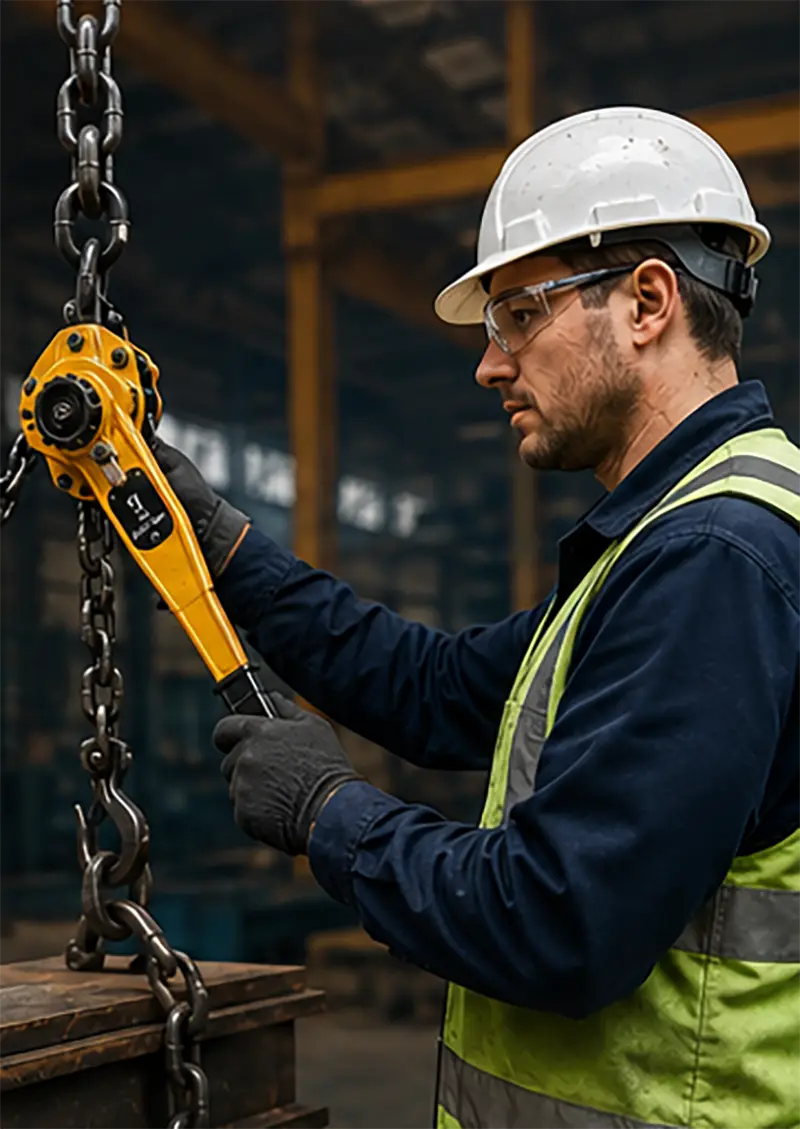
From construction sites to shipyards, from steel installation to equipment maintenance, a reliable
lever hoist is often the difference between smooth lifting and costly downtime.
Why Lever Hoists Still Matter in Modern Industry
In a world increasingly filled with automation, smart factories, and electric lifting systems, many people underestimate the importance of a traditional lever hoist.
But anyone who has worked on a real construction site knows the truth.
When space is limited, power is unavailable, or precision pulling is required in difficult environments, a lever hoist becomes one of the most practical and dependable tools available.
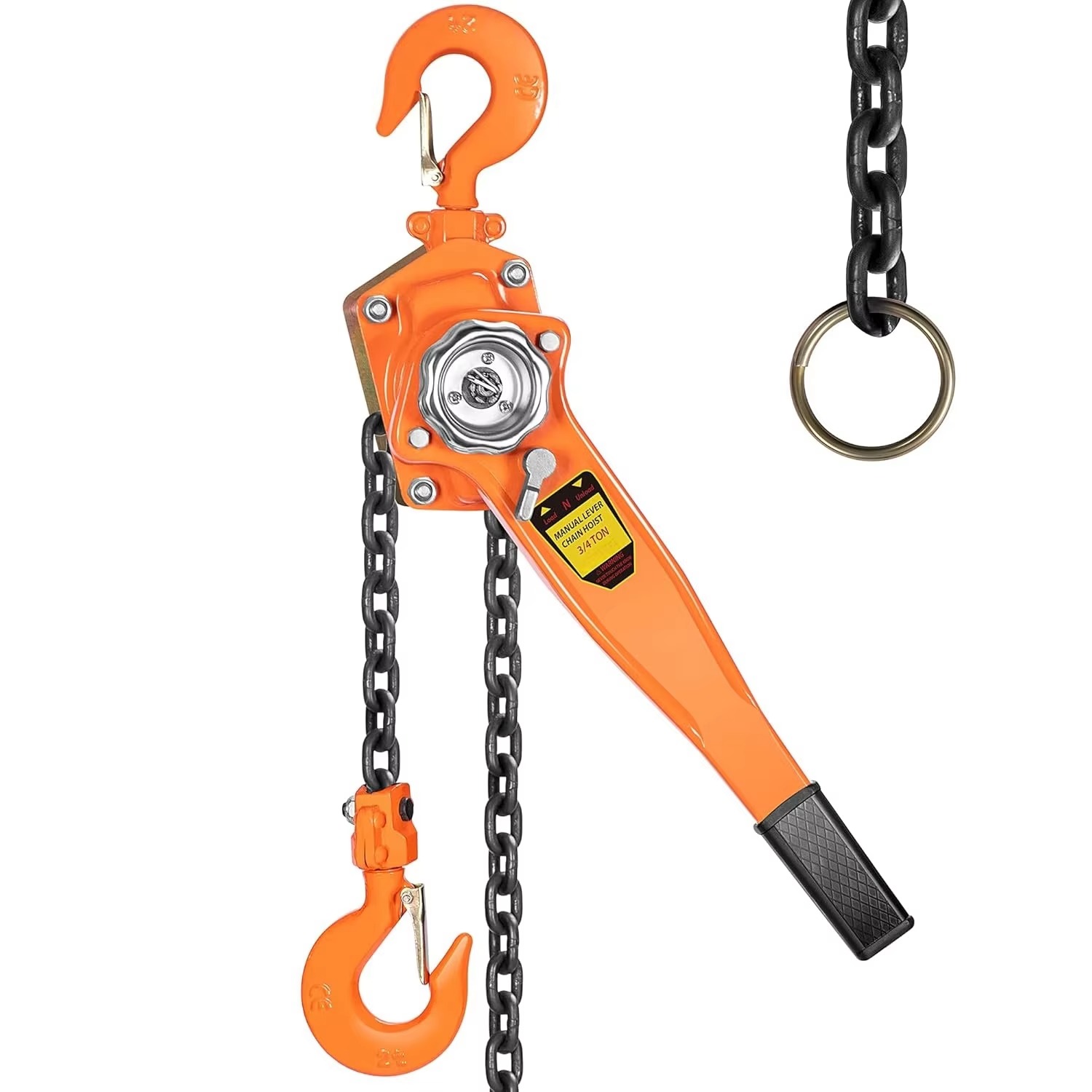
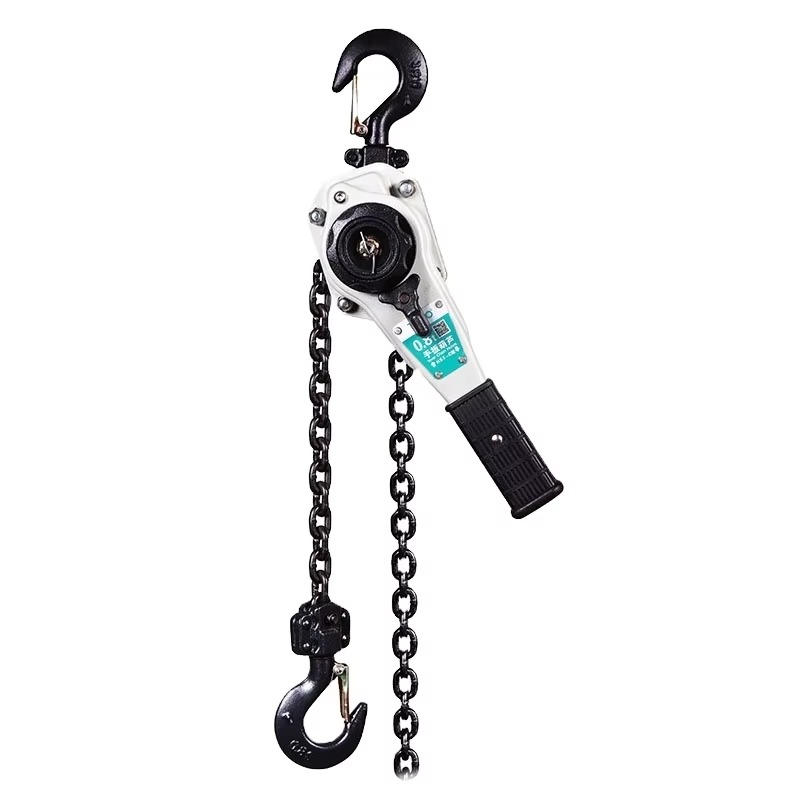
Unlike electric lifting equipment that depends on stable power supply and electronic systems, a lever hoist is simple, portable, durable, and incredibly versatile. It can lift, pull, tension, align, or position heavy loads with remarkable control.
That is why industries like:
· Construction
· Mining
· Shipbuilding
· Oil & gas
· Steel fabrication
· Power plant maintenance
· Heavy equipment installation
still rely heavily on manual lever hoists every single day.
And yet, despite their popularity, many buyers still choose the wrong model.
Some focus only on price.
Others buy oversized models that reduce efficiency.
Some ignore safety certifications.
And many users fail to maintain the hoist properly, causing avoidable failures.
This article covers everything professionals actually need to know:
· The best lever hoist brands for industrial use
· How to choose the right model for construction work
· Top-rated heavy-capacity lever hoists
· Common problems and troubleshooting methods
· Real-world tips from industrial lifting environments
If you work in lifting, rigging, or material handling, this guide will save you time, money, and headaches.
What Makes a Good Industrial Lever Hoist?
Before talking about brands, it is important to understand what separates an industrial-grade lever hoist from low-end products.
A quality lever hoist should deliver:
1. Reliable Load Capacity
The rated capacity must be accurate and tested.
Cheap hoists often advertise unrealistic capacities while using weak internal gears or low-grade chains.
In real industrial environments, that becomes dangerous very quickly.
2. Durable Alloy Steel Chain
The chain is the heart of the hoist.
Industrial environments expose chains to:
· Dust
· Mud
· Salt air
· Welding sparks
· Rain
· Heavy impact
A high-quality load chain made from hardened alloy steel significantly improves safety and service life.
3. Strong Brake System
A lever hoist should hold the load securely even during sudden stops.
A reliable braking system prevents slipping and protects workers underneath suspended loads.
4. Compact Body Design
Construction sites are crowded.
Sometimes workers must operate inside narrow steel structures or confined mechanical rooms.
Compact lever hoists improve accessibility and efficiency.
5. Easy Maintenance
Industrial users prefer equipment that can be repaired quickly.
If replacement parts are impossible to source, downtime becomes expensive.
Best Lever Hoist Brands for Industrial Use
Not all lever hoists are built the same.
Some brands focus on low-cost retail markets.
Others are engineered specifically for heavy industrial applications.
Below are some of the most respected lever hoist brands used globally.
1. KITO – Precision and Reliability
Their lever hoists are known for:
· Smooth operation
· High mechanical efficiency
· Excellent braking systems
· Long service life
Many construction and manufacturing companies prefer KITO because the equipment performs consistently even after years of heavy usage.
Their compact designs are particularly useful for steel structure installation and equipment alignment work.
Best For:
· Industrial maintenance
· Steel construction
· Heavy manufacturing
· Precision lifting operations
2. Yale – Durable European Engineering
Yale lever hoists are popular in Europe and industrial export markets.
The brand has built a reputation for durability and operator safety.
Their hoists are commonly used in:
· Shipyards
· Offshore projects
· Energy plants
· Rigging operations
Yale products are especially valued in harsh environments where corrosion resistance matters.
Best For:
· Harsh industrial environments
· Marine applications
· Offshore lifting
· Long-term industrial projects
3. CM (Columbus McKinnon) – Trusted Industrial Performance
CM lever hoists are widely used in North America.
They are recognized for rugged construction and reliable overload protection.
Many industrial contractors choose CM for:
· Heavy-duty pulling
· Rigging applications
· Mechanical installation
· Plant shutdown maintenance
Strengths:
· Strong safety standards
· Reliable load control
· High-capacity options
4. CHHOIST – Cost-Effective Industrial Solution
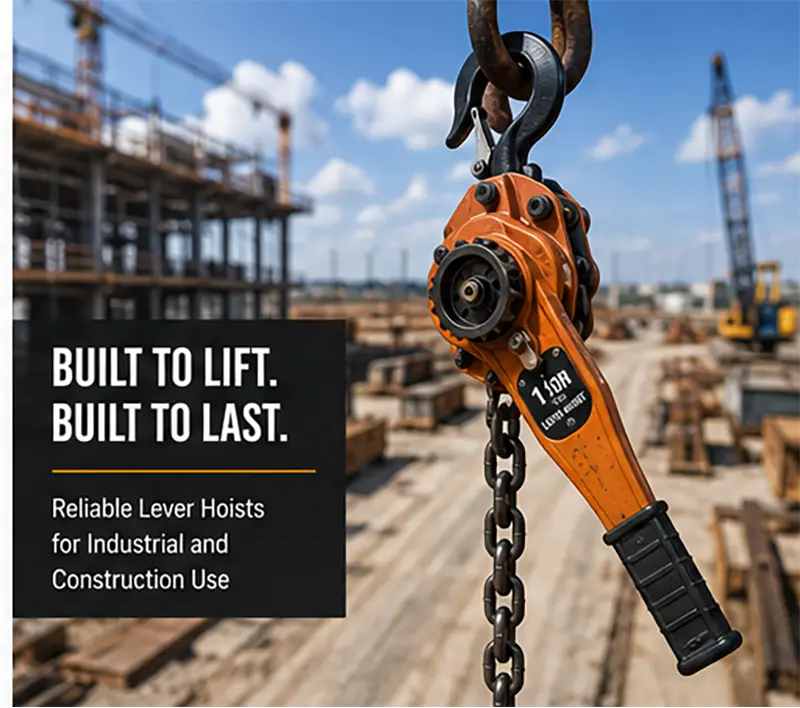
In recent years, many industrial buyers have started paying closer attention to value rather than brand name alone.
CHHOIST has become increasingly popular among distributors and contractors looking for:
· Industrial-grade performance
· Competitive pricing
· Strong load-bearing capacity
· Reliable export quality
For many growing construction businesses, balancing quality and budget is critical.
A good lever hoist should not only perform safely, but also provide long-term operational value.
Ideal For:
· Construction contractors
· Equipment distributors
· Warehouse lifting
· General industrial lifting
How to Choose a Lever Hoist for Construction Work
Choosing the wrong lever hoist can slow down operations, increase worker fatigue, and even create safety hazards.
Construction environments are unpredictable.
You need equipment that matches real working conditions.
Here are the key factors professionals should consider.
1. Understand the Actual Load Weight
One of the most common mistakes is underestimating the load.
Always calculate:
· Total weight
· Dynamic forces
· Angle loading
· Additional rigging weight
Never operate near maximum capacity continuously.
Most professionals recommend maintaining a safety margin.
For example:
· 1-ton load → use 1.5T or 2T hoist
·3-ton load → use 5T hoist if conditions are severe
2. Consider Lifting Height and Reach
Some projects require only short vertical lifting.
Others involve pulling loads across large steel structures.
Selecting the correct chain length prevents operational limitations on-site.
Too short?
The hoist becomes unusable.
Too long?
Chain management becomes messy and inefficient.
3. Evaluate Working Environment
Construction sites can be brutal.
Factors like:
· Rain
· Dust
· High temperatures
· Welding sparks
· Mud
· Corrosion
all affect hoist lifespan.
For outdoor projects, corrosion-resistant finishes and sealed brake systems become extremely important.
4. Portability Matters
Workers often carry lever hoists manually around the site.
Heavy equipment increases fatigue.
Compact lightweight designs improve productivity significantly.
Especially for:
· Steel erection crews
· Bridge work
· Tower installation
· Elevated construction areas
5. Check Safety Certifications
Industrial buyers should always verify:
· CE certification
· Load testing
· Chain grade standards
· Safety factor ratings
Cheap uncertified products may save money initially but create major long-term risks.
Top-Rated Lever Hoists with High Weight Capacity
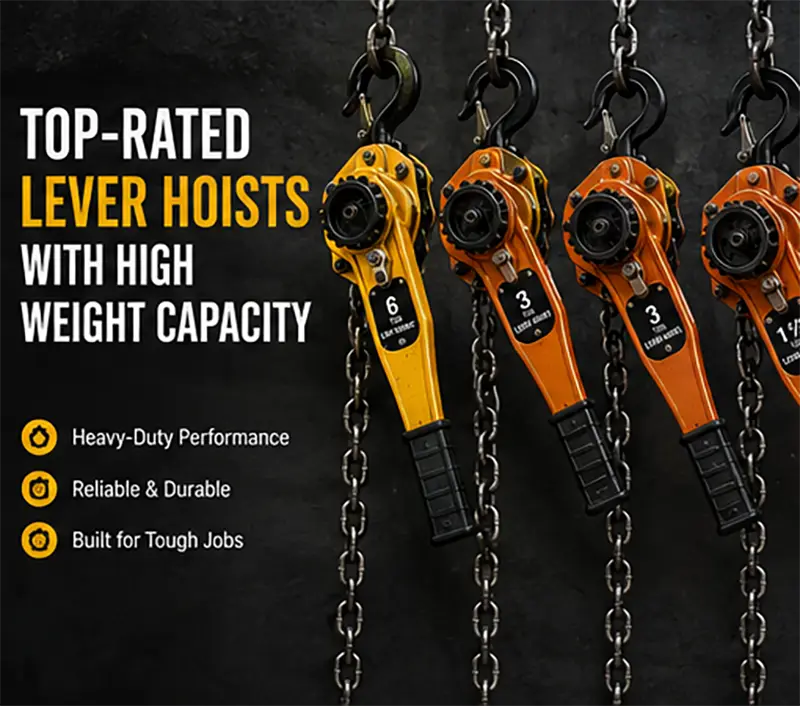
High-capacity lever hoists are commonly used in:
· Bridge construction
· Shipbuilding
· Heavy machinery installation
· Mining operations
· Industrial plant maintenance
Below are common industrial capacity ranges.
| Capacity | Common Application |
| 0.75T – 1.5T | Light construction & maintenance |
| 3T | General industrial lifting |
| 6T | Heavy construction projects |
| 9T | Steel fabrication & mining |
| 12T+ | Extreme heavy-duty industrial operations |
High-capacity models require:
· Reinforced gears
· Hardened chains
· Strong hook structures
· Reliable load brakes
Professional users should inspect these models regularly because wear increases significantly under heavy loads.
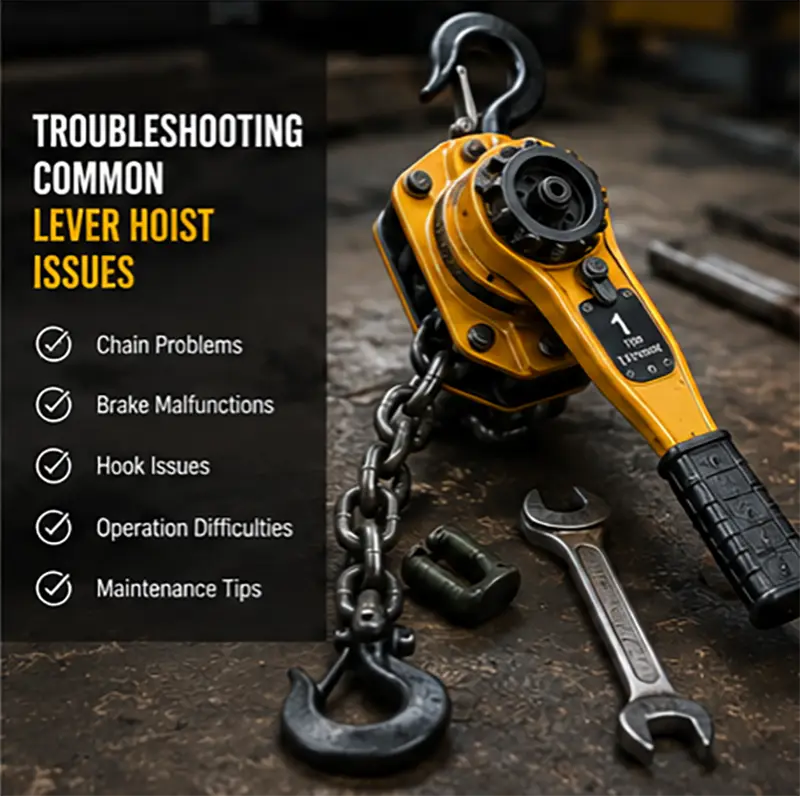
Common Lever Hoist Problems and Troubleshooting
Even the best lever hoist eventually experiences wear.
Understanding common problems helps prevent downtime and accidents.
Problem 1: Lever Hoist Will Not Lift
Possible Causes:
· Overloaded hoist
· Damaged brake system
· Internal gear wear
· Jammed chain
Solutions:
· Reduce load immediately
· Inspect brake mechanism
· Lubricate moving parts
· Replace damaged gears if necessary
Never force the handle excessively.
That usually makes the damage worse.
Problem 2: Chain Slipping During Operation
Possible Causes:
· Worn brake discs
· Dirty internal mechanism
· Oil contamination
· Excessive wear
Solutions:
· Clean internal components
· Replace worn brake parts
· Avoid lubricating brake surfaces
· Conduct regular inspections
Chain slipping is a major safety risk.
Operations should stop immediately until the issue is resolved.
Problem 3: Lever Feels Extremely Hard to Operate
Possible Causes:
· Lack of lubrication
· Internal corrosion
· Overloading
· Bent components
Solutions:
· Lubricate gears properly
· Inspect for rust damage
· Verify load capacity
· Replace bent parts
Smooth operation is usually a sign of a healthy hoist.
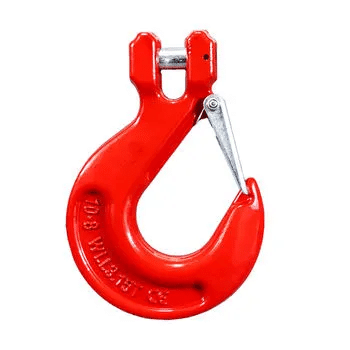
Problem 4: Hook Deformation
Hooks naturally wear over time.
However, deformation indicates dangerous overloading.
Warning Signs:
· Hook opening increases
· Visible cracks
· Twisting
· Uneven wear
Solution:
Replace immediately.
Never weld or repair damaged hooks.
Maintenance Tips That Extend Lever Hoist Lifespan
Most hoist failures are not caused by manufacturing defects.
They happen because of poor maintenance.
Simple habits dramatically improve lifespan.
Daily Inspection
Before every shift:
· Check chain condition
· Inspect hooks
·Test brake operation
· Look for cracks or deformation
A two-minute inspection can prevent catastrophic accidents.
Proper Lubrication
Industrial environments generate friction and contamination.
Lubrication reduces wear significantly.
But remember:
Never lubricate brake friction surfaces.
Clean After Harsh Use
After exposure to:
· Rain
· Mud
· Concrete dust
· Saltwater
clean the hoist immediately.
Contaminants accelerate corrosion and mechanical wear.
Store Correctly
Do not leave hoists lying directly on wet ground.
Proper storage prevents:
· Rust
· Chain damage
· Moisture contamination
Many professionals use dedicated lifting equipment storage cabinets.
Why Cheap Lever Hoists Often Cost More Later
Many buyers focus only on initial purchase price.
That is understandable.
But industrial lifting equipment should be evaluated based on:
· Safety
· Downtime risk
· Maintenance cost
· Lifespan
· Reliability
A cheap hoist that fails during a critical installation can create:
· Delayed projects
· Labor costs
· Equipment damage
· Safety incidents
In real industrial environments, reliability usually saves far more money than the cheapest purchase price.
Final Thoughts
Lever hoists may look simple.
But in demanding industrial environments, their performance matters enormously.
The right lever hoist improves:
· Workplace safety
· Productivity
· Precision handling
· Operational efficiency
Whether you are installing steel beams on a construction site, positioning heavy machinery in a factory, or handling maintenance work in a shipyard, choosing the right lever hoist is an investment in long-term reliability.
The best industrial buyers are not simply looking for the lowest price.
They look for equipment that performs consistently under pressure.
That is what separates professional lifting operations from costly operational problems.



 Click:2131
Edit: Chuanghe Hoisting
Click:2131
Edit: Chuanghe Hoisting Time:2026-05-08 14:34:27


 Tel:
+8613653129869
Tel:
+8613653129869 Whatsapp:
+8613653129869
Whatsapp:
+8613653129869 Email:
chuanghehoist@gmail.com
Email:
chuanghehoist@gmail.com Address:Donglu Village, Donglu Township, Qingyuan District, Baoding City, Hebei Province
 English
 Français
 Español
 Email
Email +8613653129869
 +8613653129869
 Home
Home Whatsapp
 chuanghehoist@gmail.com